
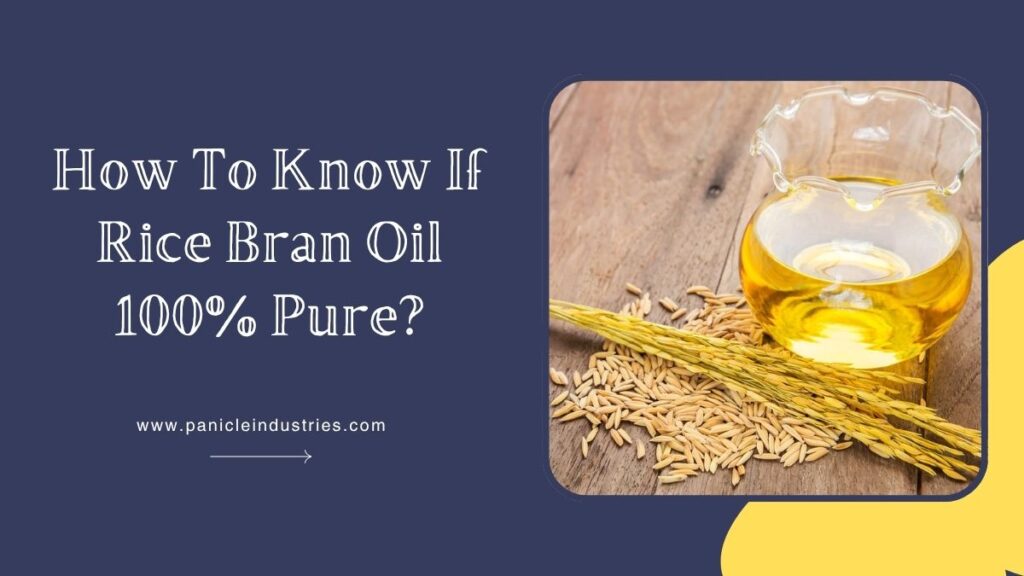
Cooking oil is one of the most important ingredients in any kitchen. It affects flavor, nutrition, cooking performance, and even long-term health. Among the many edible oils available today, rice bran oil has gained massive popularity because of its balanced fatty acid profile, high smoke point, and heart-friendly properties.
But here’s the problem: not every bottle labeled “rice bran oil” is truly pure.
Some oils contain blends, additives, or lower-quality refined oils mixed in small proportions. Others may use misleading packaging that creates the impression of purity without clearly stating it. For consumers, this raises an important question: How To Know If Rice Bran Oil 100% Pure?
The answer lies in understanding labels, processing methods, appearance, aroma, certifications, and brand transparency. In this guide, we will break down the practical ways to identify pure rice bran oil so you can make informed buying decisions with confidence.
What Is Rice Bran Oil?
Rice bran oil is extracted from the outer layer of rice grains, known as the bran. This layer contains natural oils rich in antioxidants, vitamin E compounds, and plant sterols.
What makes rice bran oil unique is its nutritional composition:
- Balanced monounsaturated and polyunsaturated fats
- Naturally occurring antioxidants like oryzanol
- High smoke point, usually around 230°C
- Mild flavor suitable for multiple cuisines
Because of these qualities, rice bran oil is widely used for:
- Deep frying
- Stir-frying
- Baking
- Everyday cooking
However, purity matters. The nutritional benefits associated with rice bran oil only apply when the oil is genuine and minimally compromised.
Also read: Rice Bran Oil vs Grapeseed Oil
How To Know If Rice Bran Oil 100% Pure?
Identifying pure rice bran oil requires more than simply reading the front label. Manufacturers often use marketing terms creatively, so consumers need to evaluate several factors together.
Let’s explore the most reliable indicators.
Check the Ingredient List Carefully
This is the first and most important step.
A truly pure rice bran oil product should mention only:
“Rice Bran Oil”
If you notice ingredients like:
- Palm oil
- Soybean oil
- Sunflower oil
- Vegetable oil blends
then the product is not 100% pure rice bran oil.
Why this matters
Some blended oils are sold at lower prices and marketed as healthier alternatives. While blends are not necessarily unsafe, they should not be mistaken for pure rice bran oil.
Quick Tip
Do not rely only on the front packaging. Always read the back label and nutritional information panel.
Look for Clear Manufacturing and Quality Certifications
Reputable brands maintain strict quality standards and display certifications openly.
Important certifications to check:
- FSSAI certification
- ISO quality standards
- HACCP compliance
- AGMARK (where applicable)
These certifications indicate that the manufacturer follows regulated processing and food safety systems.
Why certifications matter
Pure edible oils require controlled extraction, refining, packaging, and storage processes. Certified manufacturers are more likely to maintain consistent quality.
That said, certification alone does not guarantee purity—but it definitely improves credibility.
Examine the Color and Appearance
Pure rice bran oil usually has:
- A light golden or amber color
- Clear appearance without cloudiness
- Smooth consistency
What to avoid
If the oil looks:
- Extremely dark
- Artificially bright
- Murky or cloudy
it may indicate poor processing, contamination, or improper storage.
Important note
Cold temperatures can temporarily make some oils appear cloudy. This does not always mean the oil is impure. Temperature changes naturally affect texture and clarity.
Pay Attention to Aroma and Taste
Rice bran oil has a very mild smell and neutral taste. That is one reason chefs and home cooks prefer it.
Pure rice bran oil generally:
- Smells clean and light
- Does not overpower food
- Leaves minimal greasy aftertaste
Signs something may be wrong
Avoid oils that smell:
- Rancid
- Strongly chemical-like
- Excessively artificial
A harsh odor may indicate oxidation, poor storage, or low-quality blending.
Understand the Extraction Process
The extraction method plays a huge role in purity and quality.
Common extraction methods include:
1. Solvent extraction
Most commercial rice bran oils use food-grade solvents followed by refining.
2. Cold-pressed extraction
This method uses mechanical pressure with minimal heat.
Which one is better?
Cold-pressed oils generally retain more natural nutrients and antioxidants. However, refined rice bran oil often offers:
- Better shelf stability
- Neutral flavor
- Higher smoke point
The key factor is transparency. Reliable brands clearly mention their extraction and refining process.
Check the Oryzanol Content
One of the signature compounds in rice bran oil is gamma-oryzanol, a natural antioxidant associated with cholesterol management and oxidative protection.
Typical range
Many quality rice bran oils contain:
- Around 1% to 2% oryzanol content
Why this matters
If a brand openly mentions oryzanol levels, it usually indicates product authenticity and formulation transparency.
While average consumers may not test oryzanol scientifically at home, transparent labeling helps build trust.
Be Careful With Extremely Cheap Products
Price alone does not define quality, but unusually low prices should raise questions.
Pure rice bran oil production involves:
- Rice bran stabilization
- Extraction
- Refining
- Quality testing
- Packaging
All of these steps cost money.
If the price seems too low:
The oil may:
- Contain blended oils
- Use lower-quality raw material
- Lack proper quality control
A moderate price from a trusted manufacturer is often safer than choosing the cheapest bottle on the shelf.
Buy From Trusted and Transparent Brands
Brand reputation matters more than many people realize.
Reliable companies usually provide:
- Detailed labeling
- Customer support information
- Manufacturing details
- Batch tracking
- Nutritional transparency
What trustworthy brands often do well?
- Clearly state “100% Rice Bran Oil”
- Mention refining standards
- Provide storage guidance
- Share sourcing information
Brands that hide details or use vague language should be approached cautiously.
Understand the Shelf Life and Packaging
Pure rice bran oil is sensitive to light, heat, and oxygen.
Good packaging usually includes:
- Dark-colored bottles
- Airtight seals
- Proper labeling dates
Why packaging matters
Poor packaging accelerates oxidation, which affects:
- Taste
- Nutritional quality
- Freshness
Always check:
- Manufacturing date
- Expiry date
- Seal condition
Never buy leaking or damaged bottles.
Common Myths About Pure Rice Bran Oil
“Darker oil means more natural”
Not necessarily.
Oil color depends on:
- Refining process
- Filtration
- Rice variety
A darker color does not automatically indicate better quality.
“All refined oils are unhealthy”
This is an oversimplification.
Refining helps:
- Remove impurities
- Improve stability
- Increase smoke point
The quality of refining matters more than the fact that refining exists.
“Expensive oil is always pure”
Higher price does not guarantee authenticity.
Some brands charge premium prices mainly because of marketing. Always evaluate labels, certifications, and transparency instead of price alone.
Simple Home Observations You Can Make
While laboratory testing is the only way to scientifically confirm purity, a few practical observations can help consumers identify suspicious products.
Observe frying performance
Pure rice bran oil usually:
- Handles high heat well
- Produces less excessive smoke
- Maintains stability during cooking
Check residue formation
Low-quality blended oils may:
- Become sticky quickly
- Leave unusual residue
- Produce strong odors after reheating
Monitor freshness over time
Pure oil stored properly should maintain:
- Stable aroma
- Consistent texture
- Clean flavor
Rapid spoilage may indicate quality issues.
Why Purity Matters for Health and Cooking?
Consumers choose rice bran oil for specific reasons:
- Heart-friendly fat composition
- High smoke point
- Antioxidant content
- Versatility in cooking
Impure or heavily blended oils may reduce these benefits.
Health perspective
Research suggests that rice bran oil contains compounds that may support:
- Cholesterol management
- Oxidative balance
- Cardiovascular health
However, these potential benefits depend heavily on product quality and overall diet.
Tips for Storing Rice Bran Oil Properly
Even pure oil loses quality when stored incorrectly.
Best storage practices:
- Keep away from direct sunlight
- Store in a cool, dry place
- Close the cap tightly after use
- Avoid repeated exposure to heat
Avoid this common mistake
Do not store cooking oil near the stove for long periods. Constant heat exposure speeds up oxidation.
Red Flags You Should Never Ignore
Here are some warning signs that deserve attention:
Suspicious labeling
- “Edible vegetable oil” without specifics
- Missing ingredient transparency
Unusual smell
- Paint-like odor
- Sour aroma
Poor packaging quality
- Loose seals
- Faded labels
- Leakage
Unrealistic health claims
Be cautious of products promising:
- Instant weight loss
- Guaranteed heart cure
- Miracle health benefits
Authentic brands focus on factual information rather than exaggerated promises.
Final Thoughts
Understanding How To Know If Rice Bran Oil 100% Pure? is essential for making healthier and smarter kitchen choices. With so many edible oil products competing for attention, consumers need to look beyond attractive packaging and marketing slogans.
Purity starts with transparency. A high-quality rice bran oil should have:
- Clear ingredient labeling
- Trusted certifications
- Proper packaging
- Mild aroma and appearance
- Honest manufacturing details
No single factor guarantees authenticity on its own. Instead, smart buyers evaluate multiple indicators together.
The good news is that identifying pure rice bran oil is not complicated once you know what to look for. A few extra seconds spent reading labels and checking quality standards can help you choose a product that truly delivers the cooking performance and nutritional value you expect.
In the end, good cooking starts with good ingredients—and pure oil is one of the foundations of a better kitchen.