
Pepper is one of the most widely used spices in the world. From simple soups and salads to rich curries and grilled dishes, it adds warmth, aroma, and a distinct sharp flavor that many people instantly recognize. Yet, despite its popularity, there is still a common question that confuses home cooks and spice buyers alike: is peppercorn the same as black pepper?
At first glance, the terms seem interchangeable. Grocery stores often use both names casually, recipes switch between them without explanation, and spice packaging sometimes makes things even more confusing. But the reality is slightly more nuanced.
The short answer is yes—black peppercorns are black pepper. However, not every peppercorn is necessarily black pepper. Different peppercorn colors and processing methods create unique variations in flavor, aroma, and culinary use.
Understanding this distinction helps consumers buy better spices, improve cooking results, and appreciate how one small berry became known as the “King of Spices.”
In this blog, we will break down the differences between peppercorns and black pepper, explore how pepper varieties are produced, explain their nutritional profile, and help you understand which type works best in different dishes.
Understanding What Peppercorns Actually Are
Peppercorns are the dried berries of the plant Piper nigrum, a flowering vine primarily grown in tropical regions such as India, Vietnam, Indonesia, and Brazil.
These berries are harvested at different stages of ripeness and processed differently to create:
- Black peppercorns
- White peppercorns
- Green peppercorns
- Red peppercorns
That means the word “peppercorn” is a broader category, while “black pepper” refers to one specific type.
Think of it this way:
- “Peppercorn” is the family name
- “Black pepper” is one member of that family
So when someone asks whether peppercorn is the same as black pepper, the technically correct answer is:
Black pepper is a type of peppercorn.
Is Peppercorn the Same as Black Pepper?
This is where the confusion usually begins.
Black peppercorns are black pepper
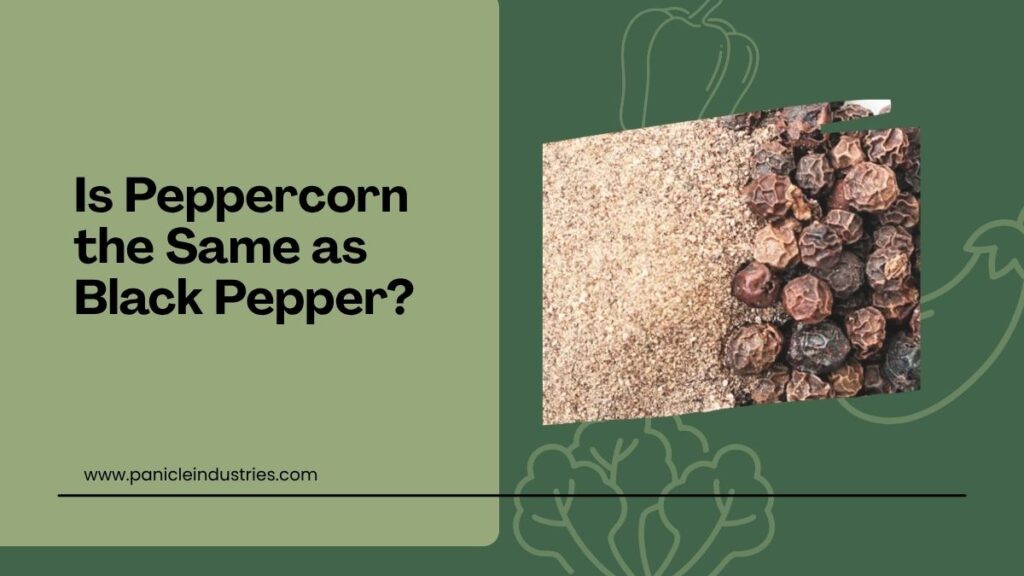
When black peppercorns are ground, they become the black pepper powder commonly used in kitchens worldwide.
So:
- Whole black pepper = black peppercorn
- Ground black pepper = crushed black peppercorns
But not all peppercorns are black
Peppercorns can also appear in:
- White
- Green
- Red
These varieties come from the same plant but differ because of:
- Harvest timing
- Ripeness level
- Drying process
- Fermentation methods
That is why all black pepper is peppercorn, but not every peppercorn is black pepper.
Simple? Yes. Confusing grocery labels? Also yes.
Also read: Granulated Garlic vs Garlic Powder
How Black Pepper Is Made
Black pepper begins as green berries growing on the Piper nigrum vine.
The process usually involves:
- Harvesting unripe green berries
- Brief cooking or blanching
- Sun-drying for several days
During drying:
- The outer skin wrinkles
- The berries darken
- Flavor compounds become concentrated
This process creates the familiar black, wrinkled peppercorns found in spice grinders and seasoning mixes.
Different Types of Peppercorns Explained
Understanding pepper varieties helps explain why terminology matters.
Black Peppercorns
Black peppercorns are:
- Harvested before full ripening
- Sun-dried with skin intact
Flavor profile
- Sharp
- Pungent
- Warm
- Slightly woody
Best used for
- Curries
- Soups
- Grilled dishes
- Everyday seasoning
Black pepper accounts for nearly 20% of the global spice trade, making it one of the most commercially important spices in the world.
White Peppercorns
White peppercorns come from fully ripened berries with the outer skin removed.
Flavor profile
- Milder
- Earthier
- Slightly fermented
Common uses
- White sauces
- Chinese cuisine
- Cream-based soups
White pepper often surprises people because it smells quite different from black pepper despite originating from the same plant.
Green Peppercorns
Green peppercorns are harvested early and preserved through drying or brining.
Flavor profile
- Fresh
- Herbal
- Less spicy
Popular in
- French cuisine
- Sauces
- Marinades
They provide pepper flavor without overwhelming heat.
Red Peppercorns
Red peppercorns are fully ripened berries that remain intact during drying.
Flavor profile
- Fruity
- Slightly sweet
- Complex
They are rarer and usually more expensive due to delicate processing requirements.
Are Peppercorns and Chili Peppers Related?
This is another common misconception.
Despite the word “pepper,” black pepper and chili peppers are completely different plants.
Black pepper
Comes from:
- Piper nigrum
Chili peppers
Belong to:
- Capsicum family
The confusion began centuries ago when European traders associated spicy flavors with the word “pepper.”
So technically:
- Black pepper is not a chili
- Chili powder is not peppercorn
History gave them similar names, but botany strongly disagrees.
Nutritional Value of Black Pepper
Black pepper contains more than just spice.
Key nutrients include:
- Manganese
- Iron
- Potassium
- Vitamin K
- Dietary fiber
However, pepper is consumed in small amounts, so its nutritional contribution per serving remains modest.
The real star: Piperine
Black pepper contains a natural compound called piperine, which gives pepper its characteristic heat.
Research suggests piperine may help:
- Improve nutrient absorption
- Support digestion
- Enhance bioavailability of certain compounds
For example, piperine is often paired with turmeric because it may improve curcumin absorption significantly.
Tiny spice. Surprisingly impressive chemistry.
Why Freshly Ground Black Pepper Tastes Better?
If you have ever compared pre-ground pepper with freshly cracked peppercorns, the difference is obvious.
Fresh grinding preserves:
- Essential oils
- Aroma compounds
- Flavor intensity
Pre-ground pepper loses flavor faster
Once ground:
- Volatile oils evaporate quickly
- Aroma weakens over time
That is why chefs often recommend whole peppercorns with a grinder for better flavor quality.
Culinary Uses of Black Pepper
Black pepper works in almost every cuisine because of its versatility.
Common uses include:
- Seasoning meats
- Flavoring soups
- Enhancing sauces
- Adding heat to salads
- Balancing creamy dishes
Interesting fact
Black pepper is one of the few spices equally comfortable in:
- Street food
- Home cooking
- Fine dining restaurants
That level of culinary adaptability is rare.
Whole Peppercorns vs Ground Black Pepper
Both forms have advantages.
Whole peppercorns
Best for:
- Grinding fresh
- Long-term storage
- Maximum aroma
Ground black pepper
Best for:
- Convenience
- Quick cooking
- Instant seasoning
Shelf life difference
Whole peppercorns usually retain flavor much longer than pre-ground pepper.
For serious flavor lovers, whole peppercorns are generally worth the extra effort.
How to Identify Good-Quality Black Pepper?
Not all pepper products offer the same quality.
High-quality black pepper usually has:
- Uniform dark color
- Strong aroma
- Heavy, dense peppercorns
- Minimal dust or broken particles
Poor-quality pepper may:
- Smell weak
- Taste dull
- Contain excessive stems or debris
Freshness matters greatly because pepper loses potency over time.
India’s Historical Connection With Black Pepper
India has a deep historical relationship with pepper.
For centuries, black pepper from the Malabar Coast played a major role in:
- International trade
- Spice routes
- Colonial expansion
In fact, pepper was once so valuable it was nicknamed:
“Black Gold”
European traders crossed oceans searching for spices, and black pepper stood at the center of that global demand.
Today, India remains one of the important producers of premium pepper varieties.
Common Myths About Black Pepper
“Black pepper and peppercorn are completely different”
False.
Black peppercorns are simply whole black pepper berries.
“White pepper is healthier than black pepper”
Not necessarily.
Both come from the same plant and offer similar core compounds.
“Pepper loses all flavor after grinding”
Not immediately—but it does lose aroma faster than whole peppercorns.
“Black pepper only adds heat”
Actually, good pepper also adds:
- Aroma
- Depth
- Earthiness
- Mild citrus notes
Pepper is far more complex than simple spiciness.
Storage Tips for Peppercorns
Proper storage keeps pepper flavorful longer.
Best practices
- Store in airtight containers
- Keep away from moisture
- Avoid direct sunlight
- Buy moderate quantities
Avoid this mistake
Do not keep pepper near the stove where heat and steam constantly affect spice quality.
Choosing Trusted Spice Suppliers Matters
Spice quality depends heavily on sourcing, processing, and storage standards.
Reliable suppliers focus on:
- Freshness
- Clean processing
- Proper packaging
- Consistent quality
If you are looking for quality food ingredients and trusted spice products, panicleindustries.com offers carefully selected products designed for everyday kitchens and food businesses.
Final Thoughts
So, is peppercorn the same as black pepper?
The answer is both yes and no.
Black peppercorns are indeed black pepper in whole form. But the term “peppercorn” also includes white, green, and red varieties that come from the same plant yet differ in processing, flavor, and culinary use.
Understanding these distinctions helps improve:
- Cooking choices
- Spice quality selection
- Flavor appreciation
Black pepper remains one of the world’s most important and versatile spices for good reason. Its bold flavor, historical significance, and culinary flexibility make it a permanent staple in kitchens across cultures.
Whether you use freshly cracked peppercorns over pasta or add black pepper powder to curry, knowing what you are actually using makes cooking a little smarter—and definitely more flavorful.