
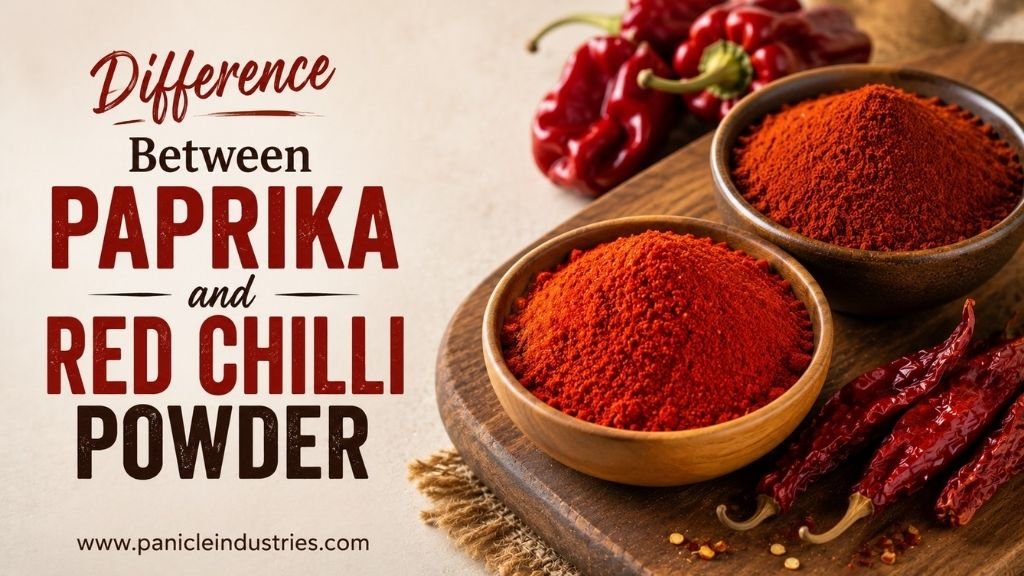
Many recipes call for either paprika or red chilli powder, leading home cooks to wonder whether these two spices are the same. Although they may look similar because of their bright red color, they differ in flavor, heat level, ingredients, and culinary uses. Understanding the difference between paprika and red chilli powder can help you choose the right spice for your recipe and achieve the desired taste.
Paprika is generally made from dried sweet peppers and is known for its mild, smoky, or slightly sweet flavor. Red chilli powder, on the other hand, is made from dried hot red chilies and is primarily used to add heat and spice to dishes. While both spices enhance color and flavor, they are not always interchangeable.
In this blog, you’ll learn how paprika and red chilli powder differ, their unique characteristics, and which one is best suited for different types of cooking.
What Is Paprika?
Paprika is a ground spice made from dried varieties of Capsicum annuum peppers. Depending on the type of peppers used, paprika can range from sweet and mild to smoky or moderately hot.
Paprika is widely used in Hungarian, Spanish, Mediterranean, and many European cuisines. Besides adding flavor, it gives food a rich red color that makes dishes more visually appealing.
There are several types of paprika available, including:
- Sweet paprika
- Smoked paprika
- Hot paprika
Each variety offers a slightly different flavor profile, allowing cooks to choose the one that best matches their recipe.
Paprika is commonly used in:
- Soups
- Stews
- Roasted vegetables
- Grilled chicken
- Potato dishes
- Deviled eggs
- Rice dishes
- Spice rubs
Because of its mild taste, paprika is often added generously without making food excessively spicy.
Also read: Purple Rice vs White Rice
What Is Red Chilli Powder?
Red chilli powder is a spice made by grinding dried red chilies into a fine powder. Unlike paprika, its main purpose is to add heat and pungency to food.
The spice level depends on the variety of chilies used during processing. Some red chilli powders are moderately spicy, while others can be extremely hot.
Red chilli powder is an essential ingredient in many cuisines, including:
- Indian
- Mexican
- Thai
- Chinese
- Korean
- Sri Lankan
It is commonly used in:
- Curries
- Stir-fries
- Marinades
- Pickles
- Sauces
- Lentil dishes
- Meat recipes
- Vegetable curries
Since red chilli powder is much hotter than most types of paprika, recipes usually require smaller quantities.
Difference Between Paprika and Red Chilli Powder
Although both spices come from peppers, the difference between paprika and red chilli powder goes far beyond their appearance.
Paprika is primarily valued for its mild flavor, vibrant color, and subtle sweetness. In contrast, red chilli powder is chosen mainly for its spicy heat and bold flavor.
Their differences include:
- Type of peppers used
- Heat level
- Flavor profile
- Color intensity
- Culinary applications
- Regional popularity
Knowing these differences helps you select the right spice and avoid accidentally making a dish too spicy or too mild.
Paprika vs Red Chilli Powder Comparison
| Feature | Paprika | Red Chilli Powder |
|---|---|---|
| Main ingredient | Dried sweet peppers | Dried hot red chilies |
| Heat level | Mild to moderate | Medium to very hot |
| Flavor | Sweet, smoky, earthy | Hot, sharp, pungent |
| Color | Bright red | Deep red |
| Primary purpose | Adds color and flavor | Adds heat and spice |
| Common cuisines | Hungarian, Spanish, Mediterranean | Indian, Mexican, Thai, Chinese |
| Typical quantity used | Larger amounts | Smaller amounts |
Flavor Differences
Flavor is one of the biggest distinctions between paprika and red chilli powder.
Paprika Has a Mild and Sweet Flavor
Most paprika varieties have a gentle sweetness with earthy notes. Smoked paprika also carries a rich smoky aroma that adds depth to grilled foods, soups, and roasted vegetables.
Because it isn’t overwhelmingly spicy, paprika enhances the natural flavor of ingredients without dominating the dish.
Red Chilli Powder Is Bold and Spicy
Red chilli powder delivers a stronger, sharper taste that immediately increases the heat level of food.
Different chili varieties produce different spice levels, but most red chilli powders are significantly hotter than paprika.
This makes red chilli powder ideal for recipes where noticeable heat is an important part of the flavor.
Heat Level Comparison
One of the easiest ways to understand the difference between paprika and red chilli powder is by comparing their heat levels.
Paprika is generally much milder because it is made primarily from sweet peppers. Even hot paprika is usually less spicy than many standard red chilli powders.
Red chilli powder, however, is specifically made from hot chili varieties. Depending on the peppers used, its heat can range from moderately spicy to extremely hot.
If you’re cooking for children or people who prefer milder food, paprika is often the better choice. If your recipe needs bold heat and spice, red chilli powder is the more suitable option.
Color Differences
Although both spices appear red, they create slightly different visual effects in food.
Paprika typically gives dishes a bright, vibrant red or reddish-orange color that enhances presentation without greatly increasing spiciness.
Red chilli powder usually produces a deeper red color while simultaneously adding noticeable heat.
Many chefs use paprika primarily to improve the appearance of food, while red chilli powder is added mainly for its spicy flavor.
Ingredient Differences
Another important difference between paprika and red chilli powder lies in the peppers used to produce them.
Paprika is generally made from dried sweet pepper varieties, although some versions may include mildly hot peppers depending on the style.
Red chilli powder is produced by grinding dried hot red chilies. Some commercial blends may contain multiple chili varieties to achieve a specific color, flavor, or heat level.
Because the raw ingredients differ, the final taste, aroma, and spice level also vary significantly.
Best Uses of Paprika and Red Chilli Powder in Cooking
Although paprika and red chilli powder are both made from dried peppers, they are used for different purposes in the kitchen. Choosing the right spice depends on whether you want to add color, flavor, heat, or a combination of all three.
When to Use Paprika
Paprika is an excellent choice when you want a mild, slightly sweet flavor and an attractive red color without making the dish too spicy.
It works well in:
- Roasted vegetables
- Creamy soups
- Mashed potatoes
- Deviled eggs
- Chicken seasoning
- Rice dishes
- Pasta sauces
- Salad dressings
- Spice rubs
Smoked paprika is particularly popular for barbecue recipes because it adds a rich smoky aroma.
When to Use Red Chilli Powder
Red chilli powder is best used when your recipe requires noticeable heat and bold flavor.
It is commonly added to:
- Indian curries
- Chili con carne
- Stir-fries
- Marinades
- Pickles
- Lentil dishes
- Spicy soups
- Mexican recipes
- Thai curries
Since red chilli powder is usually much hotter, it’s a good idea to start with a small amount and adjust according to your taste.
Can Paprika Replace Red Chilli Powder?
Yes, but only in certain situations.
Paprika can replace red chilli powder if your goal is mainly to add color or a mild pepper flavor. However, the dish will be significantly less spicy.
For example, if you’re preparing food for children or people who prefer milder meals, paprika can be a suitable alternative.
On the other hand, replacing paprika with red chilli powder requires extra caution.
Because red chilli powder is much hotter, using the same quantity may overpower the dish and make it unpleasantly spicy.
If you need to substitute red chilli powder for paprika:
- Use a smaller amount.
- Taste the dish as you cook.
- Add more only if needed.
Remember that no substitution will perfectly match both the flavor and heat of the original ingredient.
Nutritional Comparison
Paprika and red chilli powder contain many of the same nutrients because both come from peppers. However, their nutritional values can vary depending on the pepper varieties used.
| Nutrient | Paprika | Red Chilli Powder |
|---|---|---|
| Calories | Low | Low |
| Vitamin A | Excellent source | Good source |
| Vitamin C | Present | Present |
| Antioxidants | High | High |
| Capsaicin | Low | High |
| Heat level | Mild | High |
Paprika is often valued for its high vitamin A content and natural pigments, while red chilli powder contains more capsaicin, the compound responsible for its spicy heat.
Both spices can be part of a healthy diet when used in moderate amounts.
Common Mistakes to Avoid
Using paprika and red chilli powder correctly can make a noticeable difference in the flavor of your meals.
Assuming They Are the Same Spice
Although both are made from peppers, they have different flavor profiles and spice levels.
Using one in place of the other without considering these differences can change the final taste of the dish.
Using Too Much Red Chilli Powder
Because red chilli powder is usually much hotter than paprika, adding too much can overwhelm other flavors.
Always begin with a small amount and increase gradually if necessary.
Ignoring the Type of Paprika
Paprika comes in several varieties, including sweet, smoked, and hot.
Using smoked paprika in a recipe that calls for sweet paprika may introduce an unexpected smoky flavor.
Reading the label before cooking helps ensure the desired result.
Storing Spices Improperly
Both paprika and red chilli powder should be stored in airtight containers away from heat, moisture, and direct sunlight.
Proper storage helps preserve their color, aroma, and flavor for a longer time.
Difference Between Paprika and Red Chilli Powder: Which One Should You Choose?
The best choice depends on the type of dish you’re preparing.
Choose paprika if you want:
- Mild flavor
- Bright red color
- Slight sweetness
- Smoky notes (with smoked paprika)
- Gentle seasoning without excessive heat
Choose red chilli powder if you want:
- Spicy heat
- Bold flavor
- Traditional spice in curries
- Stronger kick in marinades and sauces
- Hot and flavorful dishes
Many experienced cooks keep both spices in their kitchen because they serve different purposes and complement different recipes.
Conclusion
Understanding the difference between paprika and red chilli powder helps you prepare recipes with greater confidence and accuracy. While both spices come from dried peppers, they offer very different flavor experiences. Paprika is generally mild, slightly sweet, and valued for the rich color it adds to food, whereas red chilli powder is known for its intense heat and bold taste.
Neither spice is better than the other—they simply serve different purposes. By choosing the right one for your recipe, you can achieve the perfect balance of flavor, color, and spice while creating dishes that suit your personal taste.
Panicle Industries is a trusted Indian exporter of premium Basmati Rice, Non-Basmati Rice, Pulses, Spices, Fruits & Vegetables and other food products. Through Panicle Foods, we continue to strengthen our commitment to delivering quality food products, reliable export services, and lasting partnerships with buyers across international markets.
Frequently Asked Questions
1. What is the difference between paprika and red chilli powder?
Paprika is usually mild and made from sweet peppers, while red chilli powder is made from hot chilies and is mainly used to add spicy heat.
2. Can I use paprika instead of red chilli powder?
Yes, but paprika adds color and mild flavor rather than strong heat. Your dish will be less spicy if you use paprika as a substitute.
3. Is paprika healthier than red chilli powder?
Both spices contain antioxidants and vitamins. Paprika is rich in vitamin A, while red chilli powder contains more capsaicin for spicy heat.
4. Which is hotter, paprika or red chilli powder?
Red chilli powder is generally much hotter than paprika because it is made from spicy red chilies rather than sweet peppers.
5. Can paprika and red chilli powder be used together?
Yes. Many recipes combine paprika for color and flavor with red chilli powder for heat, creating a balanced and flavorful dish.