
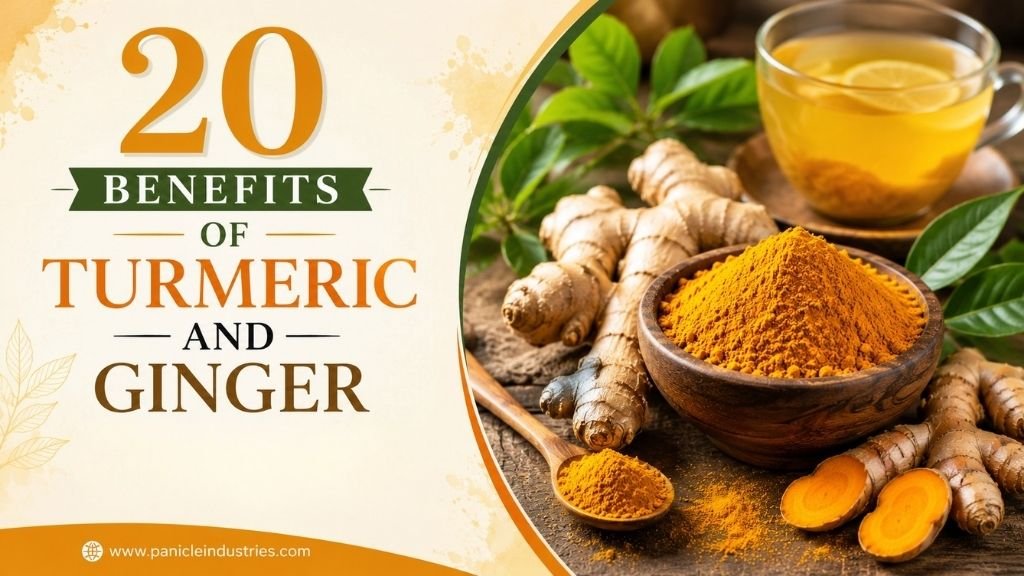
Natural spices have played an important role in traditional diets and medicine for centuries. Among them, turmeric and ginger stand out for their wide range of health-supporting properties. Today, many people search for the 20 benefits of turmeric and ginger to understand how these spices support digestion, immunity, and overall wellness. Modern research continues to study these two roots because they contain powerful bioactive compounds.
This blog explains their benefits using verified facts and trusted sources. Each benefit connects to real nutritional science rather than myths or exaggerated claims. By the end, you will understand how turmeric and ginger work in the body and how to include them safely in daily meals.
What Is Turmeric?
Turmeric comes from the root of Curcuma longa, a flowering plant in the ginger family. It contains curcumin, a natural compound widely studied for its antioxidant and anti-inflammatory properties. Known for its bright golden-yellow colour and warm, earthy flavour, turmeric has been an essential ingredient in Asian cooking and traditional wellness practices for centuries. Today, it is commonly used in curries, soups, rice dishes, sauces, and herbal beverages around the world.
What Is Ginger?
Ginger comes from the root of Zingiber officinale and is valued for its fresh, spicy, and slightly sweet flavour. It contains gingerol, a natural bioactive compound that gives ginger many of its health-supporting properties. Ginger has been used for centuries in cooking and traditional herbal practices across many cultures. It is a versatile ingredient found in stir-fries, curries, teas, baked goods, soups, and marinades, adding both flavour and aroma to a wide variety of dishes.
20 Benefits of Turmeric and Ginger
1. Support Natural Inflammation Control
Curcumin and gingerol help regulate inflammatory responses in the body. Research published in Phytotherapy Research shows these compounds support healthy inflammation levels.
2. Provide Strong Antioxidant Protection
Turmeric and ginger neutralize free radicals. Antioxidants help protect cells from oxidative stress, according to studies in Food Chemistry.
3. Improve Digestive Function
Ginger supports stomach movement and reduces digestive discomfort. Turmeric helps stimulate bile production, which aids fat digestion.
4. Help Reduce Occasional Nausea
Clinical studies show ginger helps manage nausea, including motion-related discomfort. The World Health Organization (WHO) recognizes ginger’s traditional digestive role.
5. Support Immune System Health
Both spices contain compounds that support immune responses. Regular intake through food helps maintain immune balance.
6. Aid Joint Comfort and Mobility
Turmeric and ginger support joint comfort by helping control inflammation. Research in Arthritis Research & Therapy highlights their role in joint health support.
7. Promote Heart Health
Curcumin may support healthy cholesterol levels. Ginger helps support circulation. The American Heart Association emphasizes plant-based compounds for heart-friendly diets.
8. Support Healthy Blood Sugar Levels
Studies in Nutrition Journal show turmeric and ginger may help support insulin sensitivity when consumed as part of a balanced diet.
9. Improve Gut Health
Both spices support beneficial gut bacteria. Healthy digestion depends on balanced gut microbes.
10. Support Brain Health
Curcumin supports brain function by helping reduce oxidative stress. Research in Annals of Neurology highlights curcumin’s role in cognitive health support.
11. Help Manage Muscle Soreness
Ginger consumption may reduce muscle soreness after physical activity. Studies in The Journal of Pain confirm ginger’s role in exercise recovery.
12. Support Healthy Liver Function
Turmeric supports liver enzyme activity. Ginger supports detox pathways, according to nutrition research.
13. Improve Skin Health
Antioxidants in turmeric and ginger support skin health by reducing oxidative damage.
14. Support Respiratory Comfort
Traditional practices use ginger and turmeric to support respiratory wellness. Modern studies confirm their soothing properties.
15. Aid Weight Management Efforts
Turmeric and ginger support metabolism when combined with healthy eating habits. They do not cause weight loss alone.
16. Support Oral Health
Ginger and turmeric contain compounds that help control harmful oral bacteria, supporting overall oral hygiene.
17. Support Menstrual Comfort
Ginger has shown effectiveness in reducing menstrual discomfort, according to studies in Complementary Therapies in Medicine.
18. Support Bone Health
Turmeric supports bone cell balance. Ginger helps reduce oxidative stress linked to bone aging.
19. Improve Nutrient Absorption
Turmeric supports bile production, which improves fat-soluble vitamin absorption. Ginger improves digestive efficiency.
20. Support Overall Wellness and Longevity
Diets rich in spices like turmeric and ginger align with long-term wellness patterns observed in population studies.
How to Use Turmeric and Ginger Safely?
Turmeric and ginger are generally safe to include in everyday cooking when used in moderate amounts. Using them correctly helps you enjoy their flavour and nutritional benefits without overdoing them.
Turmeric is often paired with black pepper, as black pepper contains piperine, a natural compound that can improve the body’s absorption of curcumin. Ginger can be used in many forms, including fresh root, dried slices, ground powder, or tea, making it easy to add to a variety of recipes.
Recommended daily amounts:
- Turmeric: ½ to 1 teaspoon (about 2–3 grams)
- Ginger: 1 to 2 grams of fresh or dried ginger
While both spices are widely used in cooking, moderation is important. Consuming excessive amounts may lead to digestive discomfort in some people. If you are pregnant, have gallbladder disease, take blood-thinning medications, or have any medical condition, it’s a good idea to consult your healthcare provider before regularly consuming large amounts of turmeric or ginger, especially as supplements.
Scientific Perspective on Turmeric and Ginger
Scientific research suggests that turmeric and ginger can be valuable additions to a balanced diet when consumed as foods, rather than being viewed as miracle cures. Both spices contain natural plant compounds that have been widely studied for their potential antioxidant and anti-inflammatory properties. However, researchers agree that they should complement a healthy lifestyle, not replace medical treatment or prescribed medications.
Leading health organizations encourage people to enjoy turmeric and ginger as part of a varied diet that includes whole grains, fruits, vegetables, and other nutrient-rich foods. For example, the Harvard T.H. Chan School of Public Health highlights the importance of obtaining nutrients from whole foods whenever possible and recommends using dietary supplements only when medically necessary. Using turmeric and ginger in everyday cooking is a simple way to add flavour while supporting an overall healthy eating pattern.
Common Myths About Turmeric and Ginger
Myth 1: They cure diseases
They support health but do not replace medical treatment.
Myth 2: More is always better
High doses may cause side effects.
Myth 3: Supplements work better than food
Whole-food forms offer better safety and balance.
Best Ways to Add Turmeric and Ginger to Your Diet
Adding turmeric and ginger to your daily meals is one of the easiest ways to enjoy their unique flavour and natural goodness. Both spices are incredibly versatile and can be used in a wide variety of recipes without requiring major changes to your diet. Start with small amounts and adjust according to your taste.
Some of the best ways to include them are:
- Herbal teas made with fresh ginger and a pinch of turmeric
- Vegetable curries for rich flavour and vibrant colour
- Soups and broths to add warmth and depth
- Rice dishes such as turmeric rice or ginger-flavoured fried rice
- Smoothies blended with fruits, yogurt, or plant-based milk
- Stir-fries with fresh vegetables and lean protein
- Marinades and sauces for chicken, fish, tofu, or roasted vegetables
Using turmeric and ginger in everyday cooking not only enhances the taste and aroma of your meals but also makes it easy to include these traditional spices as part of a balanced and healthy diet.
Conclusion
The 20 benefits of turmeric and ginger highlight why these spices remain valuable in modern diets. Scientific research supports their role in digestion, immunity, joint comfort, heart health, and antioxidant protection. Both turmeric and ginger work best as part of balanced meals rather than as standalone remedies. Trusted health organizations agree that whole-food consumption offers the safest and most effective benefits. By using turmeric and ginger regularly and moderately, you can support long-term wellness while enjoying natural flavor and nutrition.
Frequently Asked Questions (FAQ)
1. What are the main benefits of turmeric and ginger?
Turmeric and ginger support digestion, immunity, joint comfort, heart health, and antioxidant protection when included in a balanced diet.
2. Can I consume turmeric and ginger every day?
Yes, moderate daily use of turmeric and ginger in meals is generally safe for most people and can support overall health and wellness.
3. Is it better to use fresh or powdered turmeric and ginger?
Both fresh and powdered forms offer benefits. Fresh provides bold flavour, while powdered versions are convenient for everyday cooking.
4. Why is black pepper often used with turmeric?
Black pepper contains piperine, which helps improve the body’s absorption of curcumin, the key active compound found in turmeric.
5. What are the easiest ways to add turmeric and ginger to meals?
Add turmeric and ginger to curries, soups, rice, teas, smoothies, stir-fries, and marinades for flavour and everyday nutritional support.