
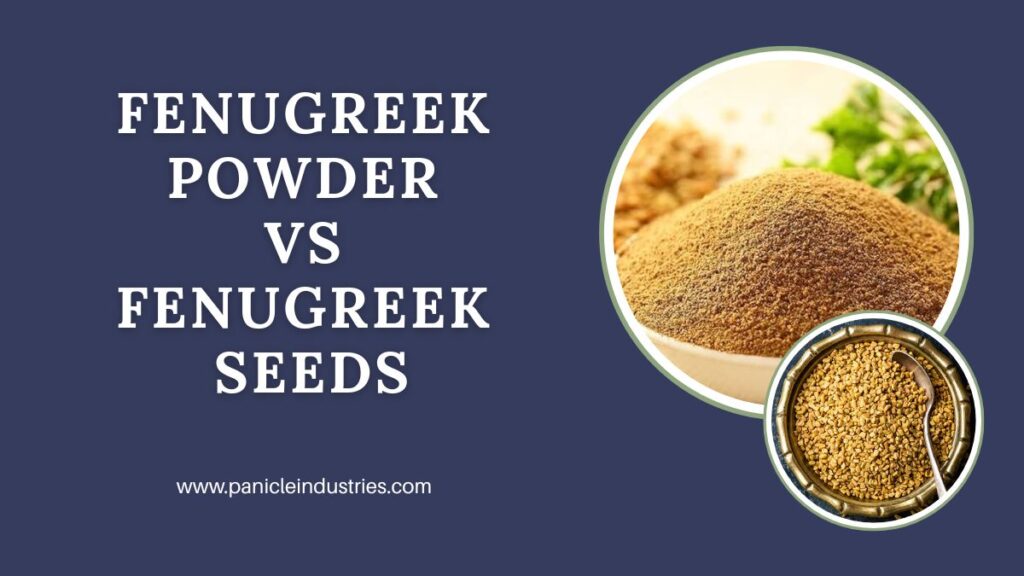
Fenugreek is a well-known herb that has been used for centuries in cooking and traditional wellness practices. You can find it in kitchens across India, the Middle East, and parts of Africa. Today, fenugreek is available in two common forms: fenugreek seeds and fenugreek powder. While both come from the same plant, they serve different purposes and offer slightly different benefits.
Many people often ask whether fenugreek powder is better than fenugreek seeds, or if seeds should be used instead. The answer depends on how you plan to use them, your cooking style, and your health goals. Understanding the differences can help you make the right choice.
In this blog, we will clearly compare fenugreek powder vs. fenugreek seeds based on nutrition, health benefits, usage, absorption, shelf life, and convenience. All information is based on trusted scientific and nutrition sources, not assumptions or exaggerated claims.
What Is Fenugreek?
Fenugreek (Trigonella foenum-graecum) is a plant belonging to the legume family. Its seeds are small, golden-brown, and slightly bitter in taste. Fenugreek leaves are also used as a vegetable, but in this article, we will focus only on fenugreek seeds and fenugreek powder.
Fenugreek has been documented in ancient texts such as Ayurveda and has also been studied in modern nutrition science. According to the National Center for Biotechnology Information (NCBI), fenugreek seeds contain fiber, protein, iron, and bioactive compounds like saponins and flavonoids.
Fenugreek Seeds: An Overview
Fenugreek seeds are the most traditional and natural form of fenugreek. People use them whole, soaked, sprouted, or lightly roasted.
Nutritional Profile of Fenugreek Seeds
According to data published by the USDA FoodData Central, fenugreek seeds contain:
- Dietary fiber (especially soluble fiber)
- Plant-based protein
- Iron and magnesium
- Small amounts of zinc and potassium
- Natural antioxidants
Because the seeds remain intact, they retain their original nutritional structure until consumption.
Also read: Recipes That Feature Roasted Coriander Seeds as a Key Ingredient
Health Benefits of Fenugreek Seeds
Fenugreek seeds support health in several ways when used correctly and in moderation.
1. Supports Digestive Health
Fenugreek seeds contain high soluble fiber, which helps slow digestion and supports gut health. Many people soak the seeds overnight to reduce bitterness and improve digestibility.
2. Helps Maintain Blood Sugar Levels
Research published in journals indexed by NCBI shows that fenugreek seeds may help regulate post-meal blood glucose levels due to their fiber content. This effect occurs because fiber slows carbohydrate absorption.
3. Supports Heart Health
The fiber and plant compounds in fenugreek seeds may help support healthy cholesterol levels when combined with a balanced diet, as suggested by studies in nutrition research journals.
Culinary Uses of Fenugreek Seeds
Fenugreek seeds are widely used in:
- Indian spice tempering
- Pickles and chutneys
- Sprouting for salads
- Herbal teas (after soaking)
However, their strong bitterness means they need careful handling in cooking.
Fenugreek Powder: An Overview
Fenugreek powder is made by grinding dried fenugreek seeds into a fine form. This process increases surface area, which affects flavor, absorption, and usability.
Nutritional Value of Fenugreek Powder
Fenugreek powder contains the same nutrients as fenugreek seeds, but the form changes how quickly the body absorbs them. Grinding does not remove nutrients, but it can slightly reduce shelf life if not stored properly.
Health Benefits of Fenugreek Powder
Fenugreek powder offers similar benefits to seeds, but it works differently due to its powdered form.
1. Faster Nutrient Absorption
Because the seeds are already ground, fenugreek powder allows quicker digestion and absorption. This makes it easier for people who have difficulty chewing seeds.
2. Convenient for Daily Use
Fenugreek powder blends easily into foods, warm water, or herbal mixtures. Many people find it easier to consume regularly compared to whole seeds.
3. Supports Skin and Hair Care
Fenugreek powder is commonly used in topical applications such as face packs and hair masks. This use is well-documented in traditional practices and supported by its antioxidant content.
Culinary Uses of Fenugreek Powder
Fenugreek powder is commonly used in:
- Spice blends
- Curries and gravies
- Marinades
- Flatbread dough
- Herbal drinks (in small quantities)
Because it is concentrated, even a small amount can add strong flavor.
Fenugreek Powder vs Fenugreek Seeds: Key Differences
1. Form and Texture
Fenugreek seeds are whole and hard, while fenugreek powder is fine and smooth. This difference affects cooking time and digestion.
2. Taste Intensity
Fenugreek powder tastes more intense and bitter than seeds because grinding releases natural oils faster.
3. Digestion and Absorption
Fenugreek powder digests faster, while seeds release nutrients slowly due to their intact fiber structure.
4. Ease of Use
Fenugreek powder is easier to measure and mix. Seeds require soaking, roasting, or grinding before use.
Which Is Better for Health?
There is no single answer to this question. Both forms offer benefits when used correctly.
- Choose fenugreek seeds if you prefer natural, slow-release nutrition and traditional cooking.
- Choose fenugreek powder if you need convenience and faster absorption.
According to nutrition experts and research summaries available through Harvard T.H. Chan School of Public Health, whole foods generally support better digestion, while processed forms improve convenience. Fenugreek follows the same principle.
Which Is Better for Cooking?
For cooking, the choice depends on the recipe:
- Use fenugreek seeds for tempering, pickles, and slow-cooked dishes.
- Use fenugreek powder for spice blends, gravies, and quick recipes.
Professional chefs often keep both forms in their kitchens to maintain flexibility.
Storage and Shelf Life Comparison
Fenugreek Seeds
- Shelf life: Up to 2–3 years
- Storage: Airtight container in a cool, dry place
- Less prone to oxidation
Fenugreek Powder
- Shelf life: 6–12 months
- Storage: Airtight container away from heat and light
- More sensitive to moisture and air
Improper storage can reduce aroma and nutritional quality, especially for powder.
Safety and Recommended Use
Fenugreek is generally safe when consumed in culinary amounts. However:
- Excessive intake may cause digestive discomfort
- Pregnant women should consult healthcare professionals before medicinal use
- People on medication should seek medical advice before regular supplementation
These recommendations align with safety notes published by WebMD and NCBI-reviewed studies.
Trusted Sources Used
To maintain accuracy and trustworthiness, this blog is based on information from:
- National Center for Biotechnology Information (NCBI)
- USDA FoodData Central
- Harvard T.H. Chan School of Public Health
- Peer-reviewed nutrition and food science journals
- WebMD (general safety guidelines)
No unverified or exaggerated claims have been included.
Conclusion
Fenugreek powder and fenugreek seeds both come from the same source, but they serve different needs. Seeds offer traditional value, slower digestion, and longer shelf life. Powder offers convenience, quicker absorption, and ease of use in modern cooking.
Instead of choosing one over the other, many people benefit from keeping both forms available. When used in moderation and stored properly, fenugreek can be a valuable addition to a balanced diet.
By understanding the real differences between fenugreek powder and fenugreek seeds, you can make informed choices that suit your health goals and cooking habits—without relying on myths or exaggerated claims.