
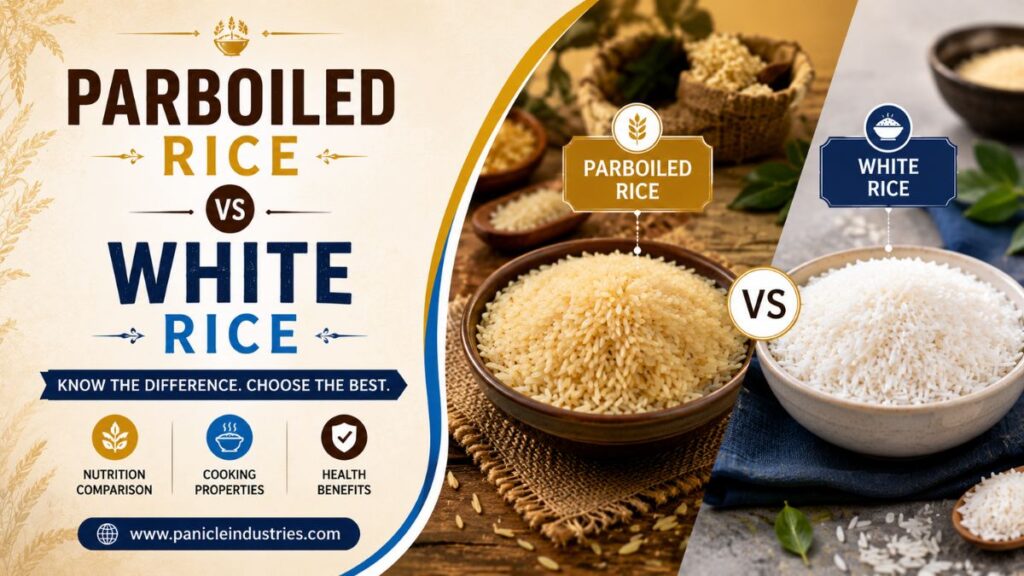
Rice feeds more than half of the world’s population. It appears in homes, restaurants, and food industries across cultures. Among the many varieties available today, parboiled rice and white rice remain two of the most commonly consumed types. Many people confuse these two or assume they offer the same nutritional value, taste, and health benefits.
This guide explains the real differences between parboiled rice vs white rice using verified information from trusted food and nutrition authorities. The goal is to help you make an informed decision based on health, cooking needs, and lifestyle without exaggeration or myths.
What Is Parboiled Rice?
Parboiled rice is rice that undergoes a hydrothermal treatment before milling. This process includes soaking, steaming, and drying the rice while it remains inside its husk. After this treatment, manufacturers remove the husk and bran layers.
This method does not mean the rice is partially cooked for consumption. Instead, it changes the grain’s internal structure.
How Parboiling Changes Rice
During parboiling, water-soluble nutrients from the bran move into the grain’s core. This nutrient migration explains why parboiled rice retains more vitamins and minerals than regular white rice after milling.
The Food and Agriculture Organization (FAO) recognizes parboiling as a traditional processing method that improves rice’s nutritional retention and storage stability.
What Is White Rice?
White rice is milled rice with its husk, bran, and germ removed. This process gives white rice its familiar smooth texture and mild taste. However, milling removes most of the fiber and several essential micronutrients.
Many countries enrich white rice with added nutrients such as iron and B vitamins. Still, enrichment does not fully restore the natural nutritional profile lost during milling.
According to the USDA, white rice remains a refined grain, even when enriched.
Parboiled Rice vs White Rice: Processing Differences
| Feature | Parboiled Rice | White Rice |
|---|---|---|
| Processing method | Soaked, steamed, dried before milling | Direct milling after harvesting |
| Nutrient retention | Higher | Lower |
| Grain firmness | Firmer, separate grains | Softer texture |
| Cooking behavior | Less sticky | More fluffy or sticky |
The processing method forms the foundation of every difference you notice later—nutrition, texture, taste, and cooking performance.
Nutritional Comparison: Parboiled Rice vs White Rice
Nutrition remains one of the most searched aspects when comparing rice types.
Key Nutritional Differences
Parboiled rice contains more naturally retained nutrients than white rice, especially:
- Thiamine (Vitamin B1)
- Niacin (Vitamin B3)
- Vitamin B6
- Magnesium
- Phosphorus
Research published by the International Rice Research Institute (IRRI) confirms that parboiling helps preserve up to 80% of certain B vitamins, compared to significantly lower levels in white rice.
White rice mainly provides carbohydrates and small amounts of protein. Enriched white rice includes added vitamins, but these additions do not fully match naturally retained nutrients.
Fiber Content and Digestive Impact
Neither parboiled rice nor white rice qualifies as a high-fiber food. However, parboiled rice contains slightly more fiber due to partial nutrient retention from the bran.
This small fiber difference affects digestion:
- Parboiled rice digests more slowly
- White rice digests faster
People with sensitive digestion often tolerate white rice well. Those seeking better digestive balance may prefer parboiled rice.
Glycemic Index: Blood Sugar Considerations
The glycemic index (GI) measures how fast a food raises blood sugar levels.
Glycemic Index Comparison
- Parboiled rice: Medium GI
- White rice: High GI
Studies referenced by the Harvard T.H. Chan School of Public Health show that parboiled rice causes a slower glucose release due to its compact starch structure formed during steaming.
This property makes parboiled rice a better option for people managing blood sugar, including those with diabetes or insulin resistance.
Taste, Texture, and Cooking Behavior
Taste and texture strongly influence consumer preference.
Parboiled Rice Characteristics
- Firm texture
- Long, separate grains
- Mild, slightly nutty taste
- Less sticky after cooking
White Rice Characteristics
- Soft and fluffy
- Neutral flavor
- Slightly sticky depending on variety
- Absorbs sauces easily
Professional kitchens often use parboiled rice for large-scale cooking because it resists overcooking and remains visually appealing.
Cooking Time and Water Absorption
Parboiled Rice Cooking
Parboiled rice takes slightly longer to cook than white rice. The grains absorb water slowly due to their hardened structure.
Benefits include:
- Reduced risk of mushy texture
- Better grain separation
- Consistent results in bulk cooking
White Rice Cooking
White rice cooks faster and requires less water. However, it overcooks easily if not monitored carefully.
Shelf Life and Storage Stability
Parboiled rice has a longer shelf life than white rice.
The steaming process:
- Reduces microbial activity
- Improves resistance to insects
- Enhances storage stability
According to FAO food storage guidelines, parboiled rice performs better in hot and humid climates, making it a preferred choice in many tropical regions.
Parboiled Rice vs White Rice for Weight Management
Weight control depends on overall diet quality, not a single ingredient. Still, rice choice plays a role.
Parboiled Rice Benefits
- Slower digestion
- Better satiety
- Lower glycemic response
These factors help control hunger and prevent sudden energy crashes.
White Rice Considerations
White rice provides quick energy but may increase hunger sooner due to rapid digestion.
Nutrition experts often recommend pairing white rice with fiber-rich vegetables and protein to balance its effects.
Suitability for Different Diets
Athletes and Active Individuals
White rice works well for:
- Post-workout meals
- Rapid energy replenishment
Diabetic or Pre-Diabetic Individuals
Parboiled rice offers better blood sugar control due to:
- Medium glycemic index
- Slower carbohydrate absorption
Elderly and Digestive-Sensitive Individuals
White rice remains easier to chew and digest, making it suitable for softer diets.
Environmental and Processing Considerations
Parboiling requires additional water and energy. However, it also reduces rice waste during milling by strengthening grains.
The International Rice Research Institute notes that parboiled rice produces fewer broken grains, which improves overall yield efficiency.
Common Myths About Parboiled Rice
“Parboiled rice is unhealthy”
This claim is false. Parboiled rice retains more natural nutrients than white rice.
“Parboiled rice is partially cooked”
Parboiled rice still requires full cooking before consumption.
“White rice has no nutrients”
White rice contains carbohydrates, protein, and added nutrients when enriched.
Which One Should You Choose?
There is no single winner in the parboiled rice vs white rice debate. The better option depends on your needs.
Choose parboiled rice if you want:
- Better nutrient retention
- Lower glycemic impact
- Firmer texture
- Improved storage life
Choose white rice if you want:
- Faster cooking
- Soft texture
- Neutral flavor
- Easy digestion
Both types can fit into a healthy diet when consumed in balanced portions.
Final Verdict
Parboiled rice and white rice serve different purposes. Parboiled rice offers better nutrient retention, steadier energy release, and cooking stability. White rice delivers simplicity, comfort, and quick energy.
Neither rice type is inherently bad. What matters is portion control, meal balance, and dietary context.
By choosing the right rice for your lifestyle, you improve both nutrition and enjoyment—without sacrificing authenticity or health.
Frequently Asked Questions
1. Is parboiled rice healthier than white rice?
Parboiled rice retains more natural vitamins and minerals during processing, making it a more nutrient-dense option than regular white rice.
2. Does parboiled rice raise blood sugar less than white rice?
Yes, parboiled rice generally has a lower glycemic index, which may help support steadier blood sugar levels than white rice.
3. Which rice is better for weight loss: parboiled or white rice?
Parboiled rice digests more slowly and may help you feel full longer, making it a popular choice for weight management diets.
4. Why do chefs prefer parboiled rice for large meals?
Parboiled rice stays firm, separate, and less sticky after cooking, making it ideal for buffets, catering, and bulk meal preparation.
5. What is the main difference between parboiled rice and white rice?
Parboiled rice is steamed before milling to retain nutrients, while white rice is fully milled, resulting in a softer texture and fewer nutrients.