
Rice is a daily staple for millions of people around the world. However, not all rice varieties are the same. Each type has its own taste, texture, aroma, and nutritional value. Among the most popular varieties, Basmati rice and Sona Masuri rice stand out, especially in South Asian households. Many people often ask which one is better for daily cooking, health, and special meals. This comparison becomes important when you want the right balance of flavor, nutrition, and affordability.
This blog explains Basmati vs Sona Masuri in a clear and simple way. You will learn about their origin, grain structure, cooking behavior, nutrition, health impact, and best uses. By the end, you will know exactly which rice suits your needs and lifestyle better.
Understanding Rice Varieties
Rice varieties differ based on grain length, starch content, aroma, and cultivation methods. These differences affect how rice cooks and tastes. According to the Food and Agriculture Organization (FAO), rice types are mainly classified as long-grain, medium-grain, and short-grain.
Basmati belongs to the long-grain aromatic rice group, while Sona Masuri falls under medium-grain non-aromatic rice. This basic difference influences everything from texture to digestion.
What Is Basmati Rice?
Basmati rice is a premium long-grain rice known for its natural aroma and fluffy texture. Farmers mainly grow it in the Indian subcontinent, especially in northern India and Pakistan, near the Himalayan foothills.
The word “Basmati” means fragrant, which explains its unique smell. Each grain elongates almost twice its length after cooking, without becoming sticky. Because of these qualities, many people use Basmati rice for biryanis, pulao, and festive meals.
Key Characteristics of Basmati Rice
- Long and slender grains
- Natural aroma due to a compound called 2-acetyl-1-pyrroline
- Non-sticky texture after cooking
- Aged varieties available for better flavor
What Is Sona Masuri Rice?
Sona Masuri rice is a popular medium-grain rice grown mainly in southern India. Farmers cultivate it widely in states like Andhra Pradesh, Telangana, and Karnataka.
This rice has a mild flavor and soft texture. It cooks faster than Basmati and absorbs water easily. Many households prefer Sona Masuri rice for daily meals because it is light, affordable, and easy to digest.
Key Characteristics of Sona Masuri Rice
- Medium-length grains
- Soft and slightly sticky texture
- Mild aroma
- Lower cost compared to Basmati
Also read: Purple Rice vs White Rice
Grain Length and Appearance: Basmati vs Sona Masuri
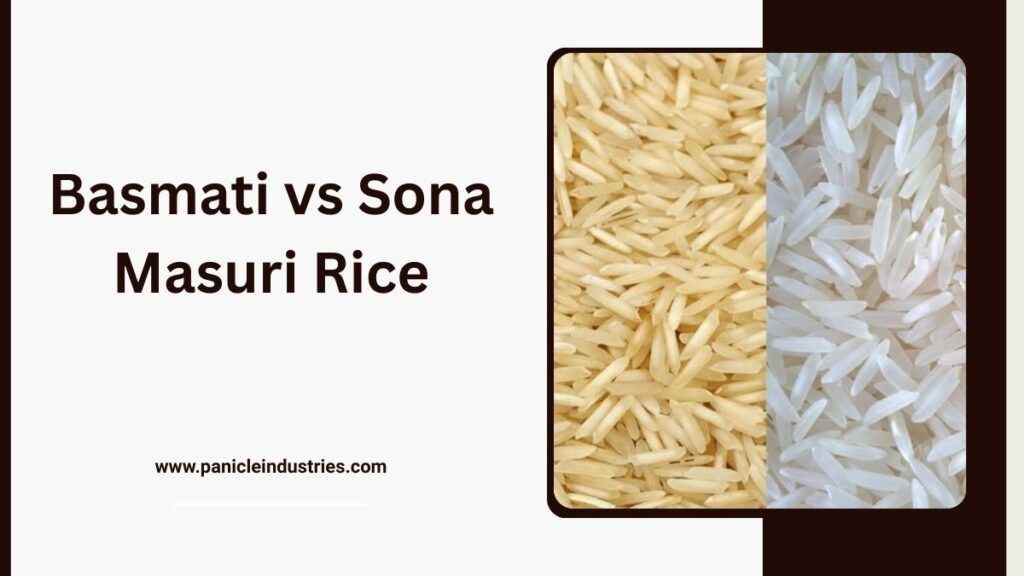
The most visible difference between Basmati vs Sona Masuri is grain length.
Basmati rice grains are long, thin, and elegant. After cooking, the grains remain separate and fluffy. This makes Basmati visually appealing on the plate.
Sona Masuri grains are shorter and broader. Once cooked, the rice becomes soft and slightly clumped. This texture works well for comfort foods and everyday meals.
Aroma and Taste Comparison
Aroma plays a major role when choosing rice.
Basmati rice has a distinct fragrance even before cooking. The aroma becomes stronger after cooking, making dishes more flavorful without extra spices.
Sona Masuri rice has little to no aroma. Its taste remains neutral, which allows curries and side dishes to dominate the flavor.
People who enjoy aromatic meals often choose Basmati. Those who prefer subtle taste usually choose Sona Masuri.
Cooking Behavior and Texture
Cooking results matter greatly in daily kitchens.
Basmati rice needs careful washing and soaking before cooking. This process helps the grains elongate fully. Once cooked, Basmati remains light and non-sticky.
Sona Masuri rice cooks quickly and needs less water. It turns soft and moist, which suits dishes like rice bowls, lemon rice, or curd rice.
According to culinary experts, choosing rice based on texture improves overall meal satisfaction.
Nutritional Comparison: Basmati vs Sona Masuri
Both rice varieties provide carbohydrates and energy, but their nutritional profiles differ slightly.
Calories and Carbohydrates
- Basmati rice has slightly fewer calories per cooked cup
- Sona Masuri rice provides quick energy due to faster digestion
Glycemic Index (GI)
The glycemic index shows how fast food raises blood sugar.
- Basmati rice has a lower glycemic index, especially aged Basmati
- Sona Masuri rice has a moderate to high GI
According to studies published by the American Journal of Clinical Nutrition, low-GI foods help manage blood sugar levels better.
Also read: Red Rice vs Brown Rice
Which Rice Is Better for Diabetes?
People with diabetes often focus on blood sugar control.
Basmati rice, particularly aged and brown Basmati, releases glucose slowly. This helps reduce sudden blood sugar spikes.
Sona Masuri rice digests faster and may increase blood sugar more quickly if eaten in large portions.
Doctors often recommend portion control regardless of rice type. However, Basmati rice usually works better for controlled diets.
Digestibility and Gut Health
Digestibility plays an important role in daily meals.
Sona Masuri rice is soft and easy to digest. Many doctors recommend it for children, elderly people, and those recovering from illness.
Basmati rice also digests well, but its firmer texture may feel heavier for some people.
Choosing rice based on digestive comfort improves overall well-being.
Culinary Uses: Where Each Rice Works Best
Best Uses of Basmati Rice
- Biryani
- Pulao
- Jeera rice
- Special occasion dishes
Best Uses of Sona Masuri Rice
- Daily meals
- South Indian dishes
- Lemon rice and tamarind rice
- Curried rice bowls
Professional chefs select rice carefully because the wrong variety can affect taste and texture.
Price and Availability
Cost often influences buying decisions.
Basmati rice costs more due to longer aging, lower yield, and export demand. Premium varieties may age for up to two years before sale.
Sona Masuri rice remains affordable and widely available in local markets. This makes it a popular choice for everyday use.
Shelf Life and Storage
Basmati rice improves with age. Stored properly, it develops better aroma and cooking quality.
Sona Masuri rice works best when consumed fresh. Long storage may reduce softness and taste.
Both types require dry, airtight storage to avoid pests and moisture.
Environmental and Farming Factors
Basmati rice cultivation depends on specific climate and soil conditions. Farmers often use traditional methods that preserve quality.
Sona Masuri rice grows faster and adapts to various climates. This increases production efficiency and lowers cost.
Sustainable farming practices benefit both consumers and farmers in the long term.
Which Rice Should You Choose?
The choice between Basmati vs Sona Masuri depends on your needs.
Choose Basmati rice if:
- You enjoy aromatic rice
- You cook special dishes often
- You want lower glycemic impact
Choose Sona Masuri rice if:
- You need rice for daily meals
- You prefer soft texture
- You want affordable options
Both rice types fit well into a balanced diet when eaten in moderation.
Trusted Sources
- Food and Agriculture Organization (FAO)
- American Journal of Clinical Nutrition
- Indian Council of Medical Research (ICMR)
- Harvard School of Public Health – Whole Grains Research
These sources provide verified information on rice nutrition and health impact.
Conclusion
Basmati and Sona Masuri rice both hold an important place in global kitchens. Each variety offers unique benefits based on aroma, texture, nutrition, and cost. Basmati rice stands out for its fragrance, long grains, and lower glycemic index, making it ideal for special meals and mindful eating. Sona Masuri rice works best for everyday cooking due to its softness, quick cooking time, and affordability.
There is no single best rice for everyone. Your health goals, taste preferences, and cooking style should guide your choice. When consumed in proper portions and combined with a balanced diet, both rice varieties support healthy living. Understanding these differences helps you make smarter and more confident food choices every day.