
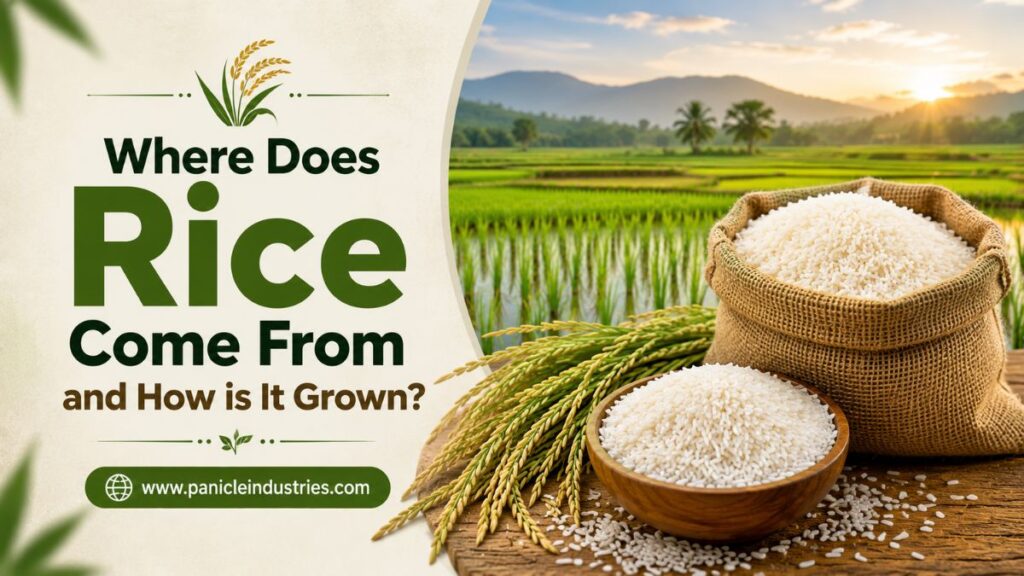
Rice is one of the most widely consumed staple foods in the world, feeding more than half of the global population every day. Whether it’s served as steamed rice, biryani, sushi, fried rice, or risotto, this versatile grain is an essential part of countless cuisines and cultures. But have you ever wondered where does rice come from and how is it grown?
The journey of rice begins long before it reaches your kitchen. From carefully selected seeds and fertile fields to harvesting and processing, growing rice requires the right climate, skilled farming practices, and careful management at every stage. Understanding how rice is cultivated not only helps us appreciate this remarkable crop but also highlights the dedication of the farmers who produce it.
In this blog, we’ll explore where rice comes from, the regions where it is grown, and the step-by-step process of cultivating rice from seed to harvest.
Where Does Rice Come From?
Rice comes from the seeds of the rice plant, scientifically known as Oryza sativa. It is believed to have been first cultivated thousands of years ago in Asia, where it gradually became one of the world’s most important food crops.
Over time, rice cultivation spread to many parts of the world through trade, migration, and agricultural development. Today, it is grown on every continent except Antarctica and is a staple food for billions of people.
Although rice is produced in many countries, Asia remains the largest producer and consumer of rice, accounting for the majority of global production.
| Also read: Rice Bran Oil Manufacturing Process |
Which Countries Grow the Most Rice?
Rice is cultivated in more than 100 countries, but a few nations dominate global production.
Some of the leading rice-producing countries include:
- China
- India
- Indonesia
- Bangladesh
- Vietnam
- Thailand
- Myanmar
- Pakistan
- Philippines
- Brazil
Each region grows rice varieties suited to its local climate, soil conditions, and consumer preferences. For example, India and Pakistan are renowned for aromatic basmati rice, while countries like Japan are known for premium short-grain rice used in sushi.
Why Is Rice Grown in Certain Regions?
Rice thrives under specific environmental conditions. Successful cultivation depends on a combination of favorable climate, fertile soil, and adequate water.
The best rice-growing regions generally offer:
- Warm temperatures
- Plenty of sunlight
- Reliable rainfall or irrigation
- Fertile soils
- A long growing season
These conditions allow rice plants to develop healthy roots, strong stems, and high-quality grains.
How Is Rice Grown?
To understand where rice comes from and how it is grown, it’s helpful to look at each stage of the cultivation process.
Growing rice involves careful planning, proper field management, and continuous monitoring from planting until harvest.
Step 1: Selecting Quality Rice Seeds
Every successful rice crop begins with selecting high-quality seeds.
Farmers choose seed varieties based on several factors, including:
- Climate suitability
- Yield potential
- Disease resistance
- Grain quality
- Market demand
For example, farmers growing basmati rice select certified basmati seed varieties known for their long grains and natural aroma.
Using healthy, certified seeds improves germination rates and helps establish a strong crop from the very beginning.
Step 2: Preparing the Land
Before planting, farmers prepare the fields to create ideal growing conditions.
Land preparation usually includes:
- Plowing the soil
- Removing weeds and previous crop residues
- Adding organic matter or fertilizers
- Leveling the field
A well-leveled field ensures water spreads evenly across the land, allowing rice plants to grow uniformly.
In many modern farms, laser land leveling is used to improve irrigation efficiency and reduce water wastage.
Step 3: Planting the Rice
Rice can be planted using different methods depending on local farming practices, labor availability, and available machinery.
Nursery and Transplanting Method
One of the most common methods involves first growing rice seedlings in a nursery.
After about three to four weeks, the young plants are carefully transplanted into flooded fields.
This method offers several benefits:
- Better plant spacing
- Strong root development
- Easier weed management
- Higher yield potential
It remains the preferred technique in many rice-growing countries.
Direct Seeding Method
Some farmers sow rice seeds directly into prepared fields instead of transplanting seedlings.
Direct seeding can be done:
- By hand
- Using seed drills
- With specialized planting machines
This method reduces labor costs and speeds up planting, making it increasingly popular in mechanized farming systems.
Step 4: Providing Water Through Irrigation
Water is one of the most important requirements for rice cultivation.
Unlike many cereal crops, rice grows well in fields that remain consistently moist or shallowly flooded during much of the growing season.
Farmers obtain irrigation water from sources such as:
- Rivers
- Canals
- Reservoirs
- Tube wells
- Rainwater harvesting systems
Proper irrigation helps:
- Support healthy root growth
- Maintain soil moisture
- Reduce weed competition
- Improve grain development
Today, many farmers are also adopting water-saving techniques such as alternate wetting and drying to conserve resources while maintaining good yields.
Step 5: Crop Care During the Growing Season
After planting, rice requires regular care to ensure healthy growth.
Farmers closely monitor the crop throughout the growing season and carry out several important tasks.
Nutrient Management
Rice plants require essential nutrients like nitrogen, phosphorus, and potassium.
Balanced fertilization promotes:
- Healthy leaves
- Strong stems
- Better flowering
- Higher grain production
Many farmers also incorporate organic manure or compost to improve soil fertility and long-term productivity.
Weed Control
Weeds compete with rice plants for sunlight, nutrients, and water.
To minimize competition, farmers use a combination of:
- Manual weeding
- Mechanical weeders
- Approved herbicides
Timely weed control allows rice plants to grow more vigorously and produce higher yields.
Pest and Disease Management
Rice crops may be affected by insects and plant diseases if not properly monitored.
Farmers regularly inspect their fields for signs of:
- Stem borers
- Leaf folders
- Brown planthoppers
- Blast disease
- Bacterial leaf blight
Modern farming increasingly relies on Integrated Pest Management (IPM), which combines preventive measures, resistant varieties, biological control, and responsible pesticide use to protect crops while reducing environmental impact.
Step 6: Monitoring Crop Growth
As the rice plants mature, farmers continue observing the crop to ensure healthy development.
Regular field inspections help identify problems early and allow timely corrective actions.
During this stage, farmers monitor:
- Plant height
- Leaf color
- Water levels
- Nutrient deficiencies
- Pest activity
- Grain formation
Consistent monitoring helps maximize both grain quality and overall yield.
Step 7: Harvesting the Rice
Harvesting is one of the most important stages in rice cultivation. Timing is critical because harvesting too early can result in immature grains, while harvesting too late may lead to grain loss due to shattering, pests, or adverse weather.
Farmers usually determine that rice is ready for harvest when:
- The plants turn golden yellow.
- Most grains become firm and fully mature.
- The moisture content drops to a suitable level.
- The panicles begin to bend under the weight of the grains.
Harvesting Methods
Rice can be harvested using different techniques depending on farm size and available resources.
Manual Harvesting
In many small farms, farmers use sickles to cut the mature rice plants by hand. Although labor-intensive, this method allows careful handling of the crop.
Mechanical Harvesting
Large commercial farms often use combine harvesters, which cut, thresh, and clean the rice in a single operation. This method saves time, reduces labor costs, and improves harvesting efficiency.
Step 8: Threshing and Drying
After harvesting, the rice grains remain attached to the stalks. The next step is threshing, which separates the grains from the harvested plants.
Modern threshing machines perform this task quickly while minimizing grain damage. Smaller farms may still use traditional methods, but mechanical threshers are becoming increasingly common.
Drying the Paddy
Freshly harvested rice, known as paddy, contains a relatively high moisture level. If stored immediately, it may develop mold or spoil.
To prevent this, farmers dry the paddy until it reaches a safe moisture content.
Drying methods include:
- Natural sun drying
- Mechanical drying in rice mills
Proper drying offers several advantages:
- Reduces spoilage
- Improves storage life
- Minimizes grain breakage during milling
- Preserves grain quality
Step 9: Milling the Rice
Once the paddy has dried sufficiently, it is transported to a rice mill for processing.
Milling transforms harvested paddy into the edible rice sold in markets.
The milling process generally includes:
Dehusking
The tough outer husk is removed, producing brown rice, which still contains the nutritious bran layer.
Whitening and Polishing
For white rice, additional milling removes the bran and germ layers. Polishing gives the grains their smooth appearance and bright color.
Depending on consumer preference, rice may be sold as:
- Brown rice
- White rice
- Parboiled rice
Each type undergoes a slightly different processing method.
Step 10: Grading and Quality Control
Not all rice grains are identical. Before packaging, the rice is carefully graded and inspected.
Modern rice mills use advanced sorting machines to separate grains based on:
- Length
- Thickness
- Color
- Shape
- Broken grain percentage
Optical color sorters use high-resolution cameras to detect damaged or discolored grains, ensuring only premium-quality rice reaches consumers.
Quality control teams also test rice for:
- Moisture content
- Cleanliness
- Aroma
- Cooking quality
- Food safety standards
These inspections help maintain consistency and customer satisfaction.
Step 11: Packaging and Distribution
Once the rice passes quality inspection, it is weighed and packed into hygienic, moisture-resistant bags.
Common retail pack sizes include:
- 1 kg
- 2 kg
- 5 kg
- 10 kg
- 25 kg
Proper packaging helps:
- Preserve freshness
- Protect against moisture
- Prevent contamination
- Extend shelf life
After packaging, rice is distributed to wholesalers, supermarkets, restaurants, exporters, and consumers around the world.
Modern Technology in Rice Farming
Rice cultivation has evolved significantly over the years. Farmers now use advanced technologies to improve efficiency, reduce costs, and increase productivity.
Some modern innovations include:
- GPS-guided tractors
- Laser land leveling
- Drone-based crop monitoring
- Smart irrigation systems
- Mechanical rice transplanters
- Combine harvesters
- Soil testing equipment
These technologies help farmers use water, fertilizer, and labor more efficiently while producing healthier crops.
Sustainable Rice Cultivation
As the global demand for rice continues to grow, sustainable farming practices are becoming increasingly important.
Sustainable rice cultivation aims to produce high yields while conserving natural resources and protecting the environment.
Some widely adopted sustainable practices include:
- Efficient irrigation methods
- Crop rotation
- Organic manure application
- Balanced fertilizer use
- Integrated Pest Management (IPM)
- Reduced chemical inputs
- Soil conservation techniques
These methods not only support environmental health but also improve long-term farm productivity.
Why Understanding Rice Cultivation Matters?
Learning where rice comes from and how it is grown helps consumers make more informed food choices and appreciate the effort involved in producing one of the world’s most important staple crops.
For students, it provides valuable insight into agriculture, plant biology, and sustainable farming. For businesses in the food industry, understanding the cultivation process supports better sourcing, quality assurance, and supply chain management.
Whether you’re enjoying a simple bowl of steamed rice or a flavorful biryani, every grain represents months of careful planning, hard work, and expertise.
Conclusion
So, where does rice come from and how is it grown? Rice comes from the seeds of the Oryza sativa plant and is cultivated in warm, fertile regions around the world, particularly across Asia. Its journey begins with selecting quality seeds and preparing the land, followed by planting, irrigation, crop care, harvesting, drying, milling, and packaging.
Each stage plays a crucial role in producing the high-quality rice we enjoy every day. Modern technology and sustainable farming practices continue to improve productivity while helping farmers conserve resources and protect the environment.
Understanding the complete journey of rice—from the field to your plate—not only deepens our appreciation for this essential crop but also highlights the dedication of millions of farmers who work tirelessly to feed the world.
Frequently Asked Questions
1. Where does rice originally come from?
Rice is believed to have originated in Asia thousands of years ago and is now cultivated in more than 100 countries around the world.
2. How is rice grown step by step?
Rice is grown through seed selection, land preparation, planting, irrigation, crop care, harvesting, drying, milling, grading, and packaging.
3. Which countries produce the most rice?
China, India, Indonesia, Bangladesh, Vietnam, Thailand, and Pakistan are among the world’s leading rice-producing countries.
4. Why do rice fields contain water?
Flooded fields help suppress weeds, maintain soil moisture, support healthy rice growth, and improve overall crop productivity during cultivation.
5. How long does it take for rice to grow?
Most rice varieties take about 90 to 150 days from planting to harvest, depending on the variety, climate, and growing conditions.