
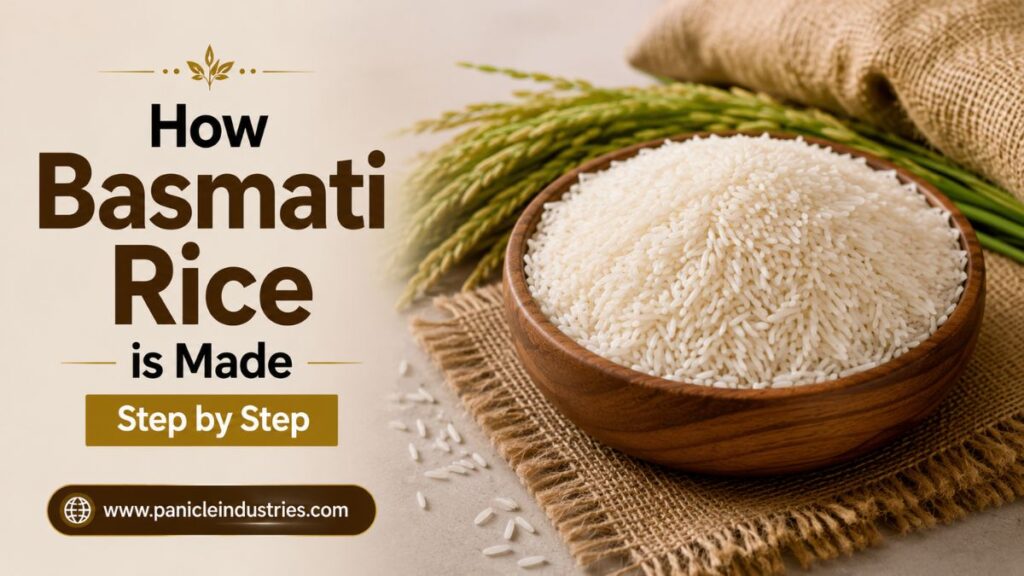
Basmati rice is one of the world’s most prized rice varieties, loved for its long, slender grains, delicate aroma, and fluffy texture. It is a staple in many households and is widely used in dishes like biryani, pulao, fried rice, and various international cuisines. But have you ever wondered how basmati rice is made step by step before it reaches your kitchen?
The journey of basmati rice is much more than simply harvesting rice from a field. It involves careful cultivation, precise harvesting, advanced milling techniques, aging, quality testing, and hygienic packaging. Every stage plays an important role in preserving the rice’s signature fragrance, texture, and cooking quality.
Whether you’re a curious home cook, a food enthusiast, or someone interested in the rice industry, understanding how basmati rice is made helps you appreciate the effort behind every grain. In this blog guide, we’ll walk through the complete production process, from planting the seeds to preparing premium-quality rice for consumers.
What Makes Basmati Rice Special?
Before exploring how basmati rice is made step by step, it’s important to understand what makes this rice unique.
Basmati rice is known for several characteristics that distinguish it from ordinary long-grain rice:
- Naturally long and slender grains
- Pleasant floral aroma
- Soft, fluffy texture after cooking
- Excellent grain elongation
- Non-sticky consistency
- Rich culinary heritage
These qualities are the result of both natural growing conditions and careful processing after harvest.
| Sorry for breaking your reading flow, but if you need the best quality basmati and non-basmati rice, you can check out our (panicleindustries) premium selection. We ensure top-notch quality for every grain! |
Where Is Basmati Rice Grown?
Authentic basmati rice is primarily cultivated in the fertile plains at the foothills of the Himalayas. This region provides ideal conditions for producing premium-quality grains.
Several environmental factors contribute to its exceptional quality:
- Fertile alluvial soil
- Clean irrigation water
- Warm days and cool nights
- Seasonal rainfall
- Suitable humidity during the growing season
These natural conditions help develop the aroma, grain length, and texture that basmati rice is famous for worldwide.
How Basmati Rice Is Made Step by Step
The production process begins months before harvesting. Farmers carefully monitor every stage to ensure healthy crops and high-quality grains.
Step 1: Selecting High-Quality Seeds
Everything starts with selecting premium basmati rice seeds.
Farmers choose certified seed varieties that are known for producing:
- Long grains
- Strong aroma
- High yield
- Disease resistance
- Excellent cooking quality
Using quality seeds is essential because they directly influence the final product.
Before planting, seeds are often cleaned and tested to ensure good germination.
Step 2: Preparing the Fields
Healthy crops require well-prepared land.
Farmers begin by plowing the fields several times to loosen the soil and improve water retention. Organic matter or fertilizers may be added to increase soil fertility.
The land is then leveled carefully. A level field ensures even water distribution, which helps rice plants grow uniformly.
Proper field preparation also reduces weed growth and improves irrigation efficiency throughout the season.
Step 3: Sowing the Seeds
Basmati rice is generally grown using two methods.
Nursery Method
Many farmers first sow seeds in a small nursery area.
After several weeks, young seedlings are carefully transplanted into the main field.
This method offers several advantages:
- Better plant spacing
- Stronger root development
- Easier weed management
- Improved crop monitoring
Direct Seeding
Some farmers use direct seeding, where seeds are planted directly into the prepared field using modern equipment.
This method reduces labor and can save water under suitable conditions.
Step 4: Growing and Caring for the Crop
Once the seedlings begin growing, regular crop management becomes essential.
Throughout the growing season, farmers focus on:
Irrigation
Rice requires consistent moisture during different growth stages.
Farmers carefully regulate irrigation to avoid both drought stress and excessive flooding.
Weed Control
Weeds compete with rice plants for nutrients, sunlight, and water.
Manual weeding, mechanical tools, or approved weed management practices help maintain healthy crop growth.
Nutrient Management
Balanced fertilizers provide essential nutrients such as nitrogen, phosphorus, and potassium.
Proper nutrient management supports healthy stems, better grain formation, and improved yield.
Pest and Disease Monitoring
Farmers regularly inspect their fields for insects and diseases.
Early detection allows timely treatment, reducing crop losses while maintaining grain quality.
Good agricultural practices throughout this stage have a significant impact on the final quality of basmati rice.
Step 5: Harvesting the Rice
Harvesting begins once the rice plants reach full maturity.
Farmers carefully monitor the crop to determine the right harvest time. Harvesting too early can result in immature grains, while harvesting too late may increase grain breakage and losses.
Signs that basmati rice is ready for harvest include:
- Golden-yellow plants
- Fully developed grains
- Reduced moisture content
- Firm kernels
Depending on the farm size, harvesting may be done using modern combine harvesters or traditional harvesting methods.
Careful harvesting minimizes grain damage and preserves quality.
Step 6: Threshing the Paddy
After harvesting, the rice grains are still attached to the stalks.
The next step is threshing, where the grains are separated from the harvested plants.
Threshing can be done using:
- Mechanical threshers
- Combine harvesters
- Traditional methods in smaller farming operations
After threshing, farmers collect the rice in its natural protective husk. At this stage, it is known as paddy rice.
The grains still contain moisture and cannot be milled immediately. They require proper drying before further processing.
Step 7: Drying the Paddy
Drying is one of the most important stages in how basmati rice is made step by step.
Freshly harvested paddy contains relatively high moisture. If stored without drying, it may develop mold, spoilage, or discoloration.
Farmers reduce the moisture content using either:
Natural Sun Drying
The paddy is spread evenly over clean drying surfaces and turned regularly to ensure uniform drying.
Mechanical Drying
Large rice processing facilities use modern drying equipment that controls temperature and airflow for faster and more consistent results.
Proper drying offers several benefits:
- Reduces spoilage
- Improves milling quality
- Minimizes grain breakage
- Extends storage life
- Preserves grain quality
Once the moisture reaches the desired level, the dried paddy is transported to rice mills for further processing.
Step 8: Removing the Husk (Dehusking)
Once the paddy reaches the rice mill, the first processing stage is dehusking, also known as hulling. During this step, specialized machines remove the tough outer husk that protects each grain.
The husk is not edible, so removing it reveals brown basmati rice, which still retains its nutrient-rich bran layer.
Modern rice mills use rubber roll shellers or similar equipment that remove the husk while minimizing grain breakage. This helps preserve the long, slender shape that premium basmati rice is known for.
Step 9: Milling and Polishing
After dehusking, the rice undergoes milling.
During milling, the bran and germ layers are removed to produce the familiar white basmati rice found in most grocery stores.
Why Is Polishing Done?
Polishing improves the rice by:
- Giving it a bright, clean appearance
- Creating a smoother surface
- Increasing consumer appeal
- Improving consistency
The amount of polishing depends on the type of rice being produced. Some consumers prefer brown basmati rice, which skips most of this polishing process and retains more fiber and nutrients.
Step 10: Grading and Sorting
Not every rice grain is exactly the same size or quality. After milling, advanced grading machines separate the rice according to several factors.
These include:
- Grain length
- Grain thickness
- Broken grains
- Color
- Overall quality
Modern processing plants use optical color sorters equipped with cameras and sensors to detect damaged, discolored, or defective grains. These machines remove unwanted grains with remarkable accuracy, ensuring only high-quality rice reaches consumers.
This step is especially important for premium export-quality basmati rice, where consistency is a key quality standard.
Step 11: Aging the Rice
One of the most unique steps in how basmati rice is made step by step is the aging process.
Unlike many other rice varieties, premium basmati rice is often aged before being sold. Freshly milled rice is good, but aged basmati develops better cooking qualities.
Why Is Basmati Rice Aged?
During storage, natural changes occur inside the grain that improve its performance during cooking.
Properly aged basmati rice generally offers:
- Better aroma
- Longer grain elongation
- Fluffier texture
- Less stickiness
- Improved cooking quality
Depending on the manufacturer and product grade, basmati rice may be aged for several months or even longer under carefully controlled storage conditions.
This aging process is one reason premium basmati rice often commands a higher price than ordinary rice.
Step 12: Quality Inspection
Before packaging, every batch of rice undergoes strict quality checks.
Quality control teams inspect the rice for several important characteristics.
Physical Quality
Inspectors examine:
- Grain length
- Uniformity
- Broken grain percentage
- Cleanliness
- Moisture content
Cooking Quality
Sample batches are cooked to evaluate:
- Aroma
- Texture
- Grain elongation
- Taste
- Appearance after cooking
Food Safety
Reputable manufacturers also test for:
- Foreign materials
- Contaminants
- Excess moisture
- Hygiene standards
These inspections help ensure consumers receive safe, high-quality basmati rice that meets industry standards
Step 13: Packaging
Once the rice passes quality inspection, it is ready for packaging.
Modern rice mills use automated packaging machines that accurately weigh and seal the rice into bags of different sizes.
Common package sizes include:
- 1 kg
- 2 kg
- 5 kg
- 10 kg
- 20 kg
- 25 kg
Good packaging serves several purposes:
- Protects the rice from moisture
- Prevents contamination
- Preserves freshness
- Extends shelf life
- Makes transportation easier
Many premium brands also use durable laminated packaging with airtight seals to help maintain the rice’s natural aroma.
Step 14: Distribution and Export
After packaging, the rice is stored in clean warehouses before being distributed to wholesalers, retailers, restaurants, and export markets.
Basmati rice is enjoyed in countries across the globe. Efficient storage and transportation help maintain its quality until it reaches consumers.
Proper inventory management, temperature control, and careful handling ensure the rice remains fresh throughout the supply chain.
Why Every Step Matters?
Producing premium basmati rice is a carefully managed process. Skipping or rushing any stage can affect the final product.
For example:
- Poor seed selection can reduce grain quality.
- Incorrect drying may lead to spoilage.
- Rough milling can increase broken grains.
- Inadequate aging can reduce aroma and cooking performance.
- Poor packaging may expose the rice to moisture and pests.
Each step builds on the previous one, ensuring the rice retains the qualities that make basmati famous around the world.
Tips for Choosing High-Quality Basmati Rice
Understanding how basmati rice is made step by step also helps you make better purchasing decisions.
When shopping for basmati rice, look for:
- Long, slender, uniform grains
- Clean, dust-free appearance
- A pleasant natural aroma
- Minimal broken grains
- Well-sealed packaging
- A trusted manufacturer or brand
If available, aged basmati rice is often preferred for dishes like biryani and pulao because of its superior texture and grain elongation.
Conclusion
Knowing how basmati rice is made step by step gives you a greater appreciation for the care and expertise behind every grain. From selecting premium seeds and preparing fertile fields to harvesting, drying, milling, aging, and packaging, each stage is designed to preserve the rice’s signature aroma, texture, and long-grain appearance.
This detailed process is what sets basmati rice apart from many other rice varieties. Careful farming practices, advanced milling technology, strict quality control, and proper aging all contribute to the exceptional cooking performance that consumers expect.
The next time you prepare a fragrant biryani, pulao, or simple bowl of steamed basmati rice, you’ll know the remarkable journey each grain has taken—from the paddy field to your plate.
Frequently Asked Questions
1. How is basmati rice made step by step?
Basmati rice is grown, harvested, dried, dehusked, milled, aged, graded, tested, and packaged before reaching consumers for everyday cooking.
2. Why is basmati rice aged before selling?
Aging improves the rice’s aroma, grain length, texture, and cooking performance, making it fluffier and less sticky after cooking.
3. What is the difference between paddy and basmati rice?
Paddy is harvested rice with its outer husk intact. Basmati rice is the processed grain after dehusking, milling, grading, and packaging.
4. Does milling reduce the nutritional value of basmati rice?
Yes. Milling removes the bran and germ layers, producing white rice with a smoother texture but less fiber than brown basmati rice.
5. How can you identify good-quality basmati rice?
Choose rice with long, uniform grains, a pleasant aroma, few broken kernels, clean packaging, and labeling from a trusted manufacturer.