
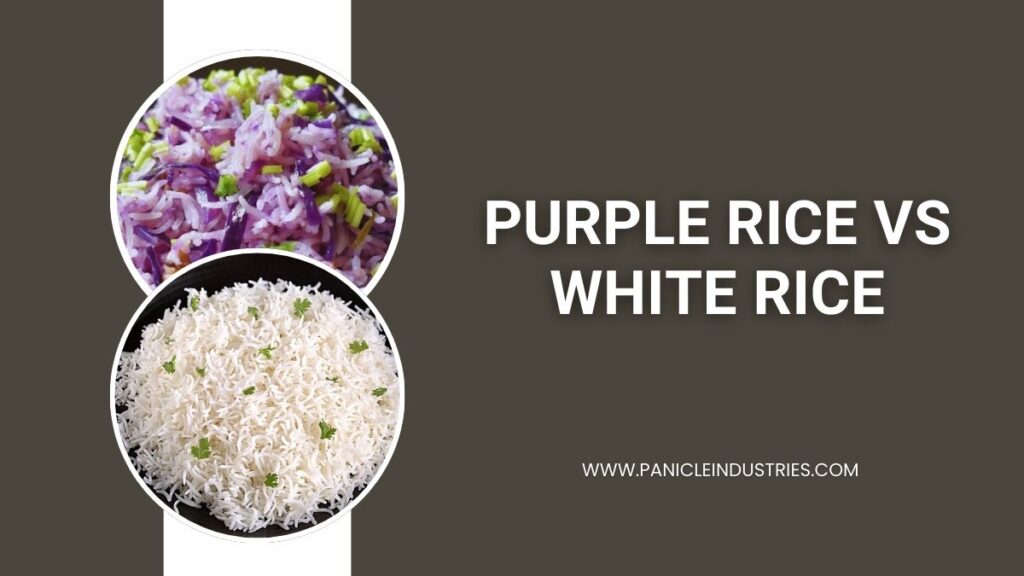
Rice remains one of the most important staple foods in the world. Millions of people consume it daily, yet not all rice types offer the same nutritional value. In recent years, many health-conscious consumers have started comparing purple rice vs white rice to understand which option supports better health. Purple rice, also called black rice in some regions, has gained attention for its deep color and antioxidant content. White rice, on the other hand, remains popular due to its taste, affordability, and easy digestion.
This blog explains the real differences between purple rice and white rice using verified facts and trusted nutrition sources. By the end, you will clearly understand how these two rice varieties differ and which one suits your dietary needs.
What Is Purple Rice?
Purple rice is a whole grain rice variety with a deep purple or dark violet outer layer. The color comes from anthocyanins, natural plant pigments also found in blueberries and purple vegetables.
Purple rice has a long history in Asian countries such as China, Thailand, and India. Traditional diets valued it for both nutrition and cultural importance.
Key Characteristics of Purple Rice
- Deep purple or dark color
- Slightly sweet, nutty flavor
- Firm and chewy texture
- Rich in natural antioxidants
According to food science research, purple rice retains its bran and germ layers, which helps preserve nutrients.
Also read: Red Rice vs Brown Rice
White rice comes from the same rice grain but goes through heavy processing. During milling, manufacturers remove the bran and germ layers, leaving only the starchy endosperm.
White rice remains widely consumed because of its soft texture, mild flavor, and long shelf life.
Key Characteristics of White Rice
- White color
- Mild taste
- Soft texture
- Quick cooking time
The United States Department of Agriculture (USDA) classifies white rice as a refined grain due to the removal of outer layers.
Purple Rice vs White Rice: Processing Differences
Processing plays a major role in nutritional quality.
Purple rice undergoes minimal processing. It keeps the bran and germ intact, which preserves fiber, vitamins, and antioxidants.
White rice undergoes extensive milling. This process improves appearance and shelf life but removes many natural nutrients.
Although white rice is often enriched with iron and B vitamins, enrichment does not restore fiber or antioxidants.
Nutritional Comparison: Purple Rice vs White Rice
Fiber Content
Fiber supports digestion, gut health, and blood sugar control.
- Purple rice (1 cup cooked): ~3.5–4 grams fiber
- White rice (1 cup cooked): ~0.5–0.7 grams fiber
The Harvard T.H. Chan School of Public Health confirms that whole grains provide more fiber than refined grains.
Vitamins and Minerals
Purple Rice Contains:
- Iron
- Magnesium
- Zinc
- Potassium
- B vitamins
White Rice Contains:
- Small amounts of natural minerals
- Added iron and B vitamins if enriched
Whole grains like purple rice naturally provide a broader range of nutrients.
Antioxidants: A Major Difference
This is where purple rice clearly stands out.
Purple rice contains high levels of anthocyanins, which act as antioxidants. These compounds help protect cells from oxidative stress.
White rice contains very few antioxidants because milling removes the outer layers.
Research published in Food Chemistry shows that pigmented rice varieties have significantly higher antioxidant activity than white rice.
Glycemic Index and Blood Sugar Impact
The glycemic index (GI) measures how quickly food raises blood sugar levels.
- Purple rice: Low to medium GI
- White rice: High GI
Purple rice digests more slowly due to fiber and intact grain structure. This helps maintain stable blood sugar levels.
Studies in The American Journal of Clinical Nutrition link high white rice intake with increased blood sugar spikes when consumed frequently.
Digestibility and Gut Health
White rice digests easily and suits people with sensitive stomachs. Doctors often recommend it during illness or recovery.
Purple rice takes longer to digest due to its fiber content. This slower digestion supports gut health but may cause discomfort if introduced suddenly.
Health experts recommend gradually adding whole grains to the diet.
Weight Management and Satiety
Foods high in fiber promote fullness.
Purple rice helps people feel full longer, which may support portion control.
White rice provides quick energy but may lead to hunger sooner.
However, nutrition experts emphasize that weight management depends on overall diet quality, not one food alone.
Heart Health Considerations
Purple rice supports heart health due to:
- Fiber content
- Antioxidant compounds
- Whole grain structure
White rice lacks fiber and antioxidants but can still fit into heart-healthy diets when eaten in moderation.
The American Heart Association encourages choosing whole grains more often than refined grains.
Cooking Time, Texture, and Taste
Cooking Purple Rice
- Longer cooking time
- Requires more water
- Produces chewy texture
Cooking White Rice
- Short cooking time
- Requires less water
- Produces soft texture
Taste preferences often influence daily rice choices more than nutrition.
Culinary Uses and Versatility
Purple Rice Uses
- Grain bowls
- Salads
- Traditional Asian dishes
- Nutrient-focused meals
White Rice Uses
- Everyday meals
- Curries and stir-fries
- Global cuisines
- Comfort foods
Both rice types absorb flavors well and pair with vegetables and proteins.
Shelf Life and Storage
Purple rice contains natural oils in the bran layer. These oils can spoil over time.
White rice has a longer shelf life due to removed oils.
Proper storage for purple rice includes:
- Airtight containers
- Cool, dark storage
- Refrigeration for long-term storage
Mineral Absorption and Phytic Acid
Purple rice contains phytic acid, a natural compound in whole grains.
Phytic acid may reduce mineral absorption if diets lack variety.
Soaking and proper cooking significantly reduce phytic acid levels.
Nutrition experts recommend balanced diets rather than avoiding whole grains.
Purple Rice vs White Rice: Health Benefits Summary
Benefits of Purple Rice
- High antioxidant content
- Better blood sugar control
- Higher fiber and nutrients
Benefits of White Rice
- Easy digestion
- Quick energy source
- Long shelf life
The World Health Organization (WHO) supports whole grain consumption for long-term health.
Which Rice Should You Choose?
Choose purple rice if you want:
- More antioxidants
- Higher fiber intake
- Whole grain nutrition
Choose white rice if you want:
- Easy digestion
- Faster cooking
- Mild taste
Many nutritionists recommend mixing both types for balance.
Cultural and Practical Factors
White rice remains a staple in many traditional diets that still support good health.
Purple rice often appears in traditional and specialty diets with a focus on nutrition.
Diet quality depends more on overall eating patterns than rice choice alone.
Common Myths About Purple Rice and White Rice
Myth 1: Purple rice has fewer calories
Both types contain similar calories per serving.
Myth 2: White rice has no nutrition
Enriched white rice still provides some nutrients.
Myth 3: Whole grains must replace white rice completely
Balanced diets allow flexibility.
What Nutrition Experts Recommend
Experts agree that:
- Whole grains offer added health benefits
- Variety improves nutrient intake
- Portion size matters
Purple rice and white rice both fit into healthy diets when consumed thoughtfully.
Purple Rice vs White Rice: Comparison Table
| Feature | Purple Rice | White Rice |
|---|---|---|
| Processing | Minimal | Heavy |
| Fiber | High | Low |
| Antioxidants | Very high | Very low |
| Digestibility | Slower | Faster |
| Shelf Life | Shorter | Longer |
Conclusion
When comparing purple rice vs white rice, purple rice offers higher fiber, antioxidants, and whole-grain nutrition, while white rice provides convenience, digestibility, and long shelf life. Scientific research and trusted health organizations confirm that whole grains like purple rice support long-term health, especially for blood sugar and heart health. However, white rice still has a place in balanced diets. The best approach focuses on variety, portion control, and overall dietary quality rather than strict food elimination.