
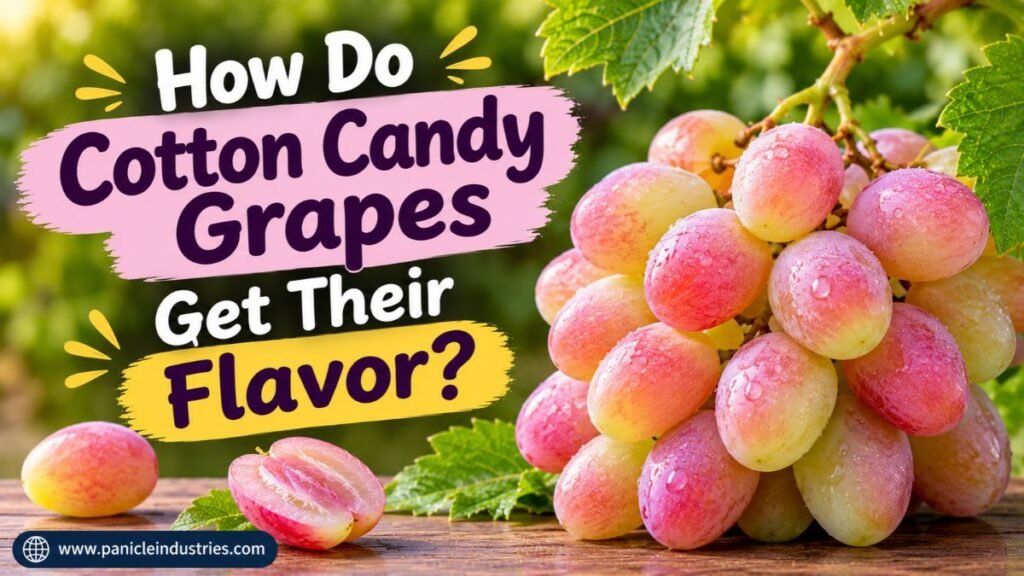
Cotton Candy grapes are famous for their unusual taste. Unlike ordinary green grapes, which usually have a mild fruity sweetness, these grapes have a flavor that reminds many people of the fluffy cotton candy sold at fairs. Their surprising taste often raises an interesting question: How do Cotton Candy grapes get their flavor?
The answer is natural plant breeding. Cotton Candy grapes were developed by crossing different grape varieties and carefully selecting plants with desirable flavor and texture. They do not get their taste from artificial cotton candy flavoring, added sugar, or chemicals sprayed onto the fruit. Their distinctive sweetness and aroma are naturally developed characteristics of the grape variety.
Cotton Candy is the commercial name of a special grape variety known as IFG Seven. It was developed through traditional cross-pollination by fruit breeders at International Fruit Genetics (IFG), now part of the BLOOM FRESH breeding programme.
To understand why these grapes taste so different, it helps to look at how they were developed, what gives grapes their flavor, and how natural breeding can create new fruit varieties.
What Are Cotton Candy Grapes?
Cotton Candy grapes are a variety of sweet, green-to-amber, seedless table grapes. They are known for their firm, juicy texture and distinctive flavor, which has sweet notes similar to cotton candy or toffee.
Unlike ordinary green grapes, which often have a simple sweet-and-tart taste, Cotton Candy grapes have a more noticeable candy-like aroma. Their natural sweetness makes them an interesting choice for people who enjoy fruit with a dessert-like flavor.
Here are some of their main characteristics:
- Color: Usually pale green, sometimes becoming slightly golden or amber.
- Texture: Firm, juicy, and crunchy.
- Seeds: Commercially seedless, although tiny seed traces may be present.
- Taste: Sweet with cotton-candy-like and toffee-like notes.
- Use: Mainly eaten fresh as a table grape.
The variety is known commercially as Cotton Candy, while its breeding or variety name is IFG Seven.
Also read: Which Fruits Should You Buy Organic
How Do Cotton Candy Grapes Get Their Flavor?
The distinctive flavor comes from traditional crossbreeding and selective plant breeding.
Fruit breeders choose grape varieties with particular characteristics and cross-pollinate them to produce new plants. The resulting grapes can inherit different combinations of traits from their parent plants, including sweetness, aroma, firmness, berry size, and texture.
Over several generations of selection, breeders identify plants that produce fruit with the qualities they want.
Cotton Candy grapes were developed using this approach. According to their plant patent, the original variety came from a hand-pollinated cross made in May 2003 between an unnamed interspecific grape selection called A2674 and the Princess grape variety.
The resulting plant was selected in 2005 and later reproduced through cuttings to preserve its characteristics. Its distinctive flavor was described in the patent as resembling toffee or cotton candy.
This means the candy-like taste is part of the grape’s natural genetic characteristics. It was created through careful breeding rather than by adding flavoring after the grapes had grown.
Are Cotton Candy Grapes Made with Artificial Flavoring?
No. Cotton Candy grapes do not need artificial cotton candy flavoring to produce their distinctive taste.
Their flavor comes naturally from the variety’s inherited characteristics. The official Cotton Candy Grapes website explains that the grapes are developed through traditional plant breeding and contain no added sugar or artificial flavors. It also identifies them as non-GMO.
This is an important distinction because the name can make people think that the grapes have been coated, injected, or infused with cotton candy flavor.
That is not how they are produced.
The breeding process creates a grape variety with a naturally unusual flavor. Farmers then grow the selected grapevines, harvest the fruit, and prepare it for sale like other table grapes.
The cotton candy taste is therefore a characteristic of the fruit itself, not an added ingredient.
What Makes Cotton Candy Grapes Taste Like Cotton Candy?
Their flavor is not explained by sweetness alone. It comes from a combination of natural sugars, aroma compounds, and the balance between sweetness and acidity.
1. Natural Sugar Content
Sugar is an important part of why Cotton Candy grapes taste so sweet.
Like other grapes, they naturally contain sugars, mainly glucose and fructose. These sugars provide the sweetness you notice when biting into the fruit.
The breeder’s variety information lists an optimal sugar level of approximately 18–22° Brix for Cotton Candy grapes. Brix is a measurement of soluble solids in fruit juice and is commonly used as an indicator of sweetness. It is not an exact measurement of sugar alone, because other dissolved substances also contribute to the reading.
This relatively high sweetness helps create the dessert-like impression associated with the variety.
2. Natural Aroma Compounds
Another important part of grape flavor is aroma.
When you eat a grape, your taste buds detect sweetness and acidity, while your sense of smell detects aromatic compounds released from the fruit. Together, these sensations create the flavor you experience.
A 2024 study published in the journal Plants examined the aroma compounds of different table grape varieties, including Cotton Candy. The researchers identified compounds associated with sweet, candy-like, floral, and fruity aromas. Furaneol was among the compounds linked with the sweet, candy-like notes reported for the variety.
This helps explain why Cotton Candy grapes can remind people of a sweet confection even though they are simply fresh fruit.
3. The Balance Between Sweetness and Acidity
Sweetness is not the only factor that affects how a grape tastes. Its natural acidity also plays an important role.
A grape with higher acidity may taste sharper or more tart, even when it contains a good amount of sugar. A grape with a sweeter flavor and a softer acidic impression may taste more like a dessert.
Cotton Candy grapes are recognized for their distinctive sweet flavor. The balance of natural sugars, acids, and aroma compounds helps create their familiar cotton-candy-like taste.
This combination is one reason they taste different from many common green grape varieties.
Are Cotton Candy Grapes Genetically Modified?
No. Cotton Candy grapes were developed through traditional plant breeding, not genetic engineering.
There is an important difference between these two methods.
Traditional crossbreeding involves pollinating one plant variety with pollen from another and selecting the offspring with desirable characteristics. It uses natural reproduction to combine existing genetic material.
Genetic modification, on the other hand, involves directly changing an organism’s genetic material using biotechnology.
Cotton Candy grapes were developed through hand pollination and selection. Their patent documents the original cross between the A2674 selection and Princess grape variety.
Therefore, their unusual flavor does not mean that they are genetically modified. Natural breeding can produce fruit with characteristics that may seem surprising compared with traditional varieties.
Who Developed Cotton Candy Grapes?
Cotton Candy grapes were developed by fruit breeders at International Fruit Genetics, commonly known as IFG.
The breeding work was led by fruit geneticist David Cain, who helped develop new table grape varieties with different flavor and eating qualities.
The original hand-pollinated cross took place in 2003. The breeder then selected the plant that showed the desired characteristics and reproduced it through vegetative propagation.
The variety eventually became commercially known as Cotton Candy grapes.
The development process demonstrates how fruit breeding can introduce new eating experiences without adding artificial ingredients. The breeder combined desirable grape characteristics and selected a variety with an unusual natural flavor.
Today, Cotton Candy grapes are part of the BLOOM FRESH breeding programme and are grown by licensed producers in different growing regions.
Why Are Cotton Candy Grapes So Sweet Compared with Regular Grapes?
Cotton Candy grapes are selected for their distinctive sweetness and candy-like flavor. Their natural sugar level and aroma profile make them taste different from many familiar table grapes.
However, this does not mean every Cotton Candy grape tastes exactly the same.
Several factors can influence the eating experience:
- Ripeness: Grapes harvested at the appropriate stage can develop their characteristic sweetness and flavor.
- Growing conditions: Sunlight, temperature, water availability, and vine health influence fruit development.
- Variety characteristics: Genetics determine much of the grape’s natural flavor potential.
- Storage: Poor storage can affect freshness, firmness, and overall eating quality.
The breeder’s target is around 18–22° Brix, but sweetness and flavor can vary between batches and growing seasons.
This is also why the same variety may taste slightly different depending on where and when it was grown.
Are Cotton Candy Grapes Healthier Than Regular Grapes?
Cotton Candy grapes are still grapes, so their nutritional characteristics are broadly similar to those of other fresh table grapes. Their unusual flavor does not mean they contain added sugar or artificial candy ingredients.
They provide natural carbohydrates, some fiber, and small amounts of nutrients. The official product information lists approximately 73 calories and 17 grams of naturally occurring sugars per 100 grams for its Cotton Candy grape product.
However, they should not automatically be considered healthier than regular grapes.
The main difference is their flavor rather than a completely different nutritional profile. If you enjoy them, they can fit into a balanced diet just like other fresh grapes.
One useful point to remember is that natural sugar is still sugar. People who need to monitor their carbohydrate intake should consider portion size rather than assuming that a fruit’s natural sweetness makes unlimited consumption appropriate.
What Is the Difference Between Cotton Candy Grapes and Regular Green Grapes?
Both are table grapes, but their taste and eating experience can be quite different.
| Feature | Cotton Candy Grapes | Regular Green Grapes |
|---|---|---|
| Flavor | Sweet with cotton-candy-like notes | Usually mild, sweet, or slightly tart |
| Aroma | Distinctive candy-like aroma | Generally familiar fruity grape aroma |
| Texture | Firm, juicy, and crunchy | Varies by variety |
| Color | Pale green to amber | Usually green |
| Seeds | Commercially seedless | Depends on variety |
| Sweetness | Selected for a distinctive sweet profile | Varies considerably |
| Main use | Fresh snacking and desserts | Snacking, salads, juices, and cooking |
It is important to remember that regular green grapes are not all the same. Some varieties are naturally very sweet, while others have a more balanced sweet-and-tart flavor.
Cotton Candy grapes simply offer a more unusual flavor profile that makes them stand out.
How to Enjoy Cotton Candy Grapes?
Because these grapes have a naturally sweet and aromatic flavor, they are enjoyable without much preparation. You can eat them directly after washing or use them in different recipes.
Here are some simple ways to enjoy them.
Eat Them Fresh
The easiest option is to wash the grapes and serve them chilled. Their firm texture and sweet flavor make them suitable for an everyday fruit snack.
Freeze Them for a Cold Snack
Place washed and dried grapes in a single layer on a tray and freeze them. Once frozen, transfer them to a suitable freezer container.
Frozen grapes have a firm, refreshing texture and can be enjoyed as a cold snack. Allow them to soften slightly before eating if you prefer a less firm texture.
Add Them to Fruit Salads
Combine Cotton Candy grapes with strawberries, apples, kiwi, or other fruits. Their sweetness can provide a pleasant contrast to fruits with a more tart flavor.
Use Them in Desserts
You can add the grapes to fruit bowls, yogurt, and homemade desserts. They also work as a fresh topping for cakes and other sweet dishes.
Serve Them with Cheese
Sweet grapes pair nicely with cheeses that have a salty or tangy flavor. This creates a contrast between the fruit’s sweetness and the cheese’s savory taste.
How to Store Cotton Candy Grapes Properly?
Proper storage helps maintain the grapes’ freshness, firmness, and flavor.
Follow these simple tips:
- Keep the grapes refrigerated after bringing them home.
- Store them in their original packaging when it allows suitable airflow.
- Avoid crushing the bunches by placing heavy items on top.
- Remove damaged or spoiled berries.
- Wash the grapes under running water before eating rather than washing the entire batch long before storage.
- Dry washed grapes if you are not eating them immediately.
Fresh grapes can lose quality if they are exposed to excessive moisture, heat, or physical damage. Keeping them refrigerated and handling them gently helps preserve their eating quality.
Conclusion
So, how do Cotton Candy grapes get their flavor? Their unusual taste comes from traditional plant breeding, which combines desirable characteristics from different grape varieties. Breeders used natural cross-pollination and careful selection to develop IFG Seven, the variety commercially known as Cotton Candy grapes.
Their candy-like flavor is created by a combination of natural sweetness, aroma compounds, and the balance between sugar and acidity. They do not need artificial cotton candy flavoring, added sugar, or genetic modification to taste this way.
Their development is an interesting example of how agricultural breeding can introduce new flavors into familiar fruits. Although they look similar to ordinary green grapes, their distinctive aroma and sweet taste make them a unique table grape variety.
Whether you enjoy them fresh, frozen, in fruit salads, or alongside cheese, Cotton Candy grapes offer a naturally sweet eating experience while remaining real, fresh fruit.
Frequently Asked Questions (FAQ)
1. Do Cotton Candy grapes actually taste like cotton candy?
Yes. They have a naturally sweet flavor with distinctive candy-like and toffee-like notes, although their taste is not exactly the same as spun-sugar candy.
2. Are Cotton Candy grapes naturally flavored?
Yes. Their unusual flavor comes from traditional grape breeding and natural plant compounds. No artificial cotton candy flavoring or added sugar is needed.
3. Are Cotton Candy grapes genetically modified?
No. Cotton Candy grapes were developed through traditional cross-pollination and selective breeding, not genetic engineering.
4. Why are Cotton Candy grapes sweeter than regular grapes?
They were selected for their distinctive sweet flavor and aroma. Their natural sugar content and flavor profile make them taste sweeter and more candy-like.
5. Are Cotton Candy grapes healthy to eat?
Yes, they can be enjoyed as part of a balanced diet. They contain natural sugars and provide nutrients, but portion size still matters because they contain carbohydrates.