
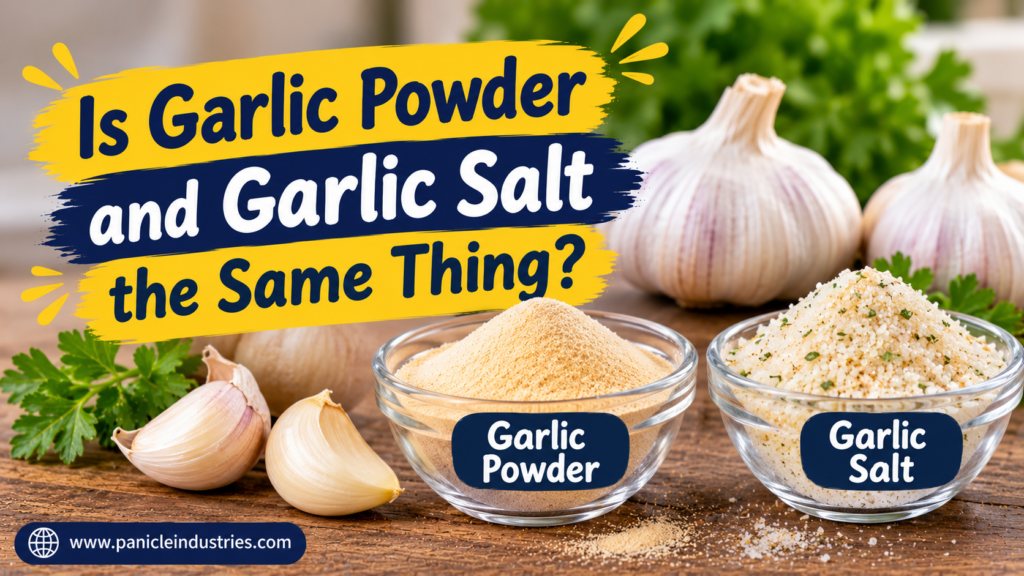
Garlic is one of the most popular ingredients used to add flavor to everyday meals. It is available in several forms, including fresh garlic, garlic paste, garlic powder, garlic granules, and garlic salt. However, when following a recipe, you may wonder is garlic powder and garlic salt the same thing.
No, garlic powder and garlic salt are not the same thing. Garlic powder is made from dried garlic cloves that have been ground into a fine powder. Garlic salt is a seasoning mixture that combines garlic powder or granulated garlic with salt. Some commercial varieties also contain an anti-caking agent to prevent the mixture from forming lumps.
The biggest difference is the addition of salt. Garlic powder provides concentrated garlic flavor without adding a significant amount of sodium, while garlic salt provides both garlic flavor and saltiness.
Understanding this difference is important when cooking because using garlic salt instead of garlic powder without adjusting the recipe can make your food unnecessarily salty. This guide explains how both seasonings are made, how they taste, when to use them, and how to substitute one for the other.
What Is Garlic Powder?
Garlic powder is a dry seasoning made by dehydrating fresh garlic cloves and grinding them into a fine powder.
During production, fresh garlic is cleaned, peeled, sliced, and dried to remove most of its moisture. The dried pieces are then ground into a powder that can be stored and used in different recipes.
Unlike fresh garlic, garlic powder does not require peeling, chopping, or crushing. It is convenient when you want garlic flavor without adding pieces of garlic to your food.
Common Characteristics of Garlic Powder
Garlic powder has several useful characteristics:
- Appearance: A fine, pale cream or light yellow powder.
- Flavor: Strong, savory, and distinctly garlicky.
- Texture: Fine and easy to mix with other ingredients.
- Salt content: Pure garlic powder contains no added salt.
- Convenience: Easy to measure, store, and use in everyday cooking.
Because garlic powder is finely ground, it distributes easily throughout liquids, sauces, marinades, and dry seasoning mixtures.
Also read: Can White Pepper Be Substituted for Black Pepper
What Is Garlic Powder Used For?
Garlic powder is a versatile seasoning that works in many types of food.
You can use it in:
- Soups and vegetable dishes
- Pasta sauces
- Rice dishes
- Marinades and dry rubs
- Roasted potatoes
- Grilled chicken and vegetables
- Salad dressings and dips
- Homemade spice blends
For example, when preparing garlic rice, you can mix garlic powder with butter, black pepper, and a little salt to create a simple savory flavor.
It is particularly useful when you want garlic flavor without adding extra moisture to a recipe.
What Is Garlic Salt?
Garlic salt is a seasoning blend made by combining garlic powder or granulated garlic with ordinary salt. Some manufacturers also include an anti-caking ingredient to keep the mixture free-flowing.
Unlike pure garlic powder, garlic salt contains a considerable amount of salt. This means it adds two things to your food at the same time: garlic flavor and saltiness.
Commercial products do not all use the same formulation. The amount of garlic and salt can vary between brands, so checking the ingredient list is important.
For example, McCormick lists salt, garlic, calcium silicate, and garlic oil in its garlic salt ingredients. Calcium silicate is included to help keep the product free-flowing.
Common Characteristics of Garlic Salt
Garlic salt generally has the following features:
- Appearance: A white or off-white seasoning mixture with visible garlic particles in some products.
- Flavor: Salty with a noticeable garlic taste.
- Texture: Usually granular or slightly coarse.
- Salt content: High compared with pure garlic powder.
- Convenience: Combines two seasonings in one product.
Garlic salt is useful when you want to season food quickly without measuring garlic and salt separately.
What Is Garlic Salt Used For?
Garlic salt is commonly used as an all-purpose seasoning for savory dishes.
It works well in:
- French fries and potato wedges
- Grilled vegetables
- Roasted chicken
- Garlic bread
- Soups and stews
- Burgers and sandwiches
- Pasta dishes
- Marinades
- Homemade seasoning blends
For example, you can sprinkle a small amount of garlic salt over roasted potatoes before cooking. It adds garlic flavor and saltiness in one step.
However, because it already contains salt, you should be careful about adding more salt to the same recipe.
Is Garlic Powder and Garlic Salt the Same Thing? Key Differences
Although both products provide garlic flavor, their ingredients and uses are different.
| Feature | Garlic Powder | Garlic Salt |
|---|---|---|
| Main ingredients | Dried, ground garlic | Garlic powder or granulated garlic mixed with salt |
| Salt content | No added salt in pure garlic powder | Contains added salt |
| Flavor | Concentrated garlic flavor | Salty garlic flavor |
| Texture | Fine powder | Granular seasoning blend |
| Sodium content | Naturally low compared with garlic salt | Generally much higher |
| Main purpose | Adding garlic flavor | Adding garlic flavor and salt together |
| Recipe control | Allows you to adjust salt separately | Adds salt whenever you use it |
| Common uses | Sauces, marinades, soups, spice blends | Fries, roasted vegetables, grilled foods |
The most important difference is that garlic powder is a single-ingredient garlic seasoning, while garlic salt is a combination of garlic and salt.
This difference becomes particularly important when following recipes that already contain salt.
Difference Between Garlic Powder and Garlic Salt in Taste
The two seasonings have different flavor profiles because of their ingredients.
Garlic powder provides a concentrated garlic taste. It has a strong savory flavor and can be used in dishes where you want garlic to be noticeable without changing the salt level.
Garlic salt, on the other hand, tastes salty as well as garlicky. Since it contains salt, its flavor is less concentrated in garlic compared with an equal amount of pure garlic powder.
For example, imagine preparing two batches of roasted potatoes.
In the first batch, you add garlic powder and a measured amount of salt. In the second, you use garlic salt. Both can taste delicious, but the amount of garlic flavor and saltiness will depend on the product proportions and the quantities used.
If you prefer greater control over the flavor, garlic powder is generally the more flexible option.
Can You Use Garlic Powder Instead of Garlic Salt?
Yes. In fact, replacing garlic salt with garlic powder is usually easier than doing the opposite.
The reason is simple: garlic powder does not contain added salt, so you can add the garlic flavor first and then adjust the salt separately.
For example, suppose a recipe calls for one teaspoon of garlic salt. You can use garlic powder for the garlic flavor and add ordinary salt according to your taste.
You may need to experiment slightly because commercial garlic salt blends contain different proportions of garlic and salt.
A Simple Replacement Method
When replacing garlic salt with garlic powder:
- Start with a small amount of garlic powder.
- Add it to the dish and mix well.
- Taste the food.
- Add plain salt separately if needed.
- Adjust the seasoning gradually.
This method gives you better control and makes it easier to avoid excessive saltiness.
Can You Use Garlic Salt Instead of Garlic Powder?
You can use garlic salt in some recipes that call for garlic powder, but you need to make adjustments.
The main problem is that garlic salt contains additional sodium. Using the same quantity of garlic salt as garlic powder may change the taste and make the food too salty.
For example, if a recipe calls for one teaspoon of garlic powder, replacing it with one teaspoon of garlic salt will usually give you less garlic flavor and introduce additional salt.
How to Make the Substitution?
If garlic salt is the only option available:
- Start with a small amount.
- Do not add the recipe’s usual amount of salt immediately.
- Mix the seasoning thoroughly.
- Taste the dish before adding more.
- Adjust the garlic flavor separately if necessary.
There is no reliable universal one-to-one conversion because commercial garlic salt blends have different ingredient ratios.
For recipes where garlic flavor is important, using fresh minced garlic or obtaining pure garlic powder is often a better option.
What Is the Ratio of Garlic Powder to Garlic Salt?
The ratio depends on the manufacturer or homemade recipe.
For example, Cornell Cooperative Extension provides a homemade garlic salt method using four parts salt to one part garlic powder. This is one possible formulation, not a universal commercial standard.
Other commercial products may use different proportions or include additional ingredients.
This is why you should not assume that every teaspoon of garlic salt contains the same amount of garlic.
If you are making your own garlic salt, you can adjust the proportions to suit your preferences. Start with a modest amount of salt, mix thoroughly, and taste it with a small amount of food before preparing a larger batch.
For everyday cooking, keeping garlic powder and salt separately gives you more control over your recipes.
Can You Make Garlic Salt at Home?
Yes. Homemade garlic salt is easy to prepare using just two basic ingredients: garlic powder and salt.
The advantage of making it yourself is that you can control the amount of salt and garlic in the mixture.
Homemade Garlic Salt Recipe
Ingredients:
- 1 tablespoon garlic powder
- 4 tablespoons salt
Method:
- Take a clean, completely dry bowl.
- Add the garlic powder and salt.
- Mix the ingredients until evenly combined.
- Transfer the mixture to a clean, dry, airtight container.
- Label the container and store it in a cool, dry place.
This follows the four-parts-salt-to-one-part-garlic-powder approach described by Cornell Cooperative Extension.
You can adjust the ratio if you prefer stronger garlic flavor, but remember that reducing the salt changes the taste and properties of the blend.
Make sure no moisture enters the container, as moisture can cause the seasoning to form lumps.
Is Garlic Powder Healthier Than Garlic Salt?
Garlic powder is often the more suitable option when you want garlic flavor without adding extra sodium.
Pure garlic powder contains naturally occurring nutrients from dehydrated garlic, including small amounts of minerals and other plant compounds. However, it is generally used in small quantities, so it should not be treated as a major source of nutrients.
Garlic salt contains added salt, which increases its sodium content.
For people who are watching their sodium intake, garlic powder can be a useful alternative to garlic salt. The US Food and Drug Administration advises adults and people aged 14 and older to limit sodium to less than 2,300 milligrams per day. It also recommends using herbs and spices to add flavor without relying entirely on salt.
However, garlic powder does not automatically make a meal healthy. The overall ingredients, portion sizes, and cooking method still matter.
The main practical advantage is that pure garlic powder allows you to control how much salt goes into your food.
How to Store Garlic Powder and Garlic Salt?
Both seasonings are dried products, so keeping them away from moisture is important.
Exposure to moisture can cause clumping and affect the quality of the seasoning.
Storing Garlic Powder
- Keep it in a tightly sealed container.
- Store it in a cool, dry cupboard.
- Avoid placing it next to the stove or other heat sources.
- Use a dry spoon when measuring.
- Keep it away from direct sunlight.
Storing Garlic Salt
Garlic salt should also be kept in an airtight container. Moisture can cause salt particles to clump, making the seasoning difficult to sprinkle.
Avoid shaking the container directly over a steaming pot because steam can enter the package.
Always check the product’s best-before date and storage instructions. If a seasoning develops an unusual smell, visible mold, or signs of contamination, discard it.
Garlic Powder vs Garlic Salt vs Fresh Garlic
It is also useful to understand how both dry seasonings compare with fresh garlic.
| Feature | Fresh Garlic | Garlic Powder | Garlic Salt |
|---|---|---|---|
| Form | Fresh cloves | Dried and ground garlic | Garlic mixed with salt |
| Flavor | Strong, fresh, pungent | Concentrated garlic flavor | Salty garlic flavor |
| Preparation | Needs peeling and chopping | Ready to use | Ready to use |
| Moisture | Contains natural moisture | Very low moisture | Very low moisture |
| Salt added | No | No, if pure | Yes |
| Best uses | Curries, sauces, stir-fries | Soups, marinades, dry rubs | Fries, roasted foods, quick seasoning |
Fresh garlic is useful when you want its distinctive texture and fresh aroma. Garlic powder is better for quick seasoning and recipes that need an even distribution of garlic flavor. Garlic salt is convenient when you want both garlic and salt in one product.
Which One Should You Keep in Your Kitchen?
There is no need to choose only one. Garlic powder and garlic salt can both be useful, provided you understand how they behave.
Choose garlic powder when:
- You want strong garlic flavor without extra salt.
- You are preparing marinades or dry spice blends.
- You want to control the salt level separately.
- You are seasoning soups, sauces, and rice dishes.
Choose garlic salt when:
- You want a quick all-purpose seasoning.
- You are seasoning fries or roasted potatoes.
- You want garlic and salt in one ingredient.
- You are preparing foods where a measured amount of salt is already accounted for.
If you cook regularly, keeping both products available can make everyday meal preparation easier.
Conclusion
So, is garlic powder and garlic salt the same thing? No. Although both provide garlic flavor, they have different ingredients and uses. Garlic powder is made from dried, ground garlic cloves, while garlic salt is a mixture of garlic powder or granulated garlic and salt, sometimes with an anti-caking ingredient.
Garlic powder is generally better when you want concentrated garlic flavor and control over the amount of salt in your food. Garlic salt is convenient when you want to add garlic flavor and saltiness together.
You can substitute one for the other in some recipes, but you should adjust the amount of salt carefully. Remember that garlic salt is not a direct one-to-one replacement for pure garlic powder because the proportions vary between products.
For the most flexibility in cooking, keeping garlic powder and ordinary salt separately is a practical choice. This allows you to control the flavor of your food without making it unnecessarily salty.
Frequently Asked Questions (FAQ)
1. Is garlic powder and garlic salt the same thing?
No. Garlic powder is dried ground garlic, while garlic salt is a mixture of garlic powder and salt. Garlic salt also contains additional sodium.
2. Can I use garlic powder instead of garlic salt?
Yes. Use garlic powder for the garlic flavor and add regular salt separately according to your taste. This gives you better control over the seasoning.
3. Can garlic salt replace garlic powder in a recipe?
Sometimes, but it is not a direct replacement. Garlic salt contains added sodium, so reduce or omit the recipe’s other salt and adjust carefully.
4. Which is healthier garlic powder or garlic salt?
Garlic powder is generally a better choice for reducing sodium because pure garlic powder contains no added salt. Garlic salt can significantly increase sodium intake.
5. What is the main ingredient in garlic salt?
Garlic salt mainly contains salt and dried garlic powder or granulated garlic. Some commercial products also include anti-caking agents to prevent lumps.