
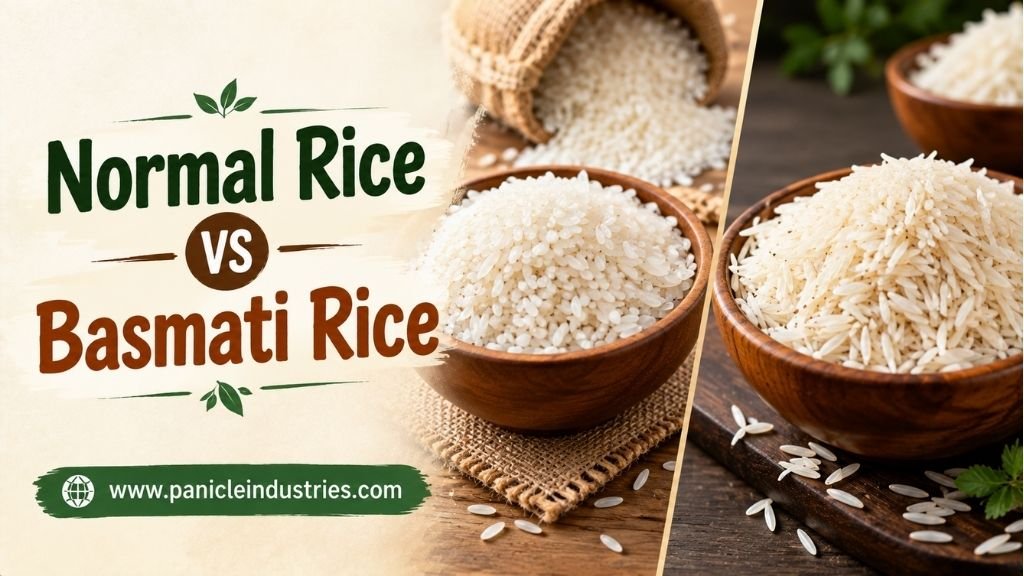
Rice is a staple food in many households, but choosing the right type can sometimes be confusing. When comparing normal rice vs basmati rice, the biggest differences are usually seen in grain shape, aroma, texture, cooking behavior, taste, and price.
The term “normal rice” is commonly used to describe regular or non-basmati rice, although it is not one specific rice variety. Non-basmati rice includes many different types, including short-, medium-, and long-grain varieties. Basmati, on the other hand, is a distinctive aromatic rice known for its slender grains, fragrance, and ability to elongate during cooking.
So, is basmati rice better than normal rice? Not necessarily. The better choice depends on what you are cooking, your preferred texture, your budget, and your personal taste.
What Is Normal Rice?
Normal rice usually refers to rice that is not classified as basmati. It can include different varieties grown in India and other rice-producing countries.
Unlike basmati rice, regular non-basmati rice does not have one fixed grain size, texture, or aroma. Some types cook soft and slightly sticky, while others remain fluffy and separate.
This is why checking the actual variety on the package is more useful than simply comparing “normal rice” with basmati.
Common Characteristics of Normal Rice
Regular rice may have:
- Short, medium, or long grains
- Mild or neutral aroma
- Different levels of softness and stickiness
- Less elongation after cooking than typical basmati
- A wide range of prices and cooking times
For everyday meals such as steamed rice, curd rice, rice bowls, khichdi, or fried rice, many non-basmati varieties work extremely well.
Also read: Brown Basmati Rice Benefits
What Is Basmati Rice?
Basmati rice is a premium aromatic rice traditionally associated with India and Pakistan. It is recognized for its long, slender grains, distinctive aroma, and characteristic cooking quality.
One of the most noticeable features of basmati is what happens during cooking. Properly cooked grains become longer while remaining relatively slender instead of swelling heavily in width. FAO material describes extra kernel elongation and pleasant aroma as important characteristics of quality basmati rice.
Basmati also contains aroma compounds that contribute to its distinctive fragrance. One important compound associated with the characteristic aroma of scented rice is 2-acetyl-1-pyrroline.
Normal Rice vs Basmati Rice: Key Differences
Understanding the practical differences makes it much easier to decide which rice to buy.
| Feature | Normal Rice | Basmati Rice |
|---|---|---|
| Grain shape | Can be short, medium, or long | Typically long and slender |
| Aroma | Mild or neutral in many varieties | Distinctive and aromatic |
| Cooked texture | Varies from soft to fluffy or sticky | Usually fluffy, separate, and relatively firm |
| Grain elongation | Usually limited to moderate | Strong elongation is a key characteristic |
| Taste | Mild and versatile | Fragrant with a distinctive flavor |
| Common uses | Everyday meals, porridge, khichdi, fried rice | Biryani, pulao, pilaf, festive dishes |
| Price | Often more affordable | Usually more premium |
| Cooking characteristics | Depend strongly on variety | Known for predictable elongation and aroma |
The important point is that “normal rice” covers many varieties. Therefore, the exact comparison can change depending on which non-basmati rice you are using.
Difference in Grain Size and Appearance
One of the easiest ways to distinguish these two categories is by looking at the uncooked grains.
Basmati rice generally has a long, slender appearance. After cooking, the grains can become noticeably longer while retaining their narrow shape. This lengthwise elongation is one of the qualities associated with good basmati rice.
Normal rice can look very different depending on the variety. Some grains may be short and rounded, while others can also be long-grain. Therefore, long grain alone does not automatically mean a rice is basmati.
This is particularly important when buying rice for commercial or export purposes, where variety, grading, and grain characteristics matter.
Difference in Aroma and Taste
Aroma is another major difference in normal rice vs basmati rice.
Basmati has a naturally distinctive fragrance that becomes more noticeable as the rice cooks. This aroma is one reason basmati is widely preferred for dishes where rice itself is an important part of the eating experience.
Normal rice is often much milder. Its relatively neutral flavor can actually be an advantage because it allows sauces, curries, vegetables, and spices to stand out.
For example, if you are serving a strongly flavored curry, everyday non-basmati rice may provide a simple base. For a fragrant biryani, basmati can add aroma and visual appeal of its own.
Difference in Cooking and Texture
Cooking behavior is one of the most practical differences.
Quality basmati is valued for producing long, separate grains with limited breadth-wise swelling. The amount of amylose in rice influences how sticky or dry the cooked grains become, which is one reason different rice varieties produce different textures.
Normal rice can produce a wider range of textures depending on its variety and starch characteristics.
For the best results, pay attention to the specific variety rather than assuming every normal rice or every basmati rice will cook identically.
How the Cooking Method Changes the Result?
Even the same rice can turn out differently depending on:
- How thoroughly it is rinsed
- Whether it is soaked
- How much water is used
- Cooking time
- The cooking method
- How long the rice rests after cooking
For example, using too much water can make rice softer and more clumped, while carefully measuring water and allowing cooked rice to rest can help maintain individual grains.
Which Rice Is Better for Biryani and Pulao?
For biryani, pulao, pilaf, and similar dishes, basmati is often preferred because its aroma and long, separate cooked grains complement these recipes.
Basmati is especially useful when the rice needs to remain visually distinct from meat, vegetables, spices, or other ingredients. Its characteristic elongation also makes the finished dish look more appealing.
Normal rice can still be used for these dishes, particularly when a specific regional recipe calls for it. However, the final texture and appearance may be different.
Which Rice Is Better for Everyday Meals?
For daily cooking, there is no universal winner.
Normal rice may be the better choice when you want an economical, mild-tasting rice for regular meals. It is practical for dishes where rice is mainly served alongside dal, vegetables, curries, or yogurt.
Basmati may be worth choosing when you want extra aroma, longer grains, or a more premium presentation.
Your decision can be as simple as asking what you are cooking that day.
Choose Normal Rice When:
- You want an affordable rice for regular meals.
- You prefer a mild flavor.
- You need rice for dishes where the rice should not dominate the flavor.
- You are cooking a recipe traditionally made with a non-basmati variety.
Choose Basmati Rice When:
- You want aromatic and slender grains.
- You are preparing biryani or pulao.
- You prefer fluffy, separate grains.
- You want a more fragrant and visually appealing rice dish.
Is Basmati Rice Healthier Than Normal Rice?
This question does not have a simple yes or no answer.
Both basmati and non-basmati rice can be part of a balanced diet. Nutritional differences depend on the exact rice variety and whether it is white, brown, parboiled, or processed in another way.
It is also important not to assume that all basmati rice has the same effect on blood sugar. One clinical study found a particular Indian branded, thermally treated basmati variety had a glycemic index below 55, but that result should not be generalized to every basmati rice product.
For a more meaningful comparison, look at the specific product, serving size, preparation method, and the rest of the meal.
Can Normal Rice and Basmati Rice Be Used Interchangeably?
Sometimes, but the result may not be exactly the same.
You can replace one with the other in some recipes, but differences in grain size, water absorption, cooking time, and texture may change the final dish.
For example, replacing basmati with a softer-cooking regular rice in biryani may produce a heavier texture. On the other hand, using basmati in a recipe designed around sticky rice may not produce the intended consistency.
For recipe-sensitive dishes, it is better to use the rice variety recommended by the recipe.
Normal Rice vs Basmati Rice: Which One Should You Choose?
The best choice depends on your purpose rather than the idea that one rice is universally superior.
Choose normal rice for affordable everyday meals, mild flavor, and recipes where you do not specifically need long aromatic grains.
Choose basmati when aroma, grain length, separate texture, and presentation are important.
In simple terms, normal rice is valued mainly for versatility and affordability, while basmati rice is valued for its aroma, slender grains, and distinctive cooking quality.
Before buying, check the package for the exact variety instead of relying only on labels such as “regular” or “normal.” Rice characteristics can vary considerably between varieties, even within the same broad category.
Conclusion
When comparing normal rice vs basmati rice, there is no single winner for everyone. Normal rice usually offers more variety, affordability, and versatility for everyday meals, while basmati rice stands out for its slender grains, distinctive aroma, fluffy texture, and excellent performance in dishes such as biryani and pulao.
Your choice should depend on the recipe, texture you prefer, budget, and nutritional needs. Also remember that “normal rice” is a broad category, so its cooking quality and nutrition can vary significantly between varieties.
For everyday meals, regular non-basmati rice can be a practical choice. When aroma, separate grains, and presentation matter, basmati rice is often the better option. The best rice is ultimately the one that suits your meal and cooking preferences.
Frequently Asked Questions (FAQ)
Is basmati rice better than normal rice?
Basmati is not automatically better. It offers distinctive aroma and long grains, while normal rice can be more affordable and better suited to everyday dishes.
What is the main difference between normal rice and basmati rice?
The main differences are grain shape, aroma, texture, cooking behavior, and price. Basmati is typically long, slender, aromatic, and premium.
Can I use normal rice instead of basmati rice?
Yes, in many recipes, but the final texture, aroma, and appearance can change. Biryani and pulao usually benefit from basmati’s grain characteristics.
Does basmati rice have a lower glycemic index?
Some basmati varieties have shown lower GI values in studies, but results vary by variety and preparation. Do not assume every basmati rice has a low GI.
Which rice is best for everyday cooking?
Normal rice is often practical for daily meals because it is versatile and economical. Basmati is a good choice when you want extra aroma and longer, separate grains.