
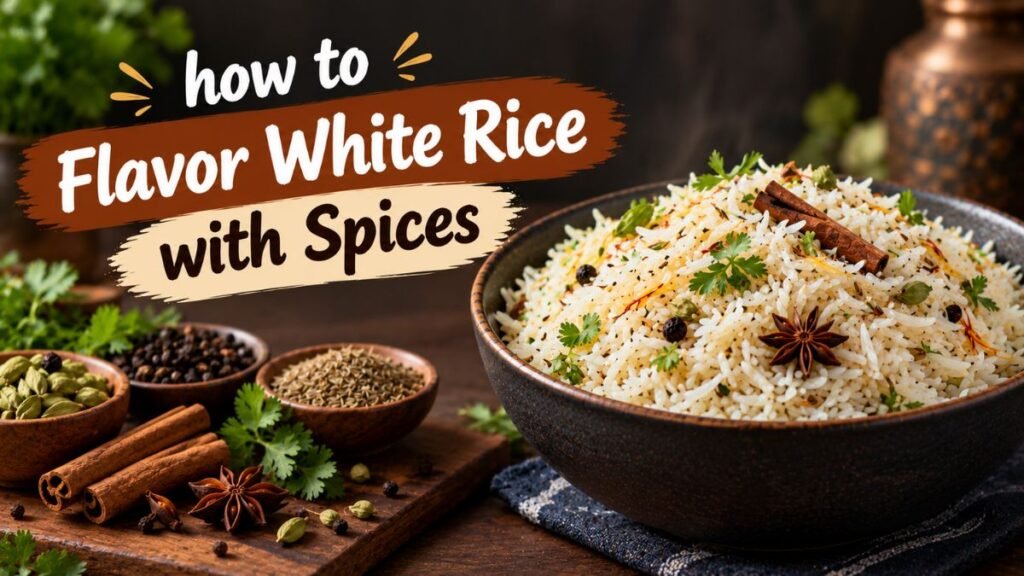
White rice is simple, versatile, and easy to serve with almost any meal, but it can taste bland when cooked with only water. The good news is that learning how to flavor white rice with spices does not require complicated recipes or expensive ingredients. A few everyday spices, a little oil or butter, and the right cooking method can turn plain rice into a fragrant, flavorful side dish.
The best spices for white rice include cumin, turmeric, black pepper, paprika, coriander, cinnamon, cardamom, and chili powder. Garlic, ginger, bay leaves, and fresh herbs can add even more flavor. You can use one or two seasonings for a simple everyday dish or combine several spices to create Indian-style rice, spicy rice, or aromatic basmati rice.
The secret is knowing which spices to use, when to add them, and how much to use. Some spices release their flavor best in hot oil, while others work well when added directly to the cooking water. Follow the methods below to make white rice more flavorful without overpowering it.
What Are the Best Spices for White Rice?
White rice has a mild flavor, making it an excellent base for different seasonings. You can give it an earthy, spicy, buttery, smoky, or aromatic taste by choosing the right combination.
Here are some of the best spices and seasonings to keep in your kitchen.
| Spice or seasoning | Flavor it adds | Best use |
|---|---|---|
| Cumin | Warm and earthy | Indian-style rice and pulao |
| Turmeric | Earthy flavor and golden color | Yellow rice and spiced rice |
| Black pepper | Mild heat and warmth | Everyday savory rice |
| Paprika | Sweet, smoky, or mildly spicy flavor | Colorful seasoned rice |
| Ground coriander | Warm and slightly citrusy | Curries and spiced rice |
| Garlic powder | Savory and rich | Everyday rice and rice bowls |
| Ginger | Warm and aromatic | Asian-inspired rice dishes |
| Chili powder | Heat and spice | Spicy rice |
| Cinnamon | Warm and slightly sweet | Fragrant rice dishes |
| Cardamom | Sweet, floral aroma | Basmati rice and pulao |
| Bay leaf | Subtle herbal aroma | Rice cooked in broth |
| Cloves | Strong, warm flavor | Biryani and aromatic rice |
You do not need to use all these seasonings together. Start with two or three that complement each other, then adjust the combination according to the meal.
Also read: Difference Between Parboiled Rice And White Rice
1. Flavor White Rice with Cumin
Cumin is one of the easiest spices to use when you want rice to taste warm, earthy, and aromatic. It is especially popular in Indian cooking and works well with white rice, basmati rice, lentils, vegetables, and curries.
You can use whole cumin seeds or ground cumin. Whole seeds provide small bursts of flavor and work particularly well when toasted in oil or ghee. Ground cumin spreads more evenly throughout the rice.
How to Make Cumin Rice
For approximately 1 cup of uncooked white rice, you will need:
- 1 teaspoon cumin seeds
- 1 tablespoon oil or ghee
- Salt to taste
- Water according to the rice package instructions
Follow these steps:
- Rinse the rice if appropriate for the product and recipe.
- Heat the oil or ghee in a saucepan.
- Add the cumin seeds and let them sizzle briefly until fragrant.
- Add the rice and stir gently so the grains are coated.
- Add the measured water and salt.
- Cover and cook according to the rice package instructions.
The result is fragrant rice with a warm cumin flavor. Serve it with dal, vegetable curry, grilled vegetables, or roasted chicken.
2. Use Turmeric to Make Yellow Rice
Turmeric is an excellent choice when you want to add both flavor and color to white rice.
It gives rice a golden-yellow appearance and an earthy taste. Turmeric also pairs well with cumin, coriander, ginger, garlic, and black pepper.
The main thing to remember is that a small amount is usually enough. Too much turmeric can make the rice taste bitter or overly earthy.
Simple Turmeric Rice
For 1 cup of uncooked rice, start with about ¼ teaspoon of ground turmeric, salt to taste, and your usual measured amount of water.
You can also add a little butter or oil and a small amount of ground cumin.
Mix the turmeric into the cooking water so the color spreads more evenly. Cook the rice according to the package instructions.
Yellow rice pairs well with roasted vegetables, chickpeas, grilled chicken, fish, and many curry dishes.
3. Add Garlic for a Savory Flavor
Garlic is one of the most versatile ingredients for flavoring white rice. It adds a savory taste without making the dish excessively spicy.
You can use fresh minced garlic or garlic powder, depending on how much preparation time you have.
Fresh garlic usually produces a stronger, more noticeable aroma when gently cooked in oil or butter. Garlic powder is convenient when you want the seasoning spread evenly through the rice.
How to Make Garlic Rice
Heat 1 tablespoon of butter or olive oil in a saucepan. Add one or two finely chopped garlic cloves and cook gently until fragrant.
Avoid browning the garlic too much because burnt garlic can taste bitter. Add the rice, stir briefly, then add water and salt according to your usual cooking method.
You can finish the cooked rice with black pepper and chopped parsley.
Garlic rice works particularly well with grilled meat, roasted vegetables, fish, and simple vegetable dishes.
4. Use Black Pepper for Mild Heat
Black pepper is a practical choice when you want to improve the taste of plain white rice without adding many ingredients.
It adds gentle heat and a warm flavor. Freshly ground black pepper usually provides a stronger aroma than pepper that has been ground and stored for a long time.
Add a small amount to the cooking water or sprinkle it over the cooked rice. For a more balanced flavor, combine it with garlic, butter, or olive oil.
Black pepper also works well with lemon juice and fresh parsley, especially when serving rice alongside fish or vegetables.
5. Flavor Rice with Paprika
Paprika is useful when you want colorful rice with a mild, smoky, or slightly sweet flavor.
Different types of paprika have different characteristics. Sweet paprika generally adds color and mild flavor, while smoked paprika provides a smoky taste. Hot paprika can add more heat.
For a simple batch of rice, start with about ½ teaspoon of paprika per cup of uncooked rice. You can combine it with garlic powder, black pepper, and a little salt.
Paprika rice pairs well with grilled foods, beans, roasted vegetables, and many tomato-based dishes.
Avoid adding too much paprika immediately. Taste the finished dish before increasing the quantity because a strong smoky flavor can dominate delicate rice.
6. Combine Coriander and Cumin
Ground coriander and cumin make a useful combination for rice, particularly when you want a warm, aromatic flavor.
Cumin provides an earthy taste, while ground coriander adds a slightly citrusy, warm flavor. Together, they work well with turmeric, ginger, garlic, and chili.
For 1 cup of uncooked rice, try ½ teaspoon of cumin and ½ teaspoon of ground coriander as a starting point. Adjust the amounts according to your preference.
You can add both spices to a little oil before adding the rice and cooking liquid. Alternatively, mix them into the measured water.
Serve the rice with dal, lentils, roasted vegetables, or a mildly spiced curry.
7. Make Spicy White Rice with Chili Powder
If you enjoy spicy food, chili powder or chili flakes can turn plain white rice into a more exciting side dish.
Chili powder generally distributes its flavor throughout the rice, while chili flakes provide small pieces and occasional bursts of heat.
A simple spicy rice seasoning can include:
- ½ teaspoon paprika
- A small pinch of chili powder
- ½ teaspoon garlic powder
- Black pepper to taste
- Salt to taste
These quantities are starting points for 1 cup of uncooked rice. You can adjust them according to the type and strength of the chili powder you use.
For a deeper flavor, cook the spices briefly in oil before adding the rice and water. Keep the heat moderate to prevent the spices from burning.
Spicy rice is a good match for beans, roasted vegetables, grilled foods, and dishes with a cooling yogurt-based sauce.
8. Use Cinnamon, Cardamom, and Bay Leaves for Fragrant Rice
Not every seasoned rice dish needs to be spicy. Whole spices can create a warm, fragrant flavor without adding chili heat.
Cinnamon, cardamom, cloves, and bay leaves are especially useful when making aromatic basmati rice or pulao.
For 1 cup of uncooked rice, you might use one small piece of cinnamon stick, one or two cardamom pods, and one bay leaf. You can add a clove if you want a stronger spice aroma.
Heat the whole spices briefly in oil or ghee before adding the rice and water. Remove the bay leaf and any large whole spices before serving if you prefer not to leave them in the finished dish.
Use these spices in moderation. Cinnamon and cloves have strong flavors, and too much can overwhelm the rice.
9. Cook White Rice in Broth Instead of Water
Spices are useful, but the cooking liquid also makes a big difference.
Replacing some or all of the water with vegetable or chicken broth can give rice a deeper savory flavor. This is particularly helpful when you want to make a side dish without using many different spices.
For example, cook rice in broth and add garlic, black pepper, and a little parsley. You can also add a small amount of butter for a richer taste.
Remember that broth may already contain salt. Taste it first and reduce the amount of additional salt to avoid making the rice too salty.
Use a broth that complements the main dish rather than one with a flavor that competes with it.
10. Add Herbs and Lemon for Freshness
Fresh herbs and citrus can balance the warm flavor of spices.
Parsley, fresh coriander, mint, and spring onions are all useful choices. Lemon or lime juice can also brighten rice, making it taste fresher.
These ingredients are generally best added near the end of cooking or after the rice has finished cooking.
For an easy lemon herb rice, gently mix cooked rice with a little lemon juice, chopped parsley, black pepper, and a small amount of olive oil.
Avoid adding too much lemon juice at once. Start with a small amount, mix well, and taste before adding more.
When Should You Add Spices to White Rice?
The timing depends on the seasoning and the result you want.
Add Whole Spices Before Cooking
Whole cumin seeds, cardamom pods, cinnamon sticks, cloves, and bay leaves can be added to oil or ghee before the rice goes into the pan. This allows their aromas to develop in the cooking fat.
Add Ground Spices During Cooking
Turmeric, paprika, ground cumin, ground coriander, and garlic powder can be mixed into the cooking liquid or briefly heated in oil.
If cooking them in oil, use moderate heat and avoid burning them. Ground spices can become bitter when overheated.
Add Fresh Herbs and Lemon After Cooking
Fresh parsley, coriander leaves, mint, lemon juice, and freshly ground black pepper can be mixed into the cooked rice before serving.
This approach helps preserve their fresh flavor.
How to Season Rice Without Overpowering It?
The easiest mistake to make is adding too many strong spices at once. Rice has a mild flavor, so a small amount of seasoning can be enough.
Use these simple guidelines:
- Start with two or three seasonings. For example, cumin, garlic, and black pepper make a balanced combination.
- Measure strong spices carefully. Cinnamon, cloves, chili powder, and turmeric can dominate the dish if used in excess.
- Season the cooking liquid. A moderate amount of salt helps bring out the flavor of the rice.
- Consider the main dish. Mild garlic rice may be ideal with a strongly flavored curry, while aromatic whole spices may suit a simple grilled meal.
- Taste before serving. Add extra salt, herbs, pepper, or lemon gradually.
You should also avoid adding too much liquid when using broth or other wet ingredients. Too much liquid can change the texture of the rice, even when the seasoning tastes good.
Conclusion
Learning how to flavor white rice with spices is easy when you understand how different seasonings work. Cumin creates an earthy, aromatic flavor, turmeric gives rice a golden color, garlic adds savory depth, paprika brings color and warmth, and whole spices such as cardamom and cinnamon create fragrant rice dishes.
You can also use broth instead of plain water, then finish the rice with fresh herbs, lemon juice, or black pepper. The best method depends on whether you want simple everyday rice, spicy rice, garlic rice, yellow rice, or aromatic basmati rice.
Start with small amounts of seasoning, add spices at the right stage, and choose combinations that suit the meal. With just a few ingredients, you can turn plain white rice into a flavorful dish without making the cooking process complicated.
Frequently Asked Questions (FAQ)
1. What spices are best for flavoring white rice?
Cumin, turmeric, black pepper, paprika, garlic powder, coriander, and chili powder are excellent choices. Cinnamon, cardamom, and bay leaves work well for fragrant rice.
2. Should I add spices before or after cooking white rice?
Add whole spices and most ground spices during cooking to develop their flavor. Fresh herbs, lemon juice, and some freshly ground pepper are usually best added afterward.
3. How do I make white rice taste good without using too many spices?
Use a simple combination such as garlic, black pepper, and butter, or cumin with a little salt. A few well-matched ingredients can add plenty of flavor.
4. Can I use chicken broth instead of water to flavor white rice?
Yes. Chicken or vegetable broth can add savory flavor. Check its salt content first and adjust the additional salt so the finished rice does not become too salty.
5. How can I make white rice spicy?
Add a small amount of chili powder or chili flakes along with paprika, garlic powder, and black pepper. Start with less chili, then increase it to suit your taste.