
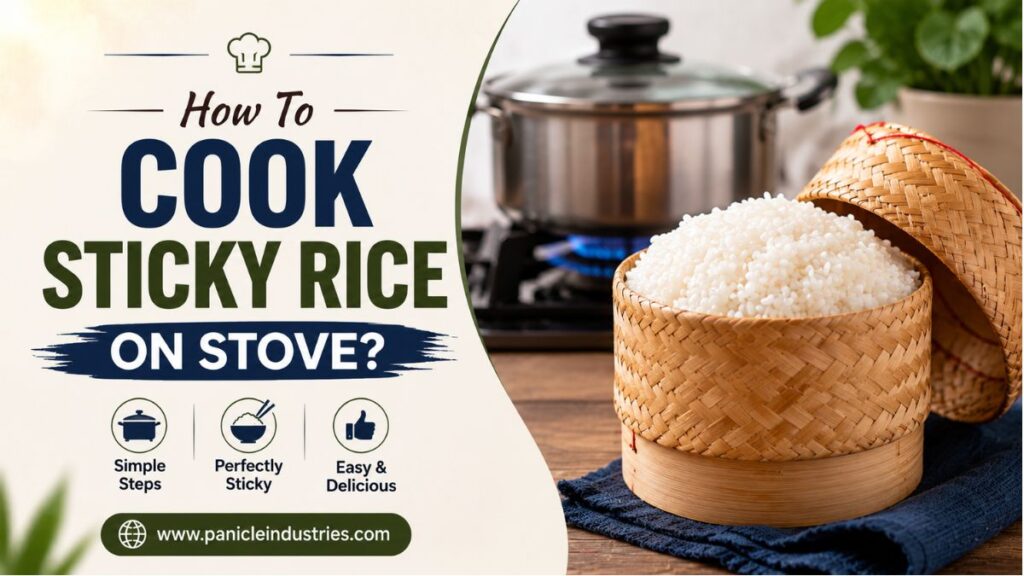
Sticky rice has a special place in many Asian cuisines. Its soft, slightly chewy texture makes it perfect for dishes like mango sticky rice, sushi rolls, and savory meals. While many people think you need a steamer or special equipment, the truth is much simpler.
You can cook perfect sticky rice right on your stovetop.
In this guide, you will learn how to cook sticky rice on stove using simple tools, clear steps, and reliable techniques. Whether you are a beginner or someone looking to improve your results, this blog will help you get it right every time.
What Is Sticky Rice?
Sticky rice, also known as glutinous rice, is a type of rice that becomes soft and sticky when cooked. Despite the name, it does not contain gluten.
Why Does Sticky Rice Become Sticky?
Sticky rice contains a higher amount of amylopectin, a type of starch that gives it its signature texture. According to food science research, rice varieties with more amylopectin tend to clump together after cooking.
This is different from long-grain rice like basmati, which contains more amylose and stays separate.
Also read: How To Cook Jollof Rice And The Ingredients?
Choosing the Right Rice for Sticky Rice
Before you start cooking, choosing the correct rice is essential.
Best Type of Rice
- Glutinous rice (also called sticky rice or sweet rice)
What to Avoid
- Basmati rice
- Jasmine rice (slightly sticky but not the same)
- Regular long-grain white rice
Using the wrong rice will not give you the desired texture, no matter how well you cook it.
Essential Ingredients and Tools
You do not need fancy equipment, but a few basics will help.
Ingredients
- 1 cup sticky rice
- 1 to 1.25 cups water
- Pinch of salt (optional)
Tools
- Medium-sized pot with lid
- Fine mesh strainer
- Bowl for soaking
Simple tools, but they make a big difference.
How to Cook Sticky Rice on Stove?
Now let’s go through the process step by step.
Step 1: Rinse the Rice Thoroughly
Place the rice in a bowl and rinse it under cold water.
- Wash 3–4 times
- Remove excess starch
- Water should run mostly clear
This step prevents overly gummy texture.
Step 2: Soak the Rice
Soaking is critical for proper cooking.
- Soak for at least 4–6 hours
- Overnight soaking works best
Why Soaking Matters
Soaking allows the grains to absorb water evenly. This ensures soft texture without hard centers.
Skipping this step often leads to uneven cooking.
Step 3: Drain the Rice
After soaking:
- Drain completely using a strainer
- Remove excess water
Do not skip draining. Too much water can make the rice mushy.
Step 4: Add Rice and Water to the Pot
Transfer the soaked rice to your pot.
- Add fresh water (about 1 to 1.25 cups)
- Keep water level just above the rice
Avoid using too much water. Sticky rice cooks best with controlled moisture.
Step 5: Bring to a Boil
Place the pot on medium heat.
- Let the water come to a gentle boil
- Do not stir too much
Stirring breaks the grains and affects texture.
Step 6: Reduce Heat and Cover
Once boiling starts:
- Reduce heat to low
- Cover the pot with a tight lid
Let it cook for 10–12 minutes.
Step 7: Steam and Rest
After the water absorbs:
- Turn off the heat
- Let the rice sit covered for 10 minutes
This resting step allows the rice to finish cooking through steam.
Step 8: Fluff Gently
Use a fork or spatula to fluff lightly.
Sticky rice will clump slightly, which is normal. Do not overmix.
Key Tips for Perfect Sticky Rice
Small details can make a big difference.
Do Not Skip Soaking
This is the most important step. It ensures even cooking and proper texture.
Use the Right Water Ratio
Too much water = mushy rice
Too little water = hard rice
Stick to the recommended ratio.
Keep Heat Low During Cooking
High heat can burn the bottom while leaving the top undercooked.
Avoid Frequent Stirring
Let the rice cook undisturbed for best results.
Common Mistakes to Avoid
Even simple recipes can go wrong. Here are common mistakes and how to fix them.
1. Using the Wrong Rice
Regular rice will not become properly sticky.
2. Skipping Soaking
This leads to uneven texture and hard centers.
3. Adding Too Much Water
This turns sticky rice into mush.
4. Cooking on High Heat
Burned bottom, undercooked top—never a good combination.
Alternative Method: Absorption vs Steaming
Traditionally, sticky rice is steamed. However, the stovetop absorption method works well when done correctly.
Differences
- Steaming: More traditional, slightly firmer texture
- Stovetop: Easier, softer texture
For home cooking, the stovetop method is practical and reliable.
How to Serve Sticky Rice?
Sticky rice pairs well with both sweet and savory dishes.
Popular Serving Ideas
- Mango sticky rice
- Thai curries
- Grilled meats
- Stir-fried vegetables
Its texture makes it easy to eat with hands or chopsticks.
Nutritional Overview
Sticky rice provides:
- Carbohydrates for energy
- Small amounts of protein
- Minimal fat
According to USDA FoodData Central, one cup of cooked sticky rice contains around 170–200 calories.
Important Note
Sticky rice has a higher glycemic index, which means it digests quickly. Pair it with protein or fiber for better balance.
Storage and Reheating Tips
Sticky rice can dry out if not stored properly.
Storage
- Keep in airtight container
- Refrigerate for up to 3 days
Reheating
- Sprinkle water over rice
- Cover and heat gently
- Steam for best results
This helps restore moisture and texture.
Final Thoughts
Learning how to cook sticky rice on stove is simpler than it looks. With the right rice, proper soaking, and controlled cooking, you can achieve perfect results without special equipment.
Focus on the basics:
- Choose glutinous rice
- Soak it properly
- Control your water and heat
Once you understand these steps, sticky rice becomes easy and consistent.
Cooking is not about complicated techniques. It is about doing simple things correctly—and this recipe proves that perfectly.