
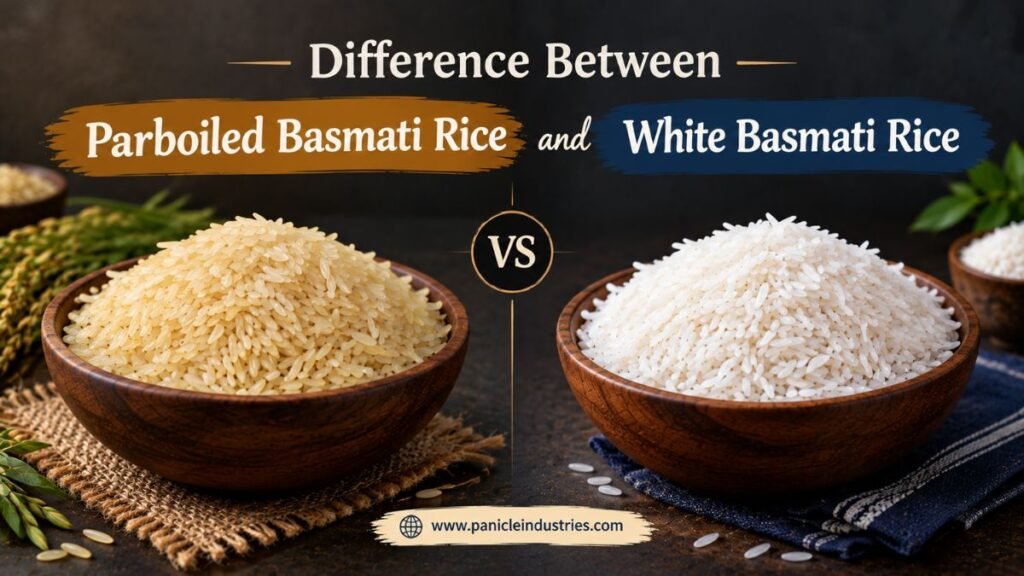
Rice is a staple food in many households, but choosing between parboiled rice and regular white rice can be confusing. Both are widely available, both can be used in everyday meals, and both provide carbohydrates for energy. However, they differ in how they are processed, how they cook, and how their grains behave when served.
The main difference between parboiled rice and white rice is the processing method. Parboiled rice is soaked, heated or steamed, and dried while it is still inside its protective outer husk. It is then milled to remove the husk and, in most products, the bran. Regular white rice is generally milled without this parboiling treatment.
Parboiling changes the structure of the grain and helps retain some nutrients that might otherwise be lost during milling. It also makes the grains firmer and often less sticky after cooking. Regular white rice usually has a milder flavor and a softer texture, although the exact result depends on the variety.
An important detail is that parboiled rice can also be white rice. Parboiled describes the processing method, while white usually describes rice from which the outer bran and germ have been removed. The comparison below focuses on parboiled rice and ordinary non-parboiled white rice.
What Is Parboiled Rice?
Parboiled rice is rice that undergoes a special treatment before milling. The process usually includes soaking, steaming or heating, and drying the paddy. After that, the outer husk is removed and the rice may be polished.
The treatment changes the internal structure of the grain. It also helps move some water-soluble vitamins and minerals from the outer layers toward the inner part of the grain before milling removes the bran.
According to a scientific review published in Rice, parboiling changes the physical and chemical properties of rice, can improve the recovery of whole grains during milling, and helps retain certain nutrients in milled rice.
Also read: Why Basmati Rice is a Great Option for People with Diabetes?
How Is Parboiled Rice Made?
The process generally follows these steps:
- Soaking: Paddy rice absorbs water to prepare the grains for heating.
- Steaming or heating: Heat changes the starch structure inside the grains.
- Drying: The treated paddy is dried to a suitable moisture level.
- Milling: The husk and, depending on the final product, the bran are removed.
- Sorting and grading: The rice is cleaned and prepared for packaging.
These stages help explain why parboiled rice behaves differently from regular white rice during cooking.
What Does Parboiled Rice Look Like?
Parboiled rice often has a slightly golden, cream-colored, or translucent appearance. However, its exact color depends on the rice variety and processing method.
Its grains tend to be firm, and many varieties hold their shape well during cooking.
Do not assume that every golden-colored rice is automatically high quality. Grain variety, processing conditions, milling, and storage also affect the final product.
What Is Regular White Rice?
White rice is rice that has had its husk removed and has usually been milled to remove the bran and germ. This creates the familiar white or cream-colored grains commonly sold in grocery stores.
Regular white rice is often produced without parboiling. It is milled and then packaged for sale.
Because milling removes the bran and germ, white rice generally contains less fiber and several vitamins and minerals than brown rice from the same variety. Some countries and manufacturers also sell enriched white rice, which has selected nutrients added back after milling.
Common Characteristics of White Rice
Regular non-parboiled white rice usually has these characteristics:
- A white or cream-colored appearance
- A mild flavor
- A texture that ranges from soft to fluffy, depending on the variety
- A relatively straightforward cooking process
- A wide range of uses in everyday meals
White rice is commonly served with dal, vegetables, curries, stir-fries, and other dishes. Different varieties can also be used for biryani, pulao, rice bowls, and desserts.
Difference Between Parboiled Rice and White Rice
The following table compares parboiled rice with regular non-parboiled white rice.
| Feature | Parboiled Rice | Regular White Rice |
|---|---|---|
| Processing | Soaked, heated or steamed, and dried before milling | Usually milled without parboiling |
| Appearance | Often cream-colored, golden, or translucent | Usually white or cream-colored |
| Grain structure | Generally firmer because of processing | Depends on the variety and milling |
| Cooked texture | Often firm with separate grains | Can range from fluffy and separate to soft and sticky |
| Nutrient retention | May retain more of certain nutrients during milling | Milling removes some nutrients; enrichment may replace selected ones |
| Flavor | Mild, sometimes slightly more distinctive | Usually mild and neutral |
| Cooking time | Often longer, depending on the product | Varies by variety and cooking method |
| Common uses | Everyday meals, catering, rice dishes requiring firm grains | Everyday meals, curries, rice bowls, and many other dishes |
| Color after cooking | May retain a cream or pale yellow tone | Usually white |
| Price | Varies by variety, brand, and processing | Varies by variety, grade, and brand |
The differences are general rather than absolute. For example, long-grain white rice may remain separate after cooking, while some short-grain varieties naturally become softer and stickier.
Difference in Nutritional Value
Nutrition is one of the biggest reasons people compare parboiled rice with regular white rice.
Parboiling can improve the retention of certain nutrients during milling. During the process, some water-soluble vitamins and minerals move from the outer layers into the endosperm, the starchy part of the grain. This means that parboiled rice can retain more of certain nutrients than comparable non-parboiled white rice after milling.
However, this does not mean every parboiled rice product contains more of every nutrient. Results depend on the rice variety, processing conditions, degree of milling, and whether the white rice is enriched.
Calories and Carbohydrates
Both parboiled rice and regular white rice are primarily sources of carbohydrates.
Neither type automatically has fewer calories in every comparison. The values depend on the variety, moisture content, and whether you compare uncooked rice or cooked rice.
For a fair comparison, use the nutrition labels for the specific products and compare the same serving basis. A cup of cooked rice can contain different amounts of dry rice depending on how much water each variety absorbs.
Fiber and Protein
Do not assume that parboiled rice is a high-fiber food simply because it undergoes parboiling.
When rice is polished, the bran is removed, which reduces much of its fiber. Parboiling mainly changes nutrient distribution and grain structure; it does not make polished rice equivalent to whole-grain brown rice.
Protein content can also vary with the variety and processing method, but the difference between two products may be small compared with differences in serving size and preparation.
Vitamins and Minerals
Parboiled white rice may retain more of certain B vitamins and minerals than comparable non-parboiled white rice. However, the amount retained depends on the processing conditions and how much of the grain is removed during milling.
Enrichment adds another variable. Regular white rice that has been fortified or enriched may provide certain added nutrients that an unenriched product does not.
For this reason, check the actual product label when nutrition is an important part of your decision.
Which Rice Has a Lower Glycemic Index?
The glycemic index, or GI, describes how quickly a carbohydrate-containing food raises blood glucose under standardized testing conditions.
Parboiled rice often has a lower GI than comparable regular white rice, but this is not guaranteed for every product.
Parboiling changes the starch structure, which can affect how the cooked rice is digested. However, the final GI also depends on the rice variety, processing conditions, cooking time, and other factors.
A review of rice processing describes how parboiling affects starch and the physical properties of rice grains. These changes help explain why parboiled rice can behave differently from untreated rice.
If you are managing diabetes or trying to control blood glucose, do not rely on the word parboiled alone. Portion size, the rest of your meal, physical activity, and your individual response to food also matter. Follow advice from your healthcare professional instead of using rice type as a substitute for diabetes management.
Difference in Taste and Texture
Another noticeable difference between parboiled rice and white rice is how they feel when eaten.
Parboiled rice tends to have a firm, slightly chewy texture. Its grains often remain separate, even when cooked in larger batches.
Regular white rice can be softer and more delicate, although this depends on the variety. Some long-grain white rice cooks up fluffy, while certain short-grain types become more cohesive.
Why Parboiled Rice Stays Firmer
The heat treatment used during parboiling changes the grain’s starch structure. This helps make the grain harder and can reduce breakage during milling.
As a result, parboiled rice often holds its shape well during cooking and handling. This can be useful for large batches, catering, and dishes where the rice should remain separate.
However, cooking technique still matters. Too much water or excessive cooking can affect the texture of either type.
Difference in Cooking Time and Water Requirements
Parboiled rice may take longer to cook than regular white rice, but the exact cooking time depends on the product.
Processing changes the grain’s structure and water absorption behavior. Some parboiled rice requires more water or a longer cooking period than ordinary white rice, while product instructions may vary by variety and brand.
How to Cook Parboiled Rice
For good results:
- Check the package for the recommended water ratio and cooking time.
- Measure the rice and water carefully.
- Use a suitable pot with enough room for the rice to expand.
- Simmer gently rather than cooking at very high heat throughout.
- Check that the grains are tender before serving.
Do not automatically use the same water ratio for parboiled rice and regular white rice. If the rice remains firm, check the instructions before making large adjustments.
How to Cook Regular White Rice
Regular white rice often cooks relatively quickly, although the time depends on the variety and cooking method.
Measure the water, cover the pot when appropriate, and avoid stirring unnecessarily if you want separate grains. Let the rice rest briefly after cooking, then fluff it gently.
The package instructions are generally the best starting point for both types.
Which Rice Is Better for Biryani and Other Dishes?
The right choice depends on the recipe and the texture you prefer.
Parboiled Rice
Parboiled rice is useful when you want firm grains that hold their shape. It can work well for everyday meals, large-batch cooking, catering, and recipes where the rice must withstand additional handling.
Parboiled basmati is also used for biryani. It combines basmati’s aromatic qualities with the firmer cooking behavior associated with parboiling.
Regular White Rice
Regular white rice is a versatile choice for daily meals, especially when you prefer a mild flavor and a softer texture.
Depending on the variety, it can work well with dal, vegetables, curries, fried rice, and rice bowls.
There is no rule that biryani must use one type of rice in every region or recipe. The best option depends on the variety, cooking method, and desired result.
Is Parboiled Rice Healthier Than White Rice?
Parboiled rice can offer a nutritional advantage over comparable non-parboiled white rice because it may retain more of certain nutrients during milling.
However, calling all parboiled rice healthier than all white rice would be too broad. The comparison changes if the white rice is enriched, if the parboiled rice is heavily polished, or if you compare different varieties.
The amount you eat and what you eat with it also matter. Rice served with vegetables, pulses, and other varied foods contributes to a different overall meal than rice eaten alone.
For a clear comparison, look at the nutrition labels, serving sizes, and ingredients of the actual products you are considering.
How to Choose Between Parboiled Rice and White Rice?
Before buying, consider what matters most to you.
Choose parboiled rice when you prefer firmer grains, want rice that holds its shape well, or want a product that may retain more of certain nutrients during milling.
Choose regular white rice when you prefer its familiar flavor and texture, need a variety that cooks quickly, or want rice for recipes designed around softer grains.
If nutrition is your priority, look at the actual product rather than relying on the name alone. The type of rice, degree of milling, enrichment, serving size, and cooking method can all influence the final result.
Conclusion
The main difference between parboiled rice and white rice is the way they are processed. Parboiled rice is soaked and heated before milling, which changes its structure and can help retain certain nutrients. Regular non-parboiled white rice is milled without that treatment and often has a milder flavor and softer texture.
Parboiled rice generally produces firmer grains that hold their shape well, while regular white rice can provide the soft or fluffy texture many people prefer for everyday meals. Nutritionally, parboiled rice may retain more of certain vitamins and minerals, but the result depends on processing, milling, variety, and whether the white rice is enriched.
Neither type is automatically the best choice for everyone. Consider the recipe, desired texture, cooking instructions, and nutrition information when choosing your rice. Understanding how each type is made will help you select the right one for your kitchen.
Frequently Asked Questions (FAQ)
1. Is parboiled rice the same as white rice?
Not exactly. Parboiled describes rice that is treated with water and heat before milling. White describes milled rice, and parboiled rice can also be white after milling.
2. Which is healthier parboiled rice or white rice?
Parboiled rice may retain more of certain nutrients during milling, but the difference depends on processing, polishing, and enrichment. Neither type is automatically healthier in every comparison.
3. Does parboiled rice take longer to cook than white rice?
Often, yes. Parboiled rice may need more cooking time because processing changes the grain structure. Always check the package because cooking times vary by product.
4. Is parboiled rice better for blood sugar?
Some parboiled rice varieties have a lower glycemic response than regular white rice, but this varies by variety and cooking method. Do not assume all parboiled rice has a low GI.
5. Can I use parboiled rice instead of white rice in recipes?
Yes, in many recipes, but you may need to adjust the water and cooking time. Parboiled rice usually stays firmer, so the finished texture may differ.