
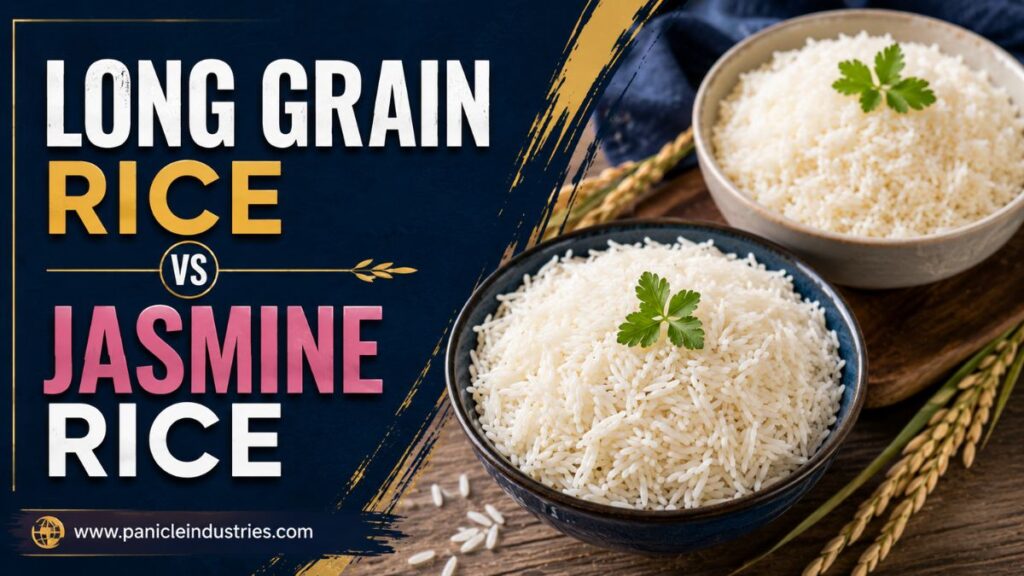
Rice is a staple food enjoyed by billions of people around the world, but not all rice varieties are the same. Among the many options available, long grain rice and jasmine rice are two of the most popular choices for home cooks, restaurants, and food manufacturers. Although they may appear similar at first glance, they differ in aroma, texture, flavor, cooking characteristics, and the dishes they complement best.
If you’ve ever wondered “Long Grain Rice vs Jasmine Rice: Which one should I choose?”, you’re not alone. Choosing the right rice can significantly impact the taste and texture of your meal. Whether you’re preparing a simple side dish, fried rice, curry, or an Asian-inspired recipe, understanding the differences between these two varieties will help you make the right decision.
In this blog, we’ll compare long grain rice and jasmine rice in detail, explore their unique characteristics, and explain when each type is the better option.
Long Grain Rice vs Jasmine Rice: Quick Comparison
| Feature | Long Grain Rice | Jasmine Rice |
|---|---|---|
| Grain Shape | Long, slender grains | Long, slender with a slightly plumper shape |
| Aroma | Mild or neutral | Naturally fragrant with a floral aroma |
| Texture After Cooking | Light, fluffy, and separate | Soft, tender, and slightly sticky |
| Flavor | Mild and neutral | Delicate, buttery, slightly sweet |
| Best For | Pilaf, fried rice, curries, side dishes | Thai cuisine, stir-fries, grilled meats, coconut rice |
| Cooking Time | 15–20 minutes | 15–18 minutes |
| Stickiness | Very low | Slightly sticky |
| Popular Regions | Worldwide | Thailand and Southeast Asia |
This comparison provides a quick overview, but each rice variety has unique qualities that make it suitable for different recipes.
What Is Long Grain Rice?
Characteristics of Long Grain Rice
Long grain rice refers to rice varieties with grains that are typically three to five times longer than they are wide. When cooked, the grains remain firm, fluffy, and well separated because they contain relatively less surface starch than shorter-grain varieties.
Its neutral flavor makes it one of the most versatile rice types available. It easily absorbs the flavors of herbs, spices, sauces, and broths without overpowering the dish.
Common Types of Long Grain Rice
Several popular rice varieties fall under the long grain category, including:
- American long grain white rice
- Long grain brown rice
- Converted (parboiled) long grain rice
- Some specialty aromatic long grain varieties
Because of its versatility, long grain rice is commonly used in homes, restaurants, cafeterias, and commercial food production.
What Is Jasmine Rice?
Characteristics of Jasmine Rice
Jasmine rice is a fragrant long-grain rice originally cultivated in Thailand. Unlike standard long grain rice, jasmine rice has a naturally pleasant floral aroma that becomes more noticeable during cooking.
Its grains are slightly softer after cooking and tend to cling together gently while still maintaining their shape. This makes jasmine rice ideal for dishes where a soft, tender texture is preferred.
Why Is Jasmine Rice So Popular?
Jasmine rice is prized for its:
- Natural fragrance
- Soft texture
- Delicate flavor
- Attractive appearance
- Excellent pairing with Southeast Asian cuisine
Its unique aroma comes from naturally occurring aromatic compounds that distinguish it from ordinary long grain rice.
Texture: One of the Biggest Differences
Long Grain Rice
One of the defining features of long grain rice is its fluffy texture.
After cooking, the grains remain:
- Separate
- Firm
- Light
- Non-sticky
This makes it an excellent choice for recipes where distinct grains are desired.
For example, fried rice prepared with long grain rice typically has a lighter texture because the grains stay separate during stir-frying.
Jasmine Rice
Jasmine rice cooks differently.
Its grains become:
- Soft
- Tender
- Slightly sticky
- Moist
Although jasmine rice is not as sticky as sushi rice, the grains naturally cling together more than standard long grain rice.
This texture pairs well with curries, grilled meats, and flavorful sauces because the rice easily absorbs moisture without becoming mushy.
Aroma and Flavor Comparison
Long Grain Rice
Long grain rice has a mild, neutral flavor that allows other ingredients to stand out.
Because it does not contribute a strong aroma, it works well in recipes with bold seasonings and sauces.
Examples include:
- Vegetable pilaf
- Fried rice
- Rice bowls
- Mexican rice
- Stuffed peppers
Jasmine Rice
Jasmine rice offers a naturally aromatic experience.
During cooking, it releases a pleasant floral fragrance that enhances the overall meal.
Its flavor is often described as:
- Light
- Slightly sweet
- Buttery
- Fragrant
These qualities make jasmine rice a favorite for Thai curries, stir-fries, coconut-based dishes, and grilled seafood.
Cooking Differences
Water Ratio
Both rice varieties require careful measurement of water, but the exact ratio can vary slightly depending on the brand and cooking method.
Always refer to the package instructions for the most accurate guidance.
Cooking Time
Both long grain rice and jasmine rice cook relatively quickly.
In general:
- Long grain rice takes approximately 15–20 minutes.
- Jasmine rice cooks in approximately 15–18 minutes.
Allowing either rice to rest for about 10 minutes after cooking helps improve texture by allowing the remaining moisture to distribute evenly.
Should You Rinse the Rice?
Rinsing is recommended for both varieties before cooking.
Rinsing helps:
- Remove excess surface starch
- Wash away dust or small particles
- Improve grain separation
- Produce a cleaner final texture
For jasmine rice, rinsing should be done gently to preserve the delicate grains while still removing excess starch.
Which Rice Is Easier to Cook?
Both varieties are beginner-friendly, but long grain rice is generally more forgiving.
Because it naturally cooks into separate grains, small measurement errors are less likely to affect the final texture.
Jasmine rice requires slightly more attention to the water ratio. Too much water can make it overly soft, while too little water may prevent the grains from reaching their characteristic tender texture.
With a little practice, however, both rice varieties are easy to prepare and consistently deliver excellent results.
Also read: Basmati Rice vs Jasmine Rice
Nutritional Comparison
Both long grain rice and jasmine rice are excellent sources of carbohydrates and provide energy for daily activities. Their nutritional profiles are quite similar, especially when comparing white rice varieties. However, small differences exist depending on whether you choose white or whole-grain versions.
| Nutrient (Cooked) | Long Grain White Rice | Jasmine White Rice |
|---|---|---|
| Calories | Similar | Similar |
| Carbohydrates | High | High |
| Protein | Moderate | Moderate |
| Fat | Very Low | Very Low |
| Fiber | Low | Low |
| Gluten | Naturally Gluten-Free | Naturally Gluten-Free |
Whole-grain versions, such as long grain brown rice or brown jasmine rice, contain more fiber, vitamins, and minerals than their white counterparts because they retain the bran and germ layers.
Which Rice Has More Nutrients?
Neither rice variety is dramatically more nutritious than the other. The nutritional value depends more on whether you choose white or brown rice than on whether it is long grain or jasmine.
For people looking to increase their fiber intake, whole-grain options are generally the better choice.
Best Uses for Long Grain Rice
Long grain rice is incredibly versatile because of its light and fluffy texture. Since the grains remain separate after cooking, it works well in dishes where individual grains are important.
Ideal Dishes
Long grain rice is an excellent choice for:
- Fried rice
- Rice pilaf
- Burrito bowls
- Stuffed peppers
- Rice salads
- Vegetable side dishes
- Curries
- Casseroles
Its mild flavor allows it to absorb seasonings, herbs, and sauces without competing with the other ingredients.
Best Uses for Jasmine Rice
Jasmine rice shines in recipes where its natural fragrance and soft texture enhance the overall dining experience.
Its slightly sticky consistency helps it pair beautifully with flavorful sauces and grilled proteins.
Ideal Dishes
Jasmine rice is commonly served with:
- Thai green curry
- Thai red curry
- Coconut chicken
- Stir-fried vegetables
- Grilled seafood
- Teriyaki chicken
- Asian rice bowls
Its floral aroma adds another layer of flavor that standard long grain rice cannot provide.
Which Rice Is Healthier?
One of the most common questions in the long grain rice vs jasmine rice comparison is which option is healthier.
The answer depends on your overall diet and nutritional goals.
Choose Long Grain Rice If You:
- Prefer fluffy, separate grains
- Want a neutral flavor
- Frequently prepare fried rice or pilaf
- Like rice that easily absorbs seasonings
Choose Jasmine Rice If You:
- Enjoy fragrant rice
- Prefer a softer texture
- Cook Thai or Southeast Asian dishes regularly
- Want rice with a naturally delicate aroma
From a nutritional perspective, both can fit into a healthy, balanced diet. Portion size, cooking method, and the foods served alongside the rice often have a greater impact on overall nutrition than the rice variety itself.
How to Cook Each Rice for the Best Results
Cooking rice correctly helps preserve its texture and flavor.
Tips for Long Grain Rice
- Rinse before cooking to remove excess starch.
- Use the recommended water-to-rice ratio.
- Cook over low heat after bringing the water to a boil.
- Let the rice rest for about 10 minutes before fluffing with a fork.
Tips for Jasmine Rice
- Rinse gently to remove excess starch.
- Avoid adding too much water, as it can become overly soft.
- Keep the lid closed during cooking.
- Allow the rice to rest before serving to achieve the best texture.
These simple steps can make a noticeable difference regardless of which variety you choose.
Buying and Storage Tips
Choosing high-quality rice helps ensure better cooking results.
When Buying Rice
Look for:
- Clean, unbroken grains
- Uniform size and color
- Properly sealed packaging
- A recent packaging or best-before date
If buying jasmine rice, authentic Thai jasmine rice is often labeled with its country of origin.
Proper Storage
Store uncooked rice in:
- An airtight container
- A cool, dry place
- Away from direct sunlight and moisture
Proper storage helps maintain freshness, aroma, and quality for an extended period.
Long Grain Rice vs Jasmine Rice: Which One Should You Choose?
There is no single winner in the long grain rice vs jasmine rice debate because each variety serves a different purpose.
If you need rice that stays fluffy, separate, and works well in a variety of international recipes, long grain rice is an excellent choice.
If you enjoy fragrant rice with a soft texture that pairs perfectly with Thai and Southeast Asian cuisine, jasmine rice is likely the better option.
Many households keep both varieties on hand so they can choose the best rice for each recipe.
Conclusion
When comparing long grain rice vs jasmine rice, the differences go far beyond appearance. Long grain rice is valued for its fluffy texture, neutral flavor, and versatility, making it suitable for fried rice, pilaf, salads, and many everyday meals. Jasmine rice, on the other hand, is prized for its natural floral aroma, soft texture, and ability to complement flavorful Asian dishes.
Neither variety is universally better than the other. The right choice depends on the meal you are preparing, your personal taste preferences, and the texture you want to achieve. By understanding the characteristics of each rice type, you can confidently select the best option for any recipe and enjoy consistently delicious results.
Frequently Asked Questions
1. Is jasmine rice the same as long grain rice?
No. Jasmine rice is a fragrant variety of long-grain rice with a softer texture and floral aroma, while regular long grain rice has a milder flavor.
2. Which is healthier, long grain rice or jasmine rice?
Both are nutritionally similar. Whole-grain versions provide more fiber and nutrients than white rice, regardless of the variety.
3. Can I substitute jasmine rice for long grain rice?
Yes. You can substitute one for the other in most recipes, but expect slight differences in texture, aroma, and stickiness.
4. Which rice is better for fried rice?
Long grain rice is generally preferred because its grains remain firm and separate, creating a light texture that works well for stir-frying.
5. Does jasmine rice take longer to cook than long grain rice?
No. Jasmine rice usually cooks in about 15–18 minutes, which is similar to or slightly faster than many long grain rice varieties.