
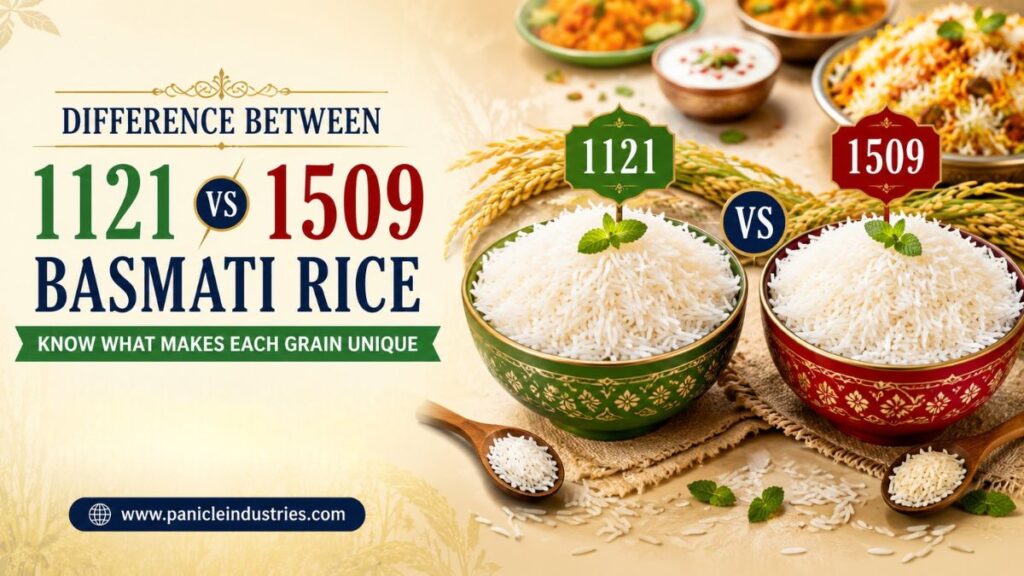
Basmati rice is one of the most prized rice varieties in the world. Known for its long grains, delightful aroma, and fluffy texture, it plays a starring role in dishes like biryani, pulao, fried rice, and many traditional Indian recipes. However, when buyers enter the market, they often encounter different basmati varieties with numbers such as 1121, 1509, 1718, and Pusa Basmati.
Among these, 1121 and 1509 Basmati Rice are two of the most popular choices. Both are widely used in homes, restaurants, catering businesses, and export markets. Yet many consumers, retailers, and food businesses wonder which variety is better and how they differ.
Understanding the difference between 1121 vs 1509 Basmati Rice can help you choose the right rice for your cooking needs, budget, and desired dining experience.
In this blog, we will compare these two popular basmati varieties in detail, including grain length, aroma, cooking performance, texture, pricing, and ideal applications.
Difference Between 1121 vs 1509 Basmati Rice
At first glance, 1121 and 1509 Basmati Rice may appear similar. Both belong to the basmati family and offer long grains, excellent cooking qualities, and attractive presentation.
However, they differ in several important areas:
- Grain length
- Aroma intensity
- Cooking characteristics
- Maturity period
- Market price
- Preferred usage
Understanding these distinctions helps consumers make informed purchasing decisions.
Also read: What Are the Best Rice Brands for Biryani and Other Indian Dishes?
What Is 1121 Basmati Rice?
1121 Basmati Rice is considered one of the longest-grain basmati varieties available today.
Introduced through agricultural research and breeding programs, it quickly became popular due to its exceptional grain elongation after cooking.
Key Characteristics of 1121 Basmati Rice
- Extra-long grain structure
- Premium appearance
- Excellent cooking elongation
- Rich traditional basmati aroma
- High export demand
- Preferred for luxury rice dishes
Many premium restaurants choose 1121 because of its elegant presentation and superior dining experience.
Average Grain Length
Before cooking:
- Approximately 8.2 mm to 8.4 mm
After cooking:
- Can elongate significantly while maintaining grain integrity
This impressive elongation is one reason why 1121 is often called the king of premium basmati rice.
What Is 1509 Basmati Rice?
1509 Basmati Rice is a newer variety developed to address some agricultural and commercial challenges associated with traditional basmati cultivation.
It gained popularity because it matures faster and offers excellent yields while still maintaining desirable basmati qualities.
Key Characteristics of 1509 Basmati Rice
- Long grains
- Faster crop maturity
- Good cooking performance
- Mild basmati aroma
- Cost-effective pricing
- High productivity for farmers
Because of its affordability and consistency, 1509 has become increasingly popular among households and food service businesses.
Average Grain Length
Before cooking:
- Approximately 8.3 mm to 8.5 mm
After cooking:
- Good elongation with attractive appearance
While grain length often rivals 1121, other quality parameters differ.
Grain Length Comparison
When discussing basmati rice, grain length is usually the first characteristic people notice.
1121 Basmati Rice
Advantages:
- Exceptional grain elongation
- Premium visual appeal
- Long, slender grains after cooking
Ideal for:
- Biryani
- Premium pulao
- Banquet meals
1509 Basmati Rice
Advantages:
- Naturally long grains
- Attractive appearance
- Good elongation
Ideal for:
- Daily cooking
- Budget-friendly biryani
- Catering services
Winner:
While both perform well, 1121 generally provides superior elongation and presentation.
Aroma and Fragrance Differences
The signature aroma of basmati rice is one of its most valued characteristics.
1121 Basmati Rice
1121 offers:
- Richer fragrance
- Traditional basmati aroma
- Enhanced dining experience
Its aroma becomes even more pronounced after aging.
1509 Basmati Rice
1509 offers:
- Pleasant aroma
- Milder fragrance
- Less intense aromatic profile
While still aromatic, it typically lacks the depth associated with premium-aged 1121 rice.
Winner:
1121 Basmati Rice usually delivers a stronger and more traditional basmati aroma.
Texture After Cooking
Texture can dramatically affect the quality of rice-based dishes.
1121 Basmati Rice
After cooking:
- Fluffy texture
- Separate grains
- Light mouthfeel
These characteristics make it ideal for special dishes.
1509 Basmati Rice
After cooking:
- Soft texture
- Good grain separation
- Consistent performance
Many households appreciate its ease of cooking and reliable results.
Winner:
1121 generally provides a more premium texture, though 1509 remains highly satisfactory for everyday use.
Yield and Farming Differences
Agricultural performance plays an important role in rice availability and pricing.
1121 Basmati Rice
Farmers often face:
- Longer crop duration
- Higher cultivation costs
- Greater weather exposure
1509 Basmati Rice
Advantages include:
- Earlier maturity
- Reduced cultivation period
- Better productivity
This faster maturity often benefits both farmers and consumers.
Price Comparison
Price frequently influences purchasing decisions.
Why 1121 Costs More
Several factors contribute:
- Premium positioning
- Superior aroma
- Better elongation
- Strong export demand
- Longer aging requirements
Why 1509 Is More Affordable
Factors include:
- Higher crop yield
- Faster maturity
- Lower production costs
- Greater market availability
For budget-conscious buyers, 1509 often provides excellent value.
Which Rice Is Better for Biryani?
Biryani places unique demands on rice.
The ideal grain should:
- Remain separate
- Absorb flavors
- Maintain structure
- Look visually appealing
1121 for Biryani
Advantages:
- Exceptional grain length
- Rich aroma
- Premium presentation
This makes it a favorite among restaurants and professional chefs.
1509 for Biryani
Advantages:
- Good elongation
- Affordable pricing
- Reliable cooking results
Many catering businesses prefer 1509 because it balances quality and cost.
Winner:
For premium biryani, 1121 generally takes the lead.
For budget-friendly biryani, 1509 performs exceptionally well.
Which Rice Is Better for Daily Consumption?
Not every meal requires premium-grade rice.
For daily cooking, consumers often prioritize:
- Value
- Consistency
- Ease of preparation
1509 Advantages
- Affordable
- Versatile
- Widely available
Suitable for:
- Dal-chawal
- Vegetable rice
- Fried rice
- Everyday meals
1121 Advantages
- Premium eating experience
- Better aroma
Suitable for:
- Special family meals
- Weekend cooking
- Guest gatherings
Winner:
1509 is often the more practical choice for everyday consumption.
Export Market Preferences
Both varieties enjoy strong international demand.
1121 Export Demand
Popular in:
- Middle East
- Europe
- North America
Buyers value:
- Luxury appearance
- Premium aroma
1509 Export Demand
Popular among:
- Large food service providers
- Bulk buyers
- Cost-conscious markets
Its affordability drives substantial export volumes.
Storage and Shelf Life
Both varieties benefit from proper storage.
Store rice:
- In airtight containers
- Away from moisture
- In cool, dry conditions
Proper storage preserves:
- Aroma
- Grain quality
- Cooking performance
Aged basmati rice often improves in quality over time when stored correctly.
How to Choose Between 1121 and 1509 Basmati Rice?
Choose 1121 if you want:
- Premium biryani results
- Superior aroma
- Better grain elongation
- Luxury dining experience
Choose 1509 if you want:
- Good quality at lower cost
- Daily-use rice
- Consistent cooking performance
- Better value for large families
Neither option is universally better. The ideal choice depends on your priorities and budget.
Common Myths About 1121 and 1509 Rice
Myth 1: Longer grain always means better rice
Reality:
Quality depends on aroma, texture, aging, and cooking performance—not grain length alone.
Myth 2: 1509 is low-quality rice
Reality:
1509 is a legitimate basmati variety with excellent cooking qualities and strong market demand.
Myth 3: Only restaurants should use 1121
Reality:
Home cooks can also enjoy the superior texture and aroma of 1121 for special occasions.
Conclusion
Understanding the difference between 1121 vs 1509 Basmati Rice helps consumers choose the right variety for their needs.
1121 Basmati Rice stands out for its exceptional grain elongation, rich aroma, premium appearance, and superior dining experience. It remains the preferred choice for luxury biryani, festive meals, and special occasions.
1509 Basmati Rice offers excellent value, good grain length, reliable cooking performance, and affordability. Its versatility makes it a practical choice for everyday cooking and large-scale food preparation.
Ultimately, both varieties deserve their popularity. If presentation and aroma matter most, 1121 is difficult to beat. If you want quality rice that balances performance and affordability, 1509 is an excellent option. The best choice depends on your cooking style, budget, and expectations.