
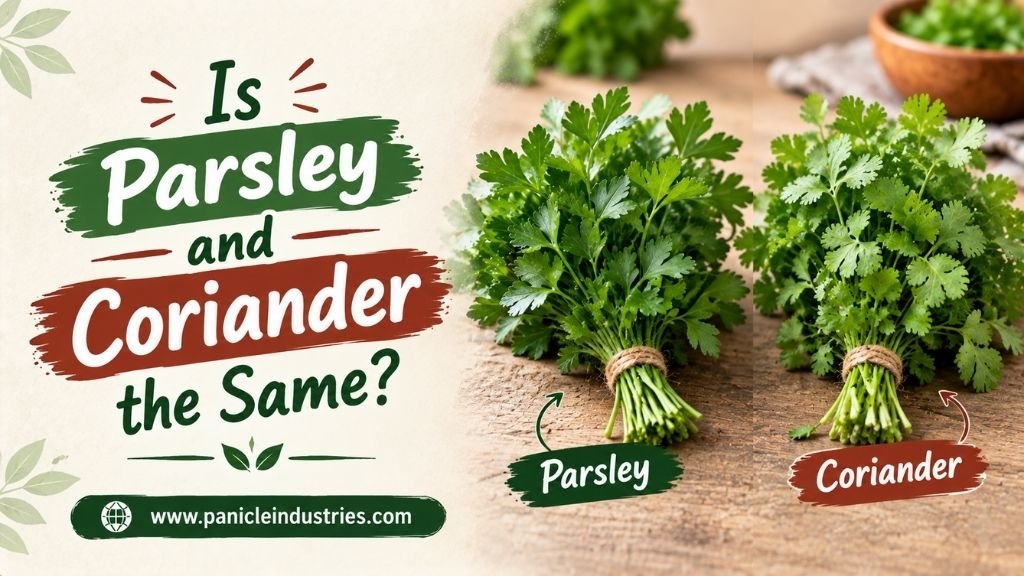
No, parsley and coriander are not the same herb. They belong to the same plant family, Apiaceae, but they are different plants with different botanical names, appearances, flavors, and common uses. Parsley is generally Petroselinum crispum, while coriander is Coriandrum sativum.
The confusion is understandable because the two herbs can look surprisingly similar, especially when sold fresh. Their leaves are both green and delicate, and both are widely used as fresh garnishes. There is also a naming issue: in many countries, the fresh leaves of coriander are called cilantro, while the dried seeds are called coriander.
So, is parsley and coriander the same? Definitely not. You can sometimes use one in place of the other in a dish, but the final flavor will be noticeably different. Understanding the difference can help you choose the right herb when shopping, cooking, or following a recipe.
What Is Parsley?
Parsley is a leafy culinary herb from the Petroselinum genus in the Apiaceae family. Kew’s Plants of the World Online recognizes Petroselinum crispum as the accepted species.
Parsley is commonly available in two forms: flat-leaf parsley and curly parsley.
Flat-leaf parsley, also called Italian parsley, has broader, flatter leaves and is often preferred for cooking because it is easy to chop and has a stronger herbaceous taste. Curly parsley has tightly curled leaves and is often used as a garnish, although it can also be used in cooked dishes.
Parsley generally has a fresh, green, slightly peppery flavor. It can brighten a dish without overpowering the other ingredients.
Common Uses of Parsley
Parsley works well in:
- Soups and stews
- Pasta dishes
- Salads
- Sauces and dips
- Garlic and herb butter
- Roasted vegetables
- Meat and fish dishes
- Fresh garnishes
Because its flavor is relatively mild compared with coriander, parsley is useful when you want freshness without introducing a strong citrusy or spicy herbal note.
Also read: Are Coriander and Cilantro the Same Thing?
What Is Coriander?
Coriander comes from Coriandrum sativum, a different plant in the same Apiaceae family. Kew lists Coriandrum sativum as an accepted species in the genus Coriandrum.
Coriander is unusual because both its fresh leaves and dried fruits, commonly called coriander seeds, are used in cooking.
In many English-speaking countries, the fresh leaves are called cilantro, while “coriander” often refers to the dried seeds. In India and several other countries, “coriander” commonly refers to both the fresh herb and the spice, depending on the context.
Fresh coriander has a much stronger aroma than parsley. Its flavor is often described as fresh, citrusy, herbal, and slightly spicy. However, people experience its flavor differently, and some individuals find fresh coriander unpleasant or soapy-tasting.
Common Uses of Coriander
Fresh coriander is commonly added to:
- Curries
- Chutneys
- Salsa
- Soups
- Rice dishes
- Noodles
- Salads
- Tacos and other dishes where a fresh herb is wanted
Coriander seeds are also used as a spice in many cuisines, including Indian, Middle Eastern, African, and Latin American cooking. Kew notes that Coriandrum sativum is used to flavor foods such as soups, stews, curries, and salads.
Parsley vs Coriander: What Is the Difference?
The easiest way to understand the difference is to compare them side by side.
| Feature | Parsley | Coriander |
|---|---|---|
| Botanical name | Petroselinum crispum | Coriandrum sativum |
| Plant family | Apiaceae | Apiaceae |
| Fresh herb name | Parsley | Coriander or cilantro |
| Leaf appearance | Flat or curly, depending on type | Softer, rounded to lobed leaves |
| Flavor | Fresh, grassy, mild, slightly peppery | Strong, citrusy, herbal |
| Aroma | Mild and fresh | More intense and distinctive |
| Common cuisines | European, Mediterranean, Middle Eastern | Indian, Mexican, Middle Eastern, Asian |
| Seeds used as spice? | Not commonly used like coriander | Yes |
| Typical role | Herb and garnish | Herb and spice |
The most important point is that they share a plant family, not an identity. They are separate genera and species.
How to Tell Parsley and Coriander Apart?
When the herbs are sitting next to each other in a grocery store, they can look similar. A few visual clues can make identification easier.
Look at the Leaves
Parsley leaves tend to look more defined and structured. Flat-leaf parsley has relatively broad leaf sections, while curly parsley has tightly curled foliage.
Coriander leaves tend to look softer and more delicate. The lower leaves may appear broader and lobed, while upper leaves become more finely divided. Kew’s botanical description also notes that coriander leaves become increasingly divided higher up the plant.
Smell the Herb
The smell is often the quickest test.
Parsley usually has a mild, clean, grassy smell. Coriander has a much stronger aroma that can be recognized immediately once you know it.
When buying fresh herbs, gently smell them if the store allows it. A strong citrusy and distinctive scent is a useful clue that you are looking at coriander.
Check the Stems
Coriander often has softer, thinner stems and a more delicate overall appearance. Parsley can look somewhat sturdier, particularly flat-leaf parsley.
These differences are not perfect identification tools by themselves, but looking at the leaves, stems, and aroma together makes identification much easier.
Why Do Parsley and Coriander Look Similar?
They look similar partly because they belong to the same botanical family, Apiaceae. This family includes many familiar culinary plants, including carrots, celery, parsley, and coriander.
Being in the same family means they share some structural features. However, being in the same family does not mean two plants are the same species or even the same genus.
A simple comparison is that two cousins can share family characteristics but still be clearly different individuals. Parsley and coriander are similar in that broad botanical sense, but their culinary identities are different.
Is Coriander Called Parsley in Some Countries?
This is where things can become confusing.
In everyday food shopping, names vary from country to country. Cilantro usually refers to the fresh leaves and stems of Coriandrum sativum, while the dried seeds are called coriander.
In India, the fresh leaves are commonly called dhania or coriander, and the dried seeds are also known as coriander seeds. This means a recipe asking for “coriander” may need some context.
Parsley, meanwhile, generally keeps the name parsley, although varieties such as Italian or flat-leaf parsley may be identified separately.
When buying herbs internationally, checking the botanical name or product description can prevent confusion.
Can You Substitute Parsley for Coriander?
Yes, but the answer depends heavily on the recipe.
Parsley can sometimes replace coriander when the main purpose is to add a fresh green herb to the dish. However, the flavor will not be the same.
For example, if a recipe calls for coriander as a finishing herb for a curry, replacing it with parsley will give freshness but will remove the distinctive coriander aroma.
Likewise, using coriander instead of parsley in a European-style pasta sauce can make the dish taste much stronger and more citrusy than intended.
When Parsley Can Be a Good Substitute?
Parsley may work reasonably well when:
- The herb is mainly used as a garnish.
- You want a mild green flavor.
- The dish already contains strong spices.
- The original herb is unavailable.
When You Should Not Substitute Them?
Avoid substitution when the herb’s distinctive flavor is central to the recipe.
For example, coriander is particularly important to the character of many chutneys, salsas, curries, and other dishes where its aroma is one of the main flavor components.
Similarly, replacing parsley with coriander in a mild herb-based dish can completely change the flavor balance.
Can You Use Parsley and Coriander Together?
Yes. There is no general reason you cannot combine them.
Using both can create an interesting herb mixture, especially in salads, sauces, marinades, soups, or grain dishes. The key is to control the amount of coriander because its stronger flavor can easily dominate parsley.
A simple approach is to use parsley as the main herb and a smaller amount of coriander for a stronger aromatic note.
For example, a chopped herb mixture for roasted vegetables might contain mostly parsley with a smaller amount of coriander, lemon juice, garlic, and olive oil.
The combination works best when you want both the mild freshness of parsley and the stronger character of coriander.
Is Parsley Healthier Than Coriander?
It is not accurate to declare one universally healthier than the other.
Both are nutrient-containing herbs, and adding fresh herbs to meals can contribute small amounts of vitamins, minerals, and other plant compounds. However, people usually consume herbs in relatively small quantities, so they should not be viewed as a replacement for a varied diet.
The more useful question is which herb fits your meal and dietary preferences.
Parsley may be a better match for someone who prefers a mild herbaceous taste, while coriander may be preferred when a stronger fresh and citrusy flavor is wanted.
Nutrition can also vary with serving size, freshness, preparation, and whether the herb is eaten fresh or dried.
Parsley vs Coriander in Different Dishes
Choosing the right herb becomes much easier when you think about the type of dish you are preparing.
Indian Cooking
Coriander is often the natural choice for curries, chutneys, dals, rice dishes, and many other Indian preparations. Both the fresh leaves and coriander seeds have important culinary roles.
Parsley can still be used in some modern or fusion recipes, but it will not provide the traditional coriander flavor.
Mexican-Inspired Cooking
Fresh coriander, or cilantro, is common in foods such as salsa, tacos, and guacamole-style preparations.
Parsley can add freshness, but it will produce a different result.
Mediterranean and European Cooking
Parsley is commonly used in pasta, sauces, salads, roasted vegetables, and herb mixtures.
Coriander can work in some modern recipes but may shift the flavor profile substantially.
What About Coriander Seeds and Parsley?
This is another important difference.
Coriander produces a widely used culinary spice called coriander seed. The dried fruits are commonly used whole, crushed, or ground.
Parsley is primarily used as a fresh or dried leafy herb. It is not normally used in cooking in the same way as coriander seeds.
This means that if a recipe calls for ground coriander, parsley is not a suitable substitute. They serve completely different purposes.
For example, if a curry recipe uses ground coriander as part of its spice base, adding dried parsley will not recreate the flavor. The dish needs an actual coriander-based spice.
Parsley vs Coriander: Which One Should You Choose?
The right herb depends on the flavor you want.
Choose parsley when you want:
- A mild, fresh herbal flavor
- A green garnish that does not dominate the dish
- An herb for pasta, sauces, salads, and roasted foods
- A classic Mediterranean or European flavor profile
Choose coriander when you want:
- A stronger aromatic herb
- A fresh citrusy and distinctive flavor
- A traditional finishing herb for many Indian or Mexican-style dishes
- An ingredient that can also be used in seed and ground-spice form
If you are following a recipe, using the specified herb is usually the safest choice, especially when the herb contributes strongly to the dish’s identity.
How to Store Fresh Parsley and Coriander?
Both herbs are delicate and lose freshness quickly when stored poorly.
Trim damaged parts, remove excess moisture, and keep the herbs refrigerated. A clean container or suitable storage wrap can help protect them from drying out or becoming excessively wet.
Do not wash large quantities much earlier than necessary if you cannot dry them properly. Extra moisture trapped around delicate leaves can encourage spoilage.
For longer storage, you can also chop and freeze herbs for use in cooked dishes. Frozen herbs may lose some of the fresh texture they had when raw, but they can still work well in soups, sauces, curries, and cooked meals.
Conclusion
So, is parsley and coriander the same? No. They are different herbs that only share the same broader plant family, Apiaceae. Parsley belongs to the Petroselinum genus, while coriander belongs to the Coriandrum genus.
The biggest differences are their appearance, aroma, flavor, and culinary uses. Parsley tends to have a milder, grassy flavor, while coriander has a stronger and more distinctive citrusy aroma. Coriander also has an important additional use: its dried fruits are widely used as the spice known as coriander seed.
Although you can sometimes substitute one herb for the other, doing so will change the flavor of the dish. For the best results, choose parsley when you want mild herbal freshness and coriander when you want its characteristic bold aroma and flavor.
Frequently Asked Questions (FAQ)
Is parsley and coriander the same herb?
No. Parsley and coriander are different plants in the same Apiaceae family. They have different botanical names, flavors, appearances, and culinary uses.
Can I use parsley instead of coriander?
You can use parsley when you mainly need a fresh green garnish, but it will not reproduce coriander’s strong, citrusy flavor or aroma.
Is coriander also called cilantro?
Yes. In many countries, “cilantro” refers to the fresh leaves and stems of Coriandrum sativum, while “coriander” often means its dried seeds.
Which tastes stronger, parsley or coriander?
Coriander generally has a more distinctive and intense aroma, while parsley has a milder, fresher, grassy flavor that works in many dishes.
Can parsley and coriander be used together?
Yes. They can be combined in salads, sauces, soups, marinades, and other dishes when you want parsley’s mild freshness with coriander’s stronger aroma.