
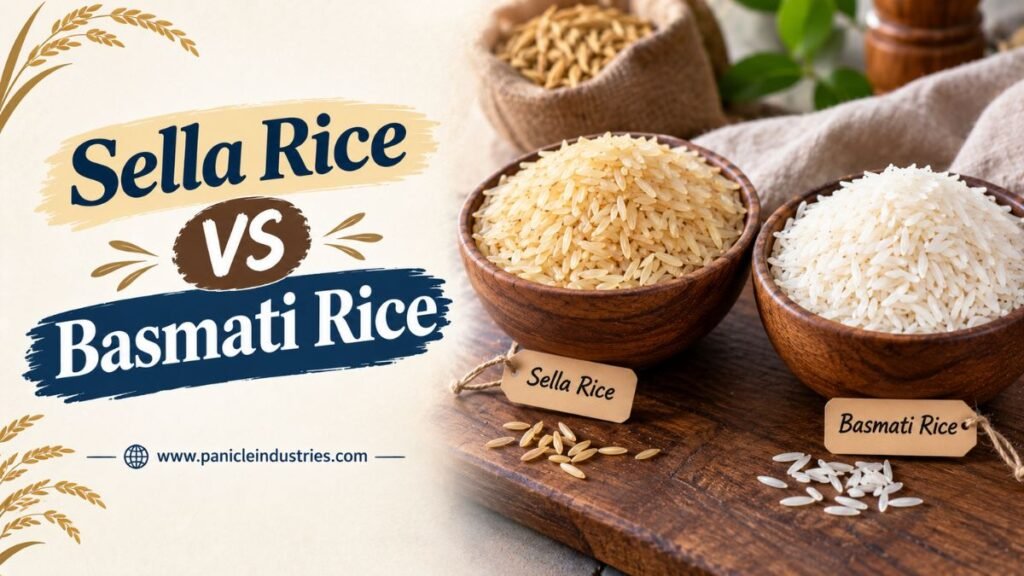
When comparing sella rice vs basmati rice, there is one important point to understand first: sella and basmati do not describe the same thing.
Basmati is a type of aromatic rice with specific grain, aroma, and cooking characteristics. Sella rice, commonly called parboiled rice, describes rice that has gone through a particular processing method before milling. This means you can have sella basmati rice. In other words, basmati tells you about the rice variety, while sella tells you about how the rice was processed. APEDA describes basmati as a long-grain aromatic rice with characteristic slender grains, aroma, and cooking quality, while Indian food standards recognize parboiled basmati as a form of basmati rice.
This distinction matters when you are buying rice for biryani, pulao, everyday meals, or export. Many people assume that “sella rice” and “basmati rice” are two completely different rice types. They are not.
What Is Sella Rice?
Sella rice is commonly used as a name for parboiled rice. Parboiling is a processing method in which rice is treated with water and heat before milling. The process changes the physical and cooking properties of the grain.
Depending on the product, sella rice can be made from different rice varieties. This is why you may find sella basmati rice, as well as parboiled non-basmati rice.
The term “sella” therefore does not tell you the variety by itself. You still need to check whether the product is basmati or non-basmati.
What Happens During Parboiling?
Parboiling usually involves soaking, heating or steaming, and drying the paddy before the rice is milled. This processing can alter the structure of the grain and influence how it behaves during cooking.
The process is important because it can make the grains firmer and less likely to break during some stages of handling and cooking. Parboiling has also been studied for its effects on starch behavior and glycemic response, although the result varies by variety and processing method.
Also read: Common Mistakes To Avoid While Cooking Rice
What Is Basmati Rice?
Basmati is a long-grain aromatic rice associated with specific geographical areas of the Indian subcontinent. In India, APEDA identifies the recognized Basmati growing area and describes the rice as having extra-long slender grains, characteristic aroma, distinctive flavor, and a soft, fluffy texture after cooking.
Basmati is also recognized as a GI product in India, and official standards define quality characteristics such as grain length, grain shape, aroma, cooked grain length, elongation, and texture.
Basmati can be sold in different forms, including raw white basmati, brown basmati, and parboiled or sella basmati.
That is why comparing “sella” directly with “basmati” can be misleading. The more useful comparison is often:
Sella basmati vs raw basmati
or
Parboiled basmati vs raw basmati
Sella Rice vs Basmati Rice: The Basic Difference
The easiest way to understand the difference is this:
| Feature | Sella Rice | Basmati Rice |
|---|---|---|
| What does the term describe? | Processing method | Rice type/variety |
| Can it be aromatic? | Yes, if made from basmati | Yes |
| Can it be non-basmati? | Yes | No, by definition |
| Common appearance | Often firmer and slightly translucent/yellowish, depending on processing | Long, slender grains |
| Cooking behavior | Often firm and less prone to breaking | Characteristic elongation and separate grains |
| Can both terms apply to the same rice? | Yes | Yes |
| Example | Sella basmati | Raw basmati |
This is the most important takeaway: sella is not the opposite of basmati.
A rice product can legitimately be described as sella basmati rice because one word describes the processing and the other describes the rice category.
Sella Basmati vs Raw Basmati
For most consumers searching about sella rice and basmati rice, this is actually the comparison they are trying to make.
Raw basmati is milled without the parboiling process, while sella basmati is parboiled before milling.
Both can be made from basmati rice and can retain the characteristic long, slender grain form associated with the variety.
The biggest differences appear in processing, appearance, texture, cooking behavior, and the final eating experience.
Appearance
Raw white basmati usually has a more familiar white or cream-colored appearance.
Sella rice can look more translucent or slightly yellowish, depending on the exact parboiling and milling process. This does not automatically mean the rice is of lower quality. It is a result of processing.
A buyer should therefore avoid judging the quality of rice simply by color.
Grain Strength
Parboiling changes the structure of the grain. This can make sella rice more resistant to breakage during handling and cooking.
For dishes where you want intact grains, that can be a useful property.
Quality basmati itself is also selected for grain length, elongation, integrity, and non-stickiness. Official basmati characteristics include cooked grain integrity, elongation, and aroma as important quality parameters.
Which One Becomes Longer After Cooking?
Basmati is known for its ability to elongate during cooking.
APEDA describes basmati as a rice whose grains can elongate to at least twice their original size under appropriate conditions. Official basmati quality criteria also specify minimum cooked length and elongation requirements.
Sella basmati can also show strong elongation because it is still basmati rice. The difference is that parboiling changes how the grain behaves during cooking.
This is another reason why sella basmati should not be treated as a completely separate variety from basmati.
Sella Rice vs Basmati Rice: Difference in Cooking
Cooking performance is one of the main reasons people choose one form over another.
Sella Basmati
Sella basmati tends to produce firm grains that hold their shape well. This can be useful for dishes that involve longer cooking or handling, such as biryani.
Because the rice has already undergone parboiling, it can behave differently from raw basmati in terms of water absorption and cooking time. The exact result depends on the specific processing method, grain quality, and product.
Raw Basmati
Raw basmati is often preferred when the goal is a softer, lighter, more delicate eating experience.
It can produce beautifully aromatic rice with separate grains when cooked carefully, but it may also be less forgiving if you use too much water or overcook it.
This is why the cooking instructions on the specific package are more useful than relying on a single universal water ratio.
Which Is Better for Biryani?
Both can work well for biryani, but sella basmati is especially popular for biryani where firm, separate grains are important.
Sella basmati can hold its shape well during layered cooking and handling. This makes it useful in commercial kitchens, restaurants, catering, and large-batch cooking.
Raw basmati is also excellent for biryani and is preferred by many cooks who want its characteristic aroma and delicate texture.
The better option depends on the type of biryani you are making and the texture you prefer.
Choose Sella Basmati for Biryani When:
- You want firm grains that hold their shape.
- You are cooking larger batches.
- You prefer grains that remain relatively separate during extended cooking.
- You are making restaurant-style or catering-style biryani.
Choose Raw Basmati When:
- You prefer a lighter and softer texture.
- Aroma is a major priority.
- You enjoy the traditional cooking characteristics of raw basmati.
- You are comfortable controlling water and cooking time carefully.
Sella Rice vs Basmati Rice: Aroma and Taste
Aroma is one area where the specific variety matters more than the word “sella.”
If the sella rice is sella basmati, it can still have the characteristic aroma of basmati. If it is sella non-basmati, it should not be expected to provide the same basmati fragrance.
APEDA identifies natural aroma and distinctive flavor as defining characteristics of basmati, while Indian regulatory standards require basmati rice to have its characteristic natural fragrance.
So, when buying rice, do not assume:
Sella = less aromatic
or
Basmati = always raw
Both assumptions are incorrect.
A product can be aromatic basmati and parboiled at the same time.
Which Rice Is Easier to Cook?
There is no universal answer because cooking depends on the exact rice and method.
Sella basmati is often considered more forgiving for dishes where maintaining grain shape is important. However, that does not mean it requires no attention.
Raw basmati can cook beautifully when the water, heat, soaking, and resting are controlled properly.
One common mistake is to use exactly the same cooking method for every rice product. Processing changes how rice absorbs water and how its texture develops.
Always check the package instructions and test a small batch when working with an unfamiliar product.
Is Sella Rice Healthier Than Basmati Rice?
This question needs a more careful answer because sella and basmati are not directly opposite nutritional categories.
Sella describes parboiling, while basmati describes the rice type. Therefore, nutritional comparisons depend on what you are actually comparing.
For example:
- Sella basmati vs raw basmati
- Sella non-basmati vs raw non-basmati
- White sella vs brown basmati
These are not equivalent comparisons.
Research suggests that parboiling can change nutritional composition and starch behavior, and several studies have found lower glycemic responses with some parboiled rice products. However, results vary depending on rice variety and processing method.
One study of an Indian thermally treated basmati product found a GI below 55, while another study comparing different basmati varieties found that cooking method also affected GI. These findings should not be generalized to every sella or basmati product.
So, it would be inaccurate to say that all sella rice is healthier than all basmati rice.
Does Sella Rice Have a Lower Glycemic Index?
Parboiling has been associated with lower glycemic responses in some studies, but there is no single GI value for all sella rice.
Different rice varieties, processing conditions, cooking methods, and even serving conditions can influence the final glycemic response. A recent systematic review also highlighted the complex interaction between rice variety, cooking technique, and glycemic response.
Therefore, someone choosing rice for blood sugar management should not assume that “sella” automatically means low GI.
The exact product and overall meal matter.
Sella Rice vs Basmati Rice: Which Is More Expensive?
Price depends on several factors, including variety, grain length, grade, processing, aging, origin, packaging, and market demand.
Premium basmati generally commands a higher price because of its distinctive quality characteristics and market positioning. APEDA describes basmati as a premium rice with unique cooking and eating properties.
Sella basmati may also be a premium product because it combines basmati characteristics with parboiling.
On the other hand, ordinary non-basmati sella rice can be much more affordable.
Therefore, you should not compare sella rice vs basmati rice based on price alone. First determine whether the sella product is actually basmati.
How to Choose the Right Rice?
Before buying, ask yourself four simple questions.
1. Is it basmati or non-basmati?
This tells you about the variety and aromatic characteristics.
2. Is it raw or parboiled?
This tells you about the processing method and can help predict cooking behavior.
3. What are you cooking?
Biryani and pulao may benefit from long, separate grains. Everyday meals may not require premium basmati.
4. What texture do you prefer?
If you prefer firmer, highly intact grains, sella basmati may suit you. If you prefer a softer and more delicate texture, raw basmati may be a better fit.
Sella Rice vs Basmati Rice: Which One Should You Choose?
The answer depends on what you actually need.
Choose sella basmati when you want basmati aroma combined with the firmer cooking characteristics associated with parboiled rice. It is particularly useful for biryani, pulao, catering, and dishes where grain integrity matters.
Choose raw basmati when you want the classic basmati cooking experience, including its characteristic aroma, slender appearance, and fluffy texture.
Choose non-basmati sella rice when your priority is a firm, practical rice for everyday cooking and you do not specifically need basmati’s distinctive aroma.
The most important thing is to read the package carefully. “Sella” does not tell you whether the rice is basmati. Look for the full description, such as Sella Basmati Rice or Sella Non-Basmati Rice.
Conclusion
When comparing sella rice vs basmati rice, the first thing to remember is that they describe different characteristics. Basmati is a rice type known for its long, slender grains, aroma, flavor, and cooking characteristics, while sella refers to rice that has undergone parboiling.
That means you can have sella basmati rice, and this is one of the most important points for anyone trying to understand the difference.
For biryani and other dishes where strong grain structure matters, sella basmati can be an excellent choice. Raw basmati is a strong option when aroma, delicate texture, and the classic basmati eating experience are your priorities.
There is also no simple answer to whether sella is “healthier” than basmati. Parboiling can affect starch and nutrient characteristics, but results depend on the variety, processing method, and cooking technique.
So instead of asking whether sella or basmati is better, ask a more useful question: Do you want a particular rice variety, a particular processing style, or both? Once you understand that distinction, choosing the right rice becomes much easier.
Frequently Asked Questions (FAQ)
Is sella rice the same as basmati rice?
No. Sella usually refers to parboiled processing, while basmati refers to a specific aromatic rice type. Sella rice can be basmati or non-basmati.
Is sella basmati good for biryani?
Yes. Sella basmati is widely suited to biryani because its firm grains can hold their shape well during cooking and handling.
Which is better, sella basmati or raw basmati?
Neither is universally better. Sella basmati suits firmer, more intact grains, while raw basmati may suit people who prefer a softer and more delicate texture.
Is sella rice healthier than basmati rice?
Not automatically. Sella describes processing, while basmati describes variety. Nutrition and glycemic response depend on the specific rice and cooking method.
Does sella basmati have the same aroma as basmati rice?
Sella basmati can retain basmati’s characteristic natural fragrance because it is still basmati. Aroma varies with variety, processing, aging, and quality.