
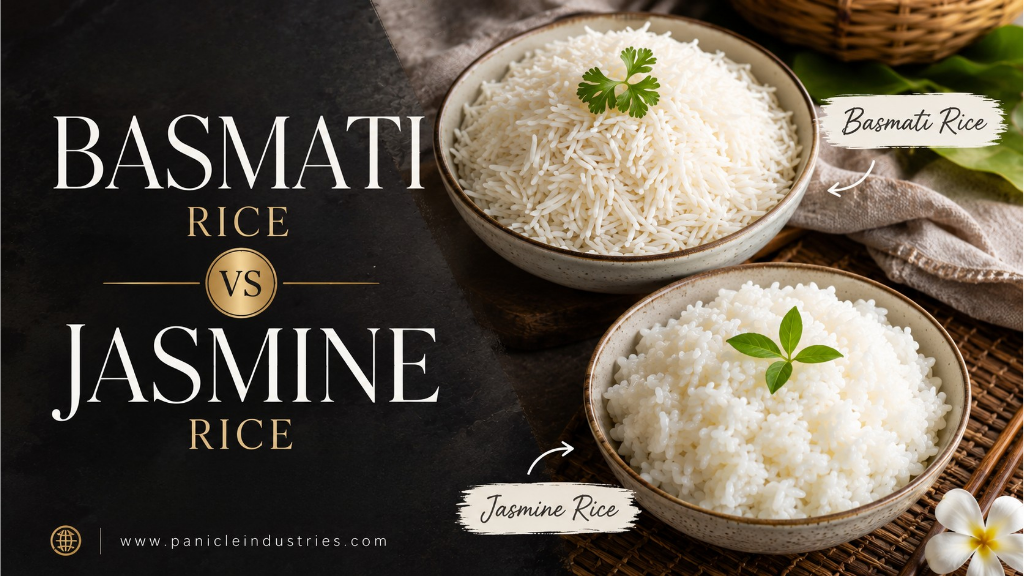
Basmati rice and jasmine rice are two of the world’s most popular aromatic rice varieties. Both are prized for their unique fragrance, delicate flavor, and versatility in cooking. Although they may look similar at first glance, they differ significantly in origin, grain structure, texture, aroma, cooking methods, and the types of dishes they complement best.
If you’ve ever stood in the grocery store wondering “Basmati Rice vs Jasmine Rice: Which one should I buy?”, you’re not alone. Choosing the right rice can greatly influence the taste, texture, and overall quality of your meal. Whether you’re preparing biryani, fried rice, Thai curry, or a simple side dish, understanding the differences between these two rice varieties will help you make the best choice.
In this blog, we’ll compare basmati rice and jasmine rice in detail, explain their unique characteristics, and help you decide which one is better suited for your cooking needs.
Basmati Rice vs Jasmine Rice: Quick Comparison
| Feature | Basmati Rice | Jasmine Rice |
|---|---|---|
| Origin | India and Pakistan | Thailand |
| Grain Type | Extra-long grain | Long grain |
| Aroma | Nutty and floral | Sweet, floral, and buttery |
| Texture After Cooking | Light, fluffy, separate grains | Soft, moist, and slightly sticky |
| Flavor | Mild, nutty | Slightly sweet and delicate |
| Best For | Biryani, pulao, curries | Thai curries, stir-fries, grilled dishes |
| Stickiness | Very low | Slightly sticky |
| Cooking Time | 15–20 minutes | 15–18 minutes |
| Popular Cuisine | Indian, Middle Eastern | Thai and Southeast Asian |
Although both are aromatic rice varieties, their cooking performance and flavor profiles are quite different.
Also read: Should You Soak Rice Before Cooking?
What Is Basmati Rice?
Origin of Basmati Rice
Basmati rice has been cultivated for centuries in the fertile foothills of the Himalayas, primarily in India and Pakistan. The word “Basmati” comes from a Sanskrit term meaning “fragrant” or “full of aroma,” reflecting one of its most distinctive characteristics.
Because of its exceptional quality, basmati rice is widely exported and enjoyed in homes, restaurants, and commercial kitchens around the world.
Characteristics of Basmati Rice
Basmati rice is well known for its:
- Extra-long grains
- Distinct nutty aroma
- Light and fluffy texture
- Excellent grain separation
- Ability to absorb flavors from spices and herbs
When cooked properly, basmati grains expand lengthwise rather than becoming wider, giving the rice an elegant appearance that is ideal for premium dishes.
What Is Jasmine Rice?
Origin of Jasmine Rice
Jasmine rice originated in Thailand and remains one of the country’s most important agricultural exports. It is also grown in neighboring Southeast Asian countries, where it plays a central role in traditional cuisine.
Unlike basmati rice, jasmine rice is famous for its naturally sweet floral fragrance and soft texture.
Characteristics of Jasmine Rice
Jasmine rice is appreciated for its:
- Pleasant floral aroma
- Soft and tender texture
- Slight stickiness
- Delicate flavor
- Attractive glossy appearance
Its natural fragrance becomes more noticeable during cooking, making it an excellent companion for flavorful sauces and curries.
Origin and Growing Regions
Basmati Rice
Basmati rice grows best in the unique climate and fertile soils of the Himalayan region.
The combination of cool mountain air, mineral-rich soil, and traditional farming methods contributes to its distinctive aroma and grain quality.
Today, India is the world’s largest producer and exporter of basmati rice, supplying international markets with a wide range of premium varieties.
Jasmine Rice
Jasmine rice thrives in the warm, tropical climate of Thailand.
The country’s fertile plains and abundant rainfall create ideal growing conditions for producing fragrant jasmine rice with its characteristic soft texture.
Authentic Thai jasmine rice is highly valued in global markets for its consistent quality and aroma.
Grain Shape and Appearance
Basmati Rice
One of the easiest ways to distinguish basmati rice is by its exceptionally long and slender grains.
After cooking, the grains become even longer while remaining separate and fluffy.
This elegant appearance makes basmati rice particularly suitable for dishes where presentation is important.
Jasmine Rice
Jasmine rice also has long grains, but they are slightly shorter and plumper than basmati.
Once cooked, the grains become soft and cling together gently, giving the rice a moist and tender texture.
Although they remain distinct, jasmine rice is noticeably less fluffy than basmati rice.
Aroma and Flavor Comparison
Basmati Rice
Basmati rice has a distinctive aroma that is often described as:
- Nutty
- Floral
- Fresh
- Delicate
Its mild flavor allows it to absorb spices, herbs, and seasonings exceptionally well, making it ideal for richly flavored dishes.
Jasmine Rice
Jasmine rice has a sweeter fragrance than basmati.
Many people describe its aroma as:
- Floral
- Buttery
- Slightly sweet
- Pleasantly fragrant
Its delicate flavor complements Thai curries, grilled seafood, stir-fries, and coconut-based recipes without overpowering the main ingredients.
Texture After Cooking
Basmati Rice
Basmati rice is famous for its fluffy texture.
When cooked correctly, the grains remain:
- Long
- Separate
- Light
- Firm
This makes it one of the best choices for dishes where individual grains should remain distinct.
Jasmine Rice
Jasmine rice has a naturally softer texture.
After cooking, it becomes:
- Tender
- Moist
- Slightly sticky
- Smooth
Its ability to hold together slightly makes it ideal for dishes served with sauces, gravies, and curries.
Cooking Differences
Water Requirements
Both rice varieties require different water ratios to achieve the best texture.
Basmati rice often benefits from soaking for about 20–30 minutes before cooking, which helps the grains expand and remain separate.
Jasmine rice usually does not require soaking, although some cooks prefer a short soak to ensure even cooking.
Always follow the cooking instructions provided on the packaging, as water ratios may vary slightly between brands.
Cooking Time
Both varieties cook relatively quickly.
- Basmati rice: Approximately 15–20 minutes
- Jasmine rice: Approximately 15–18 minutes
After cooking, allowing the rice to rest for 5–10 minutes before fluffing helps improve the final texture.
Which Rice Is Easier to Cook?
Both basmati and jasmine rice are beginner-friendly, but they require slightly different techniques.
Basmati rice benefits from soaking and careful water measurement to achieve its signature fluffy texture. Jasmine rice is generally simpler to prepare, but using too much water can make it overly soft.
With proper cooking techniques, both varieties consistently produce delicious results and can elevate a wide variety of meals.
Nutritional Comparison
Basmati rice and jasmine rice are both excellent sources of carbohydrates and provide energy for everyday activities. Their nutritional values are quite similar, but slight differences in their starch composition and fiber content can influence how they fit into different diets.
| Nutrient (Cooked) | Basmati Rice | Jasmine Rice |
|---|---|---|
| Calories | Similar | Similar |
| Carbohydrates | High | High |
| Protein | Moderate | Moderate |
| Fat | Very Low | Very Low |
| Dietary Fiber | Low (higher in brown basmati) | Low (higher in brown jasmine) |
| Gluten | Naturally Gluten-Free | Naturally Gluten-Free |
| Glycemic Index | Generally lower | Generally higher |
Both rice varieties are naturally gluten-free, making them suitable for people with gluten intolerance or celiac disease.
Which Rice Has a Lower Glycemic Index?
In general, white basmati rice has a lower glycemic index (GI) than white jasmine rice. This means it may cause a slower rise in blood sugar levels when eaten as part of a balanced meal. However, the exact GI depends on factors such as the variety, cooking method, and what foods are eaten alongside the rice.
If you’re looking for more fiber and nutrients, choosing brown basmati or brown jasmine rice is usually a healthier option than their white counterparts.
Health Benefits of Basmati Rice and Jasmine Rice
Both rice varieties can be part of a healthy diet when consumed in appropriate portions.
Benefits of Basmati Rice
Basmati rice offers several advantages, including:
- Naturally long and fluffy grains
- Lower glycemic index compared to many other white rice varieties
- Mild flavor that pairs well with nutrient-rich meals
- Easy to digest for many people
Its lower GI makes it a popular choice for those seeking steadier energy levels.
Benefits of Jasmine Rice
Jasmine rice is appreciated for its:
- Pleasant natural aroma
- Soft, tender texture
- Quick cooking time
- Excellent ability to absorb flavors
It is especially suitable for meals featuring vegetables, lean proteins, and flavorful sauces.
Best Dishes for Basmati Rice
Because of its light and separate grains, basmati rice works well in recipes where texture is important.
Ideal Uses
Basmati rice is perfect for:
- Biryani
- Pulao
- Jeera rice
- Butter chicken
- Tandoori dishes
- Middle Eastern rice dishes
- Rice pilaf
Its ability to absorb spices without becoming sticky makes it a favorite in Indian and Middle Eastern cuisine.
Best Dishes for Jasmine Rice
Jasmine rice complements recipes that benefit from a soft, slightly sticky texture.
Ideal Uses
Jasmine rice is commonly served with:
- Thai green curry
- Thai red curry
- Stir-fried vegetables
- Coconut chicken
- Teriyaki dishes
- Grilled seafood
- Asian rice bowls
Its floral aroma enhances many Southeast Asian recipes without overpowering the other ingredients.
Basmati Rice vs Jasmine Rice: Which Is Better for Different Recipes?
Choosing between the two depends on the dish you’re preparing.
Choose Basmati Rice If You:
- Want long, fluffy, separate grains
- Are cooking Indian or Middle Eastern recipes
- Need rice that stays firm after cooking
- Prefer a slightly nutty flavor
Choose Jasmine Rice If You:
- Enjoy a soft and moist texture
- Frequently cook Thai or Southeast Asian dishes
- Like naturally fragrant rice
- Want rice that pairs well with creamy or flavorful sauces
Many professional chefs keep both varieties available because each offers unique advantages.
Buying and Storage Tips
Purchasing high-quality rice helps ensure the best cooking results.
Tips for Buying Rice
When shopping, look for:
- Uniform grain size
- Clean, unbroken grains
- Properly sealed packaging
- A trusted brand or supplier
- Recent packaging or best-before date
Authentic basmati rice is typically labeled with its origin, while genuine jasmine rice is often sourced from Thailand.
Proper Storage
Store uncooked rice in:
- An airtight container
- A cool and dry location
- A place away from direct sunlight
- An area protected from moisture and strong odors
Proper storage helps preserve freshness, aroma, and overall quality.
Basmati Rice vs Jasmine Rice: Which One Should You Choose?
There isn’t a single winner in the basmati rice vs jasmine rice comparison because both serve different culinary purposes.
If you’re preparing biryani, pulao, or any recipe where fluffy, separate grains are essential, basmati rice is the better option.
If you’re cooking Thai curry, stir-fries, or dishes that benefit from soft, fragrant rice, jasmine rice is an excellent choice.
Ultimately, your decision should depend on the recipe, your preferred texture, and the flavor profile you want to achieve.
Conclusion
When comparing basmati rice vs jasmine rice, it’s clear that both are exceptional aromatic rice varieties with unique characteristics. Basmati rice stands out for its extra-long grains, fluffy texture, and nutty aroma, making it ideal for Indian, Middle Eastern, and festive rice dishes. Jasmine rice, on the other hand, is loved for its floral fragrance, tender texture, and ability to complement Thai and Southeast Asian cuisine.
Neither variety is universally better than the other. The best choice depends on your cooking style, personal preference, and the meal you’re preparing. By understanding the differences in texture, aroma, nutrition, and culinary uses, you can confidently select the perfect rice for every occasion.
Frequently Asked Questions
1. Is basmati rice healthier than jasmine rice?
Basmati rice generally has a lower glycemic index than jasmine rice, making it a popular choice for balanced meals and steady energy.
2. Can I substitute jasmine rice for basmati rice?
Yes. You can substitute one for the other, but expect noticeable differences in aroma, texture, and how the rice complements the dish.
3. Which rice is better for biryani?
Basmati rice is the preferred choice for biryani because its long, separate grains and aromatic flavor create the traditional texture.
4. Why is jasmine rice more fragrant than regular rice?
Jasmine rice contains natural aromatic compounds that give it its signature floral fragrance, especially when freshly cooked.
5. Which rice is better for everyday cooking?
Both are excellent choices. Basmati suits fluffy rice dishes, while jasmine is ideal for soft, fragrant meals served with curries and stir-fries.