
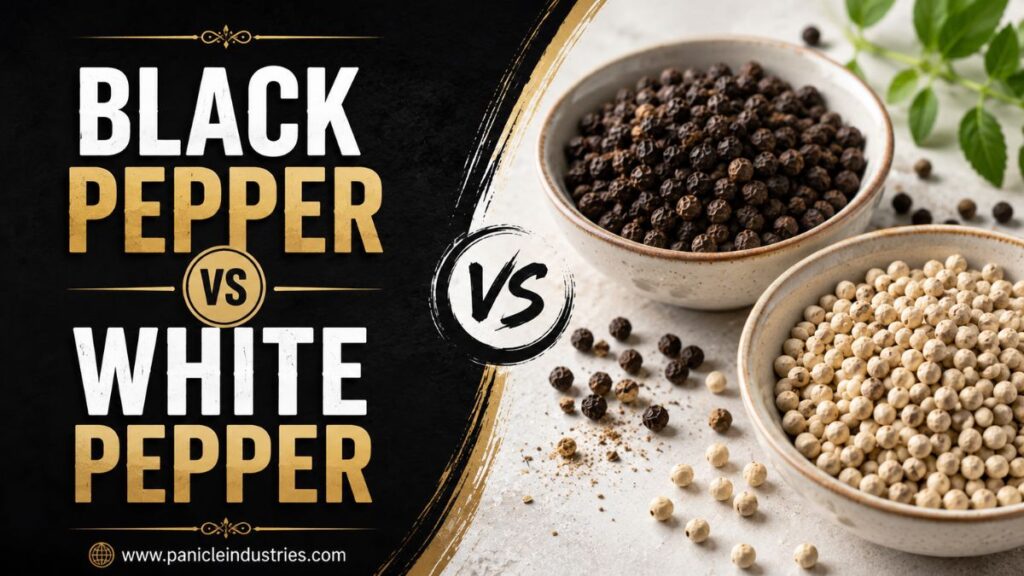
Black pepper and white pepper are two of the most widely used spices in the world. They add depth, heat, and flavor to countless dishes, from soups and curries to grilled meats and stir-fries. At first glance, they may seem like completely different spices because of their color and taste. However, many people are surprised to learn that both come from the same pepper plant.
If you’ve ever wondered “Black Pepper vs White Pepper: What’s the Difference?”, you’re not alone. While both peppers originate from the berries of the Piper nigrum plant, the way they are processed gives them distinct flavors, aromas, appearances, and culinary uses.
Understanding these differences can help you choose the right pepper for your recipes. Whether you’re seasoning a steak, making a creamy soup, or preparing an authentic Asian dish, selecting the appropriate pepper can make a noticeable difference in the final result.
In this blog, we’ll compare black pepper and white pepper in detail, explore how they’re produced, and explain when each type works best.
Black Pepper vs White Pepper: Quick Comparison
| Feature | Black Pepper | White Pepper |
|---|---|---|
| Source | Unripe pepper berries | Fully ripe pepper berries |
| Processing | Dried with the outer skin intact | Outer skin removed before drying |
| Color | Black or dark brown | Creamy white to light beige |
| Flavor | Bold, earthy, and robust | Mild, earthy, slightly fermented |
| Aroma | Strong and pungent | Softer but more distinctive |
| Heat Level | Sharp and spicy | Smooth, lingering heat |
| Best Uses | Grilled meats, salads, pasta, soups | Cream sauces, mashed potatoes, Asian dishes |
| Appearance in Food | Visible black specks | Blends into light-colored dishes |
This comparison highlights the key differences, but there’s much more to know about these two popular spices.
Also read: Can Spices Go Bad?
What Is Black Pepper?
Origin of Black Pepper
Black pepper comes from the berries of the Piper nigrum vine, which is native to southern India and is now cultivated in many tropical regions around the world.
The berries are harvested while they are still green and unripe. They are then dried under the sun or with controlled heat. During drying, the outer layer shrivels and turns dark, creating the familiar black peppercorns found in kitchens worldwide.
Characteristics of Black Pepper
Black pepper is known for its:
- Bold flavor
- Sharp heat
- Rich aroma
- Dark appearance
- Versatile culinary applications
Its strong taste makes it one of the most commonly used seasonings for both home cooking and commercial food production.
What Is White Pepper?
Origin of White Pepper
White pepper also comes from the Piper nigrum plant, but it is processed differently.
Instead of harvesting the berries while they are green, growers allow them to ripen fully. The ripe berries are soaked in water until the outer skin softens and can be removed.
The remaining inner seed is then dried to produce white peppercorns.
Characteristics of White Pepper
White pepper is appreciated for its:
- Milder appearance
- Earthy flavor
- Smooth heat
- Distinctive aroma
- Ability to blend into light-colored foods
Although it is less commonly used than black pepper in some regions, it plays an essential role in many European and Asian cuisines.
How Are Black Pepper and White Pepper Made?
Black Pepper Processing
The production of black pepper is relatively straightforward.
Harvesting
Pepper berries are picked before they become fully ripe, while they are still green.
Drying
The berries are spread out under the sun or placed in drying equipment. As they lose moisture, the outer skin wrinkles and darkens.
Cleaning and Packaging
Once dried, the peppercorns are cleaned, graded, and packaged for sale.
This process helps preserve the pepper’s strong aroma and characteristic spicy flavor.
White Pepper Processing
White pepper requires additional processing.
Harvesting Fully Ripe Berries
The berries are allowed to ripen until they turn red.
Soaking
The ripe berries are soaked in water for several days. This softens the outer fruit layer.
Removing the Outer Layer
After soaking, the softened skin is removed, leaving only the inner seed.
Drying
The seeds are thoroughly dried until they become the familiar creamy white peppercorns.
This extra processing gives white pepper its unique flavor and appearance.
Flavor Comparison
Black Pepper Flavor
Black pepper has a bold, fresh, and slightly citrusy flavor with a sharp heat that develops quickly.
Its robust taste makes it suitable for seasoning foods before, during, or after cooking.
It complements dishes such as:
- Steaks
- Grilled chicken
- Pasta
- Roasted vegetables
- Eggs
- Sandwiches
Its versatility is one of the reasons black pepper is considered a kitchen essential around the world.
White Pepper Flavor
White pepper offers a different flavor profile.
It is generally:
- Earthier
- Milder in appearance
- Slightly fermented
- Less sharp
- More lingering
Some people describe white pepper as having a musky or woody note that becomes more noticeable in delicate dishes.
Because its flavor is more subtle, it blends well into recipes without overpowering other ingredients.
Aroma Differences
The aroma of each pepper is another major distinction.
Black Pepper Aroma
Black pepper has a fresh, pungent aroma that immediately stands out when freshly ground.
Its fragrance comes from natural essential oils that are largely retained because the outer layer remains intact.
White Pepper Aroma
White pepper has a more subtle but distinctive aroma.
The soaking and removal of the outer skin create a scent that many people associate with traditional Asian soups, white sauces, and mashed potatoes.
Although not everyone prefers its aroma, it is highly valued in cuisines where its unique flavor profile is appreciated.
Appearance and Presentation
Appearance may not affect taste, but it can influence the presentation of a dish.
Black Pepper
Freshly ground black pepper leaves visible dark specks that add contrast and texture to food.
This makes it ideal for dishes where the appearance of pepper is not a concern.
White Pepper
White pepper blends almost completely into light-colored recipes.
It is commonly used in:
- Cream soups
- White sauces
- Mashed potatoes
- Light gravies
- Seafood chowders
Because it doesn’t leave dark flecks, chefs often choose white pepper when preparing elegant or visually smooth dishes.
Nutritional Comparison
Black pepper and white pepper come from the same plant, so their nutritional profiles are very similar. Both contain small amounts of vitamins, minerals, dietary fiber, and beneficial plant compounds. Since pepper is usually used in small quantities, it contributes only a modest amount of nutrients to the diet, but it can still add valuable antioxidants and flavor without extra calories.
| Nutrient | Black Pepper | White Pepper |
|---|---|---|
| Calories | Very Low | Very Low |
| Carbohydrates | Low | Low |
| Dietary Fiber | Present | Present |
| Iron | Small Amount | Small Amount |
| Calcium | Small Amount | Small Amount |
| Potassium | Present | Present |
| Piperine | Higher | Present |
One notable difference is that black pepper generally contains slightly more piperine, the natural compound responsible for its pungent flavor and many of its potential health benefits.
Health Benefits of Black Pepper and White Pepper
Both varieties offer similar health benefits because they come from the same pepper plant. However, black pepper is often studied more extensively due to its higher piperine content.
Rich in Antioxidants
Pepper contains natural antioxidants that help protect cells from damage caused by free radicals. Antioxidants play an important role in supporting overall health as part of a balanced diet.
May Support Digestion
Pepper has traditionally been used to stimulate digestion. It may encourage the production of digestive enzymes, helping the body process food more efficiently.
Enhances Flavor Naturally
One of the greatest benefits of both peppers is their ability to enhance flavor without adding sugar, unhealthy fats, or excessive calories. This makes them excellent seasonings for people looking to prepare healthier meals.
Contains Piperine
Piperine is the compound that gives pepper its characteristic heat. Research suggests it may help improve the absorption of certain nutrients, though its effects can vary depending on the individual and the foods consumed.
Best Culinary Uses
Choosing between black pepper and white pepper often depends on the recipe you’re preparing.
When to Use Black Pepper
Black pepper works well in recipes where you want a bold flavor and visible seasoning.
It is commonly used in:
- Grilled meats
- Roasted vegetables
- Pasta dishes
- Sandwiches
- Salads
- Marinades
- Omelets
- Pizza
Freshly ground black pepper is often added just before serving to maximize its aroma.
When to Use White Pepper
White pepper is preferred when appearance matters or when a milder, earthier flavor is desired.
It is frequently used in:
- Cream soups
- White sauces
- Mashed potatoes
- Seafood dishes
- Chinese stir-fries
- Fried rice
- Noodle soups
- Light-colored gravies
Many chefs choose white pepper because it blends into the dish without leaving black specks.
Can You Substitute One for the Other?
Yes, but the results won’t be exactly the same.
Replacing Black Pepper with White Pepper
White pepper can provide similar heat, but the flavor is earthier and slightly different. It works best in soups, sauces, and dishes where appearance is important.
Replacing White Pepper with Black Pepper
Black pepper can replace white pepper in most recipes, but it will add visible black flecks and a stronger, more pungent flavor.
For everyday cooking, either pepper can often be substituted depending on personal preference.
Which Pepper Should You Choose?
The answer depends on the type of dish you’re preparing and the flavor you’re looking for.
Choose Black Pepper If You:
- Prefer a bold, fresh flavor
- Enjoy a stronger aroma
- Cook grilled or roasted foods frequently
- Want a versatile everyday seasoning
Choose White Pepper If You:
- Prefer a smoother, earthier taste
- Prepare cream-based dishes
- Cook Asian or European recipes regularly
- Want seasoning that blends into light-colored foods
Many professional kitchens keep both varieties on hand because each has its own strengths.
Buying and Storage Tips
Buying high-quality pepper helps you get the best flavor and aroma.
Choosing Quality Pepper
When purchasing pepper, look for:
- Whole peppercorns instead of pre-ground pepper whenever possible
- Uniform color and size
- Fresh packaging
- Reputable brands or trusted spice suppliers
Whole peppercorns retain their flavor much longer than ground pepper and can be freshly ground when needed.
Proper Storage
To maintain freshness:
- Store pepper in an airtight container.
- Keep it in a cool, dry place.
- Protect it from direct sunlight and moisture.
- Avoid storing it near the stove, where heat and steam can reduce its quality.
Proper storage helps preserve both flavor and aroma for a longer period.
Black Pepper vs White Pepper: Final Verdict
The black pepper vs white pepper debate doesn’t have a single winner because each spice serves a different purpose.
Black pepper is known for its bold flavor, strong aroma, and versatility. It works well in everyday cooking and pairs with a wide variety of dishes.
White pepper offers a smoother, earthier taste and is ideal for recipes where appearance and subtle seasoning are important. It remains a staple in many Asian and European cuisines.
Instead of choosing one over the other, consider keeping both in your kitchen. This gives you the flexibility to use the most suitable pepper for each recipe and enjoy a wider range of flavors.
Conclusion
Although black pepper and white pepper come from the same Piper nigrum plant, their processing methods create noticeable differences in flavor, aroma, appearance, and culinary use. Black pepper delivers a bold, pungent taste that enhances everyday meals, while white pepper provides a milder, earthy flavor that blends seamlessly into light-colored dishes.
Understanding these differences makes it easier to select the right pepper for your recipes. Whether you’re preparing grilled meats, creamy soups, stir-fries, or sauces, using the appropriate pepper can improve both the flavor and presentation of your food.
Frequently Asked Questions
1. Is black pepper stronger than white pepper?
Black pepper has a bolder, more pungent flavor, while white pepper offers a smoother, earthier heat that is less sharp but lingers longer.
2. Why do chefs use white pepper in soups?
White pepper blends into light-colored soups and sauces without leaving dark specks while adding gentle heat and earthy flavor.
3. Can I substitute black pepper for white pepper?
Yes. They can replace each other in most recipes, but expect slight differences in flavor, aroma, and the appearance of the finished dish.
4. Is white pepper healthier than black pepper?
Both are nutritionally similar. Black pepper may contain slightly more piperine, but both can be part of a healthy, balanced diet.
5. Which pepper is better for everyday cooking?
Black pepper is the preferred everyday choice because of its bold flavor, versatility, and ability to complement a wide range of dishes.