
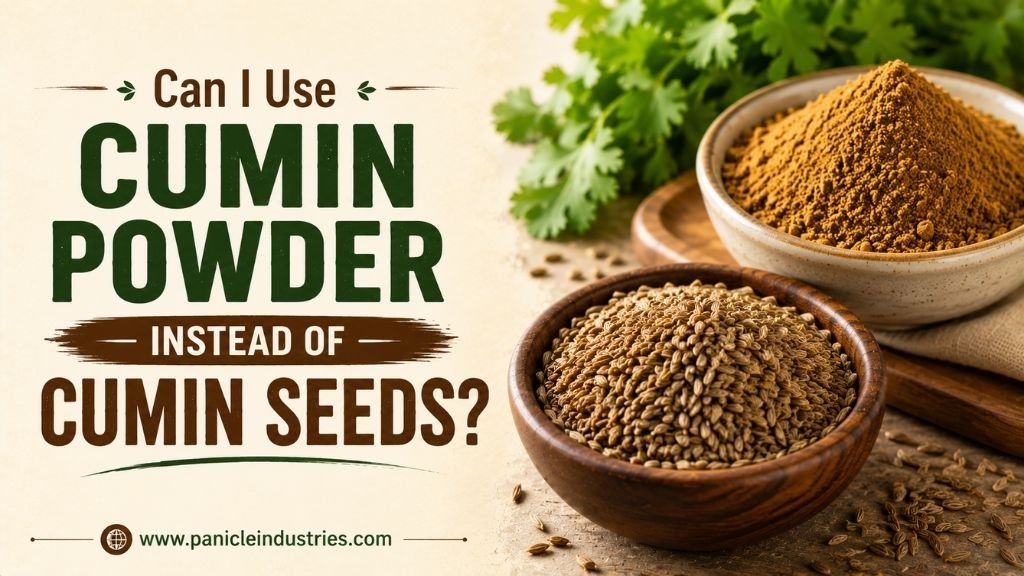
Have you ever started cooking and realized that a recipe calls for cumin seeds, but you only have cumin powder in your spice cabinet? This is a common kitchen situation, and it leads to an important question: Can I use cumin powder instead of cumin seeds?
Yes, you can use cumin powder instead of cumin seeds in many recipes, but the result will not be exactly the same. Both ingredients come from the same spice, yet they behave differently when heated. Cumin seeds release their aroma gradually when toasted in oil or ghee, while cumin powder distributes its flavor quickly throughout a dish.
The best substitute depends on the recipe, the cooking stage, and the flavor you want. Understanding the difference can help you avoid overpowering a dish or losing the characteristic aroma that whole cumin seeds provide.
Are Cumin Seeds and Cumin Powder the Same?
Cumin seeds and cumin powder come from the same plant, Cuminum cyminum. Cumin seeds are the whole dried seeds, while cumin powder is made by grinding those seeds into a fine powder.
They have the same basic flavor profile, but their cooking behavior is different.
| Feature | Cumin Seeds | Cumin Powder |
|---|---|---|
| Form | Whole dried seeds | Ground spice |
| Flavor | Warm and aromatic | Stronger and more evenly distributed |
| Aroma release | Gradual when toasted | Fast when heated |
| Best use | Tempering, rice, curries | Spice blends, marinades, sauces |
| Storage | Stays fresh longer | Loses aroma faster |
| Texture | Adds small toasted seeds | Blends into the dish |
So, while the two forms are related and can often be substituted, they are not always interchangeable on a one-to-one basis.
Also read: How to Make Ras El Hanout?
Can I Use Cumin Powder Instead of Cumin Seeds?
Yes, you can use cumin powder instead of cumin seeds, especially when the cumin is intended to provide overall flavor rather than a toasted seed texture.
However, you may need to adjust the quantity.
As a general starting point, use about ¾ teaspoon of ground cumin for every 1 teaspoon of whole cumin seeds. This is only a guideline because the strength of cumin powder can vary depending on freshness, grinding, and the brand.
For recipes where cumin seeds are toasted in oil at the beginning, cumin powder may behave differently and should be added carefully to avoid burning.
When Can You Easily Substitute Cumin Powder for Cumin Seeds?
Cumin powder is an easy substitute when the recipe mixes cumin with several other spices or ingredients.
Curries and Gravies
Cumin powder works particularly well in curries because it blends into the sauce and distributes its flavor evenly.
For example, if a curry calls for one teaspoon of cumin seeds but you only have powder, you can add a slightly smaller amount during the spice-cooking stage and adjust later if needed.
Marinades
Ground cumin is often better than whole seeds in marinades because the powder coats meat, vegetables, tofu, or other ingredients evenly.
It pairs especially well with:
- Yogurt
- Lemon juice
- Garlic
- Ginger
- Coriander
- Paprika
- Chili powder
Spice Blends
Cumin powder is ideal for spice blends because it mixes evenly with other ground spices.
It is commonly used in:
- Garam masala
- Curry blends
- Taco seasoning
- Chili seasoning
- Middle Eastern spice mixtures
Soups and Stews
Ground cumin works well in soups and stews because it dissolves into the cooking liquid and provides consistent flavor throughout the dish.
When Should You Use Cumin Seeds Instead?
There are some recipes where cumin seeds provide a specific texture and aroma that powder cannot fully reproduce.
Jeera Rice
Jeera rice is one of the clearest examples.
Whole cumin seeds are traditionally toasted in oil or ghee before rice is added. The heat releases the seeds’ natural oils, creating a fragrant aroma throughout the dish.
Cumin powder can provide cumin flavor, but it won’t give exactly the same toasted-seed experience.
Tempering Dal
In many Indian dal recipes, cumin seeds are added to hot oil or ghee along with ingredients such as garlic, dried chilies, or other whole spices.
The seeds sizzle and release their aroma instantly. This tempering technique is an important part of the dish’s flavor.
Pickles and Some Dry Curries
Whole cumin seeds can provide small bursts of flavor and texture. Cumin powder will blend into the food rather than providing those distinct bites.
How Much Cumin Powder Should You Use?
Because ground cumin has more surface area exposed to air, its flavor can sometimes seem more intense when freshly ground. However, older cumin powder may have lost much of its aroma and require more seasoning.
A practical substitution guide is:
| Cumin Seeds | Approximate Cumin Powder |
| ¼ teaspoon | Scant ¼ teaspoon |
| ½ teaspoon | About ⅓ teaspoon |
| 1 teaspoon | About ¾ teaspoon |
| 1 tablespoon | About 2¼ teaspoons |
These measurements are starting points rather than strict rules. Taste the dish and adjust gradually.
How to Use Cumin Powder Without Burning It?
If a recipe asks you to toast cumin seeds in oil, you should not simply add the same amount of cumin powder at the same time and cook it for several minutes.
Ground cumin can burn quickly.
Instead:
- Heat the oil or ghee over medium heat.
- Add other whole spices first if the recipe calls for them.
- Add cumin powder later, usually along with other ground spices.
- Stir briefly so the powder becomes fragrant.
- Add liquid or other ingredients soon afterward.
Burnt cumin powder can taste bitter and may overpower the dish.
Does Cumin Powder Taste the Same as Cumin Seeds?
The basic flavor is similar, but the experience is different.
Whole cumin seeds have a warm, toasted aroma when heated in oil. They can provide small bursts of flavor when you bite into them.
Cumin powder distributes its earthy flavor more evenly through the dish.
For example, a pot of dal made with cumin seeds may have distinct aromatic notes from the tempered seeds, while cumin powder creates a more uniform cumin flavor throughout the dal.
This difference is especially noticeable in simple dishes where cumin is one of the main seasonings.
Can You Grind Cumin Seeds at Home?
Yes. Grinding cumin seeds at home is an excellent way to get fresh cumin powder.
Why Freshly Ground Cumin Can Be Better?
Whole spices generally retain their aromatic oils longer because those oils are protected inside the seed.
When you grind cumin immediately before cooking, more of those natural aromas are released.
You can lightly toast the seeds in a dry pan for a few minutes, let them cool, and then grind them using a spice grinder or mortar and pestle.
Freshly ground cumin can be particularly useful when preparing spice blends, marinades, or dishes where cumin is a major flavor.
How to Store Cumin Powder and Cumin Seeds?
Proper storage helps both forms maintain their flavor.
Cumin Seeds
Store whole cumin seeds in an airtight container in a cool, dry, dark place. Whole seeds generally retain their aroma longer than ground cumin.
Cumin Powder
Ground cumin should also be stored in an airtight container away from heat, moisture, and direct sunlight.
Because powder loses aromatic compounds more quickly, buying smaller quantities and using them regularly can help maintain freshness.
Common Mistakes When Substituting Cumin Powder
Using cumin powder instead of cumin seeds is simple, but avoid these common mistakes.
Using Exactly the Same Amount Without Tasting
Ground cumin can be more concentrated in some recipes. Start with a little less and adjust as needed.
Adding Powder Too Early
Ground cumin burns more quickly than whole seeds. Add it at the appropriate stage of cooking.
Expecting the Same Texture
Cumin powder cannot reproduce the crunchy, toasted texture of whole cumin seeds.
Using Old Cumin Powder
Old powder may have lost much of its aroma. If it smells weak when you open the container, the flavor may also be disappointing.
Can Cumin Powder Replace Cumin Seeds in Every Recipe?
Not always.
For recipes where cumin is simply one of several seasoning ingredients, substitution is usually straightforward.
However, dishes based around tempering whole cumin seeds, such as jeera rice or certain dals, may taste noticeably different if you use powder instead.
The substitution will still add cumin flavor, but it won’t perfectly reproduce the aroma, texture, or visual appearance of toasted seeds.
Can I Use Cumin Powder Instead of Cumin Seeds?
So, can I use cumin powder instead of cumin seeds? Yes, in most recipes you can. Cumin powder is a practical substitute when whole cumin seeds are unavailable, especially in curries, soups, marinades, stews, and spice blends.
However, the substitution works best when you understand the differences between the two forms. Ground cumin releases flavor quickly and blends smoothly, while whole cumin seeds provide a toasted aroma, distinct texture, and stronger impact when tempered in oil or ghee.
As a general starting point, use about ¾ teaspoon of cumin powder for every 1 teaspoon of cumin seeds, then adjust according to your taste and the recipe.
Conclusion
Cumin seeds and cumin powder come from the same spice, but each has its own advantages in cooking. Cumin seeds are excellent for tempering, jeera rice, dal, and recipes where toasted spice and texture are important. Cumin powder is convenient for curries, marinades, spice blends, soups, and dishes where you want the cumin flavor to spread evenly.
If you only have cumin powder at home, there is no need to abandon a recipe that calls for cumin seeds. In most cases, you can make the substitution successfully by using a slightly smaller amount and adding it at the right stage of cooking.
For the best results, keep both forms in your kitchen when possible. Whole cumin seeds provide freshness and texture, while cumin powder offers convenience and versatility.
Frequently Asked Questions (FAQ)
1. Can I use cumin powder instead of cumin seeds?
Yes. Cumin powder can replace cumin seeds in many dishes, but use slightly less because ground cumin distributes its flavor more quickly.
2. How much cumin powder replaces one teaspoon of cumin seeds?
As a general starting point, use about ¾ teaspoon of cumin powder for one teaspoon of cumin seeds, then adjust according to taste.
3. Is cumin powder stronger than cumin seeds?
Fresh cumin powder can release flavor more quickly because it has greater surface area, while toasted seeds provide a more distinct aroma and texture.
4. Can I use cumin powder for jeera rice?
Yes, but the result will differ. Whole cumin seeds provide the traditional toasted aroma and texture that make jeera rice distinctive.
5. Should cumin powder be added before or after cumin seeds?
If substituting powder for seeds, add the powder briefly with other ground spices to avoid burning and bitterness during cooking.