
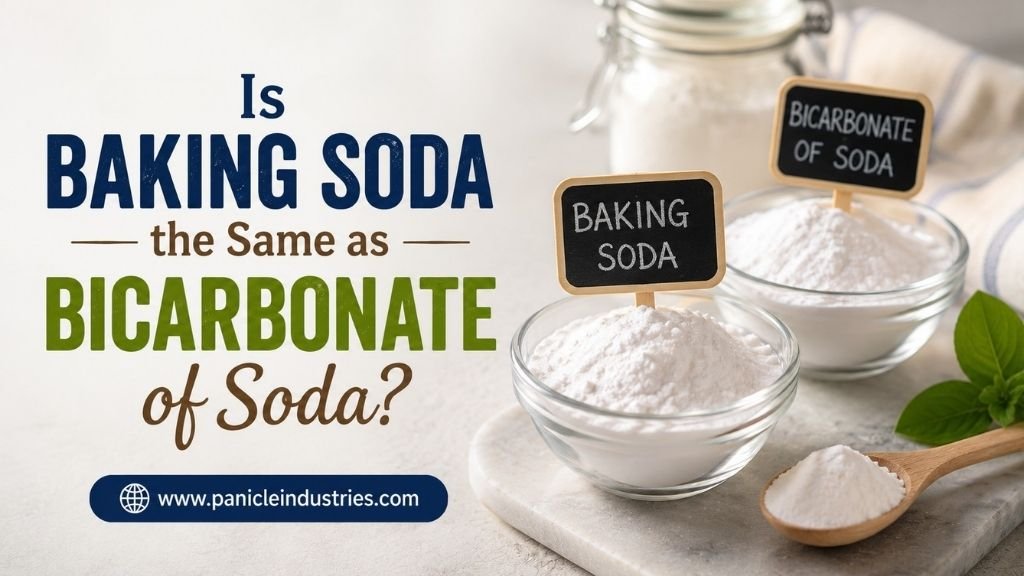
If you’ve ever followed an international recipe, you may have noticed that some call for baking soda, while others mention bicarbonate of soda. This often leads to confusion, especially for home bakers wondering whether they are different ingredients or simply different names for the same product.
The simple answer is yes, baking soda and bicarbonate of soda are the same thing. They are two names for the same chemical compound: sodium bicarbonate (NaHCO₃). The name “baking soda” is commonly used in the United States and Canada, while “bicarbonate of soda” is the preferred term in the United Kingdom, Australia, New Zealand, and several other countries.
Although the names differ, their purpose, chemical composition, and baking performance remain exactly the same. Understanding how this ingredient works can help you bake better cakes, cookies, breads, and other baked goods while avoiding common recipe mistakes.
In this blog, you’ll learn what baking soda is, why it has two different names, how it works in baking, and how it compares with other leavening agents.
What Is Baking Soda?
Baking soda is a white, fine powder made from sodium bicarbonate, a naturally occurring alkaline compound. It has been used in cooking and baking for generations because of its ability to produce carbon dioxide gas when combined with an acidic ingredient.
This gas creates tiny air bubbles inside dough or batter, helping baked goods rise and become light and fluffy.
Unlike baking powder, baking soda does not contain its own acid. It needs an acidic ingredient to activate its leavening properties.
Common acidic ingredients include:
- Lemon juice
- Vinegar
- Buttermilk
- Yogurt
- Sour cream
- Brown sugar
- Honey
- Cocoa powder (natural)
- Molasses
Without one of these acidic ingredients, baking soda cannot perform its job effectively.
What Is Bicarbonate of Soda?
Bicarbonate of soda is simply another name for baking soda.
The ingredient has the same:
- Chemical formula
- Texture
- Appearance
- Function
- Strength
- Baking performance
The only difference is the name printed on the packaging, which varies depending on the country.
For example:
- United States: Baking Soda
- Canada: Baking Soda
- United Kingdom: Bicarbonate of Soda
- Australia: Bicarbonate of Soda
- New Zealand: Bicarbonate of Soda
If you’re following a British recipe that lists bicarbonate of soda, you can confidently use baking soda if that’s what you have at home.
Likewise, if an American recipe calls for baking soda, bicarbonate of soda is the correct ingredient.
Is Baking Soda the Same as Bicarbonate of Soda?
Yes. Baking soda and bicarbonate of soda are exactly the same ingredient.
Both are made from 100% sodium bicarbonate and perform the same function in baking and cooking.
Whether you purchase a box labeled “Baking Soda” or “Bicarbonate of Soda,” you’ll find the same white powder inside.
This means you can substitute one for the other in equal amounts without changing the recipe.
For example:
- 1 teaspoon baking soda = 1 teaspoon bicarbonate of soda
- ½ teaspoon baking soda = ½ teaspoon bicarbonate of soda
- ¼ teaspoon baking soda = ¼ teaspoon bicarbonate of soda
No adjustments are necessary because the ingredients are identical.
How Does Baking Soda Work?
Understanding how baking soda works helps explain why recipes often specify certain ingredients.
It Needs an Acid to React
Baking soda is an alkaline substance.
When it comes into contact with an acidic ingredient and moisture, a chemical reaction occurs.
This reaction produces:
- Carbon dioxide gas
- Water
- Salt
The carbon dioxide gas becomes trapped inside the batter or dough, causing it to expand and rise during baking.
The Reaction Starts Immediately
One important characteristic of baking soda is that it begins reacting as soon as it is mixed with liquid and acid.
This means recipes using baking soda should usually be baked soon after mixing.
Waiting too long allows the gas to escape before baking begins, resulting in flatter baked goods.
It Helps Improve Texture
Besides helping baked goods rise, baking soda also contributes to texture.
Properly used baking soda can make baked products:
- Lighter
- Softer
- Airier
- More tender
It also promotes browning because its alkaline nature speeds up the Maillard reaction, giving cookies, cakes, and breads an attractive golden color.
Common Foods That Use Baking Soda
Many everyday recipes rely on baking soda for their texture and appearance.
Popular examples include:
- Chocolate cake
- Banana bread
- Pancakes
- Muffins
- Cookies
- Soda bread
- Biscuits
- Brownies
- Waffles
- Quick breads
In each of these recipes, baking soda reacts with acidic ingredients to create the lift needed for soft and fluffy baked goods.
Baking Soda vs Bicarbonate of Soda
| Feature | Baking Soda | Bicarbonate of Soda |
|---|---|---|
| Chemical name | Sodium bicarbonate | Sodium bicarbonate |
| Chemical formula | NaHCO₃ | NaHCO₃ |
| Appearance | Fine white powder | Fine white powder |
| Function | Leavening agent | Leavening agent |
| Strength | Identical | Identical |
| Requires acid? | Yes | Yes |
| Used in baking | Yes | Yes |
| Difference | Name used mainly in North America | Name used mainly in the UK, Australia, and other regions |
As you can see, there is no functional difference between baking soda and bicarbonate of soda. The distinction is purely regional, making it easy to use either one when following recipes from different countries.
Common Uses of Baking Soda in Cooking and Baking
Baking soda is one of the most versatile ingredients found in the kitchen. While it is best known as a leavening agent, it also serves several other purposes in food preparation.
Baking Cakes and Muffins
Baking soda reacts with acidic ingredients such as buttermilk, yogurt, or lemon juice to create carbon dioxide gas. This helps cakes and muffins rise, giving them a soft, light texture.
Making Cookies
Many cookie recipes include baking soda because it encourages spreading during baking and helps create crispy edges with a soft center. It also contributes to the golden-brown color that makes cookies look more appealing.
Preparing Quick Breads
Unlike yeast breads, quick breads rely on baking soda or baking powder for leavening. Banana bread, zucchini bread, and Irish soda bread are popular examples.
Tenderizing Certain Foods
A small amount of baking soda is sometimes used in marinades to help tenderize meat. It can also be added to dried beans during soaking to reduce cooking time, although this should be done sparingly.
Can You Substitute Baking Soda for Bicarbonate of Soda?
Yes. Since baking soda and bicarbonate of soda are exactly the same ingredient, they can always be substituted in equal amounts.
For example:
- 1 teaspoon baking soda = 1 teaspoon bicarbonate of soda
- ½ teaspoon baking soda = ½ teaspoon bicarbonate of soda
- ¼ teaspoon baking soda = ¼ teaspoon bicarbonate of soda
No recipe adjustments are necessary because both names refer to pure sodium bicarbonate.
However, it’s important not to confuse baking soda with baking powder. These are different ingredients and cannot always replace each other directly.
Baking Soda vs Baking Powder
Many people mistakenly believe baking soda and baking powder are identical, but they work differently.
Baking soda is pure sodium bicarbonate and requires an acidic ingredient to produce carbon dioxide.
Baking powder already contains sodium bicarbonate along with one or more acids and a drying agent, allowing it to work with moisture and heat even when no additional acid is present.
Key Differences
| Feature | Baking Soda | Baking Powder |
|---|---|---|
| Main ingredient | Sodium bicarbonate | Sodium bicarbonate plus acid |
| Needs acidic ingredient | Yes | Usually no |
| Leavening action | Starts immediately after mixing | Works during mixing and baking (depending on the type) |
| Taste if overused | Slightly bitter or soapy | Less noticeable |
| Common uses | Cookies, muffins, soda bread | Cakes, pancakes, biscuits |
Understanding this difference helps prevent baking mistakes and ensures recipes turn out as expected.
How to Store Baking Soda Properly
Proper storage helps baking soda remain effective for a longer period.
To maintain its quality:
- Store it in an airtight container.
- Keep it in a cool, dry place.
- Protect it from moisture and humidity.
- Keep it away from strong-smelling foods, as it can absorb odors.
- Always close the package tightly after use.
Although baking soda has a long shelf life, it gradually loses effectiveness over time. If you’ve had it for several years or are unsure of its freshness, replacing it before baking is a good idea.
Common Mistakes to Avoid
Even though baking soda is simple to use, a few common mistakes can affect the quality of your baked goods.
Confusing It with Baking Powder
This is one of the most common baking errors. Although both are leavening agents, they are not interchangeable in every recipe.
Using Too Much
Adding extra baking soda does not make baked goods rise more. Instead, it can leave an unpleasant bitter or soapy taste and affect the texture.
Forgetting the Acid
Without an acidic ingredient, baking soda cannot produce enough carbon dioxide to help baked goods rise properly.
Waiting Too Long Before Baking
Since baking soda begins reacting immediately after mixing with acid and liquid, it’s best to bake the batter as soon as possible to capture the gas bubbles.
Is Baking Soda the Same as Bicarbonate of Soda? The Final Answer
So, is baking soda the same as bicarbonate of soda? Yes, they are exactly the same ingredient. Both names refer to sodium bicarbonate, a versatile leavening agent used in baking and cooking around the world. The only difference is regional terminology—”baking soda” is commonly used in North America, while “bicarbonate of soda” is more common in the United Kingdom, Australia, and several other countries.
As long as you’re using pure sodium bicarbonate, you can substitute baking soda and bicarbonate of soda in equal amounts without changing your recipe. Just remember not to confuse either of them with baking powder, which has a different composition and purpose.
Conclusion
Understanding the difference between ingredient names can make following recipes from different countries much easier. Baking soda and bicarbonate of soda are simply two names for the same product, so you never need to worry about choosing between them.
Whether you’re baking cookies, cakes, muffins, or quick breads, this ingredient plays an important role in creating light, fluffy textures and beautifully browned baked goods. By using the correct amount, pairing it with acidic ingredients, and storing it properly, you’ll achieve more consistent baking results every time.
The next time you come across a recipe using either term, you can confidently reach for the same box of sodium bicarbonate and start baking.
Panicle Industries is a trusted Indian exporter of premium Basmati Rice, Non-Basmati Rice, Pulses, Spices, and other food products. Through Panicle Foods, we continue to strengthen our commitment to delivering quality food products, reliable export services, and lasting partnerships with buyers across international markets.
Frequently Asked Questions
1. Is baking soda exactly the same as bicarbonate of soda?
Yes. Baking soda and bicarbonate of soda are both sodium bicarbonate and can be used interchangeably in equal amounts in any recipe.
2. Why do some recipes use bicarbonate of soda instead of baking soda?
The difference is regional. British recipes use “bicarbonate of soda,” while American and Canadian recipes usually say “baking soda.”
3. Can I replace baking soda with bicarbonate of soda?
Yes. They are the same ingredient, so you can substitute one for the other using exactly the same measurement.
4. Is baking soda the same as baking powder?
No. Baking soda is pure sodium bicarbonate, while baking powder contains sodium bicarbonate plus acids and other ingredients.
5. Does baking soda need an acidic ingredient to work?
Yes. Baking soda requires an acid, such as lemon juice, yogurt, or vinegar, to produce carbon dioxide and help baked goods rise.