
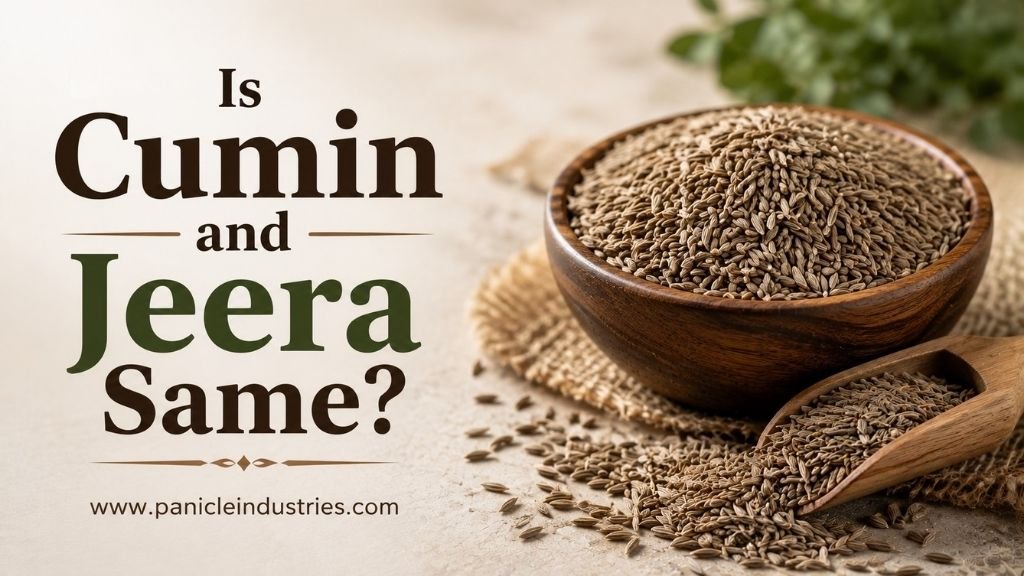
If you’ve ever shopped for spices or followed recipes from different parts of the world, you’ve probably come across the terms cumin and jeera. This often leads to a common question: Is cumin and jeera same? The good news is that they are indeed the same spice. The only difference lies in the language used to describe them.
The word “cumin” is the English name, while “jeera” (also spelled jira or zeera) is the Hindi name for the same spice. Both refer to the dried seeds of the plant Cuminum cyminum, which belongs to the parsley family. These aromatic seeds have been used in cooking and traditional medicine for thousands of years and are an essential ingredient in cuisines across Asia, the Middle East, Africa, and Latin America.
In this blog, you’ll learn whether cumin and jeera are the same, how they are used in cooking, their nutritional value, and why this versatile spice is popular around the world.
What Is Cumin?
Cumin is a flowering plant scientifically known as Cuminum cyminum. Its dried seeds are used as a spice because of their warm, earthy, slightly nutty flavor and distinctive aroma.
Cumin is believed to have originated in the eastern Mediterranean region and Southwest Asia. Today, it is cultivated in many countries, with India being one of the world’s largest producers and consumers.
The seeds are small, elongated, and yellowish-brown in color. They can be used whole or ground into a fine powder, depending on the recipe.
Cumin is commonly found in:
- Curries
- Rice dishes
- Soups
- Lentils
- Spice blends
- Marinades
- Roasted vegetables
- Meat dishes
Its rich flavor makes it one of the most widely used spices in both home kitchens and commercial food production.
| Also read: How Long Can Spices Last? |
What Is Jeera?
Jeera is simply the Hindi name for cumin.
In India, Pakistan, Nepal, and several neighboring countries, people commonly refer to cumin seeds as jeera. Whether a recipe mentions jeera or cumin, it is referring to the same spice.
Jeera plays a major role in Indian cuisine. It is often added to hot oil or ghee at the beginning of cooking, allowing its essential oils to release their aroma before other ingredients are added.
Some popular dishes that commonly include jeera are:
- Jeera rice
- Dal (lentils)
- Vegetable curries
- Biryani
- Chana masala
- Rajma
- Spice mixes such as garam masala
Its unique aroma adds depth and complexity to countless savory dishes.
Is Cumin and Jeera Same?
Yes, cumin and jeera are the same spice.
The only difference is the language used.
- English: Cumin
- Hindi: Jeera
- Scientific name: Cuminum cyminum
There is no difference in:
- Flavor
- Aroma
- Appearance
- Nutritional value
- Cooking uses
- Health benefits
For example, if an Indian recipe calls for one teaspoon of jeera and an international recipe asks for one teaspoon of cumin, you can use exactly the same ingredient.
This confusion often arises because recipes from different countries use local names instead of scientific or English names.
Understanding this makes it much easier to follow recipes from around the world.
Nutritional Value of Cumin (Jeera)
Although cumin is usually consumed in small amounts, it contains several important nutrients and beneficial plant compounds.
| Nutrient | Approximate Amount (per 100 g) |
|---|---|
| Energy | 375 kcal |
| Protein | 18 g |
| Carbohydrates | 44 g |
| Dietary Fiber | 11 g |
| Fat | 22 g |
| Iron | High source |
| Calcium | Good source |
| Magnesium | Present |
| Potassium | Present |
| Manganese | Present |
Because cumin is generally used as a seasoning, the actual nutritional contribution per serving is relatively small. However, when included regularly as part of a balanced diet, it can contribute small amounts of essential minerals and antioxidants.
Common Uses of Cumin (Jeera)
Cumin is valued not only for its flavor but also for its versatility. It can be used in many forms and suits a wide range of cuisines.
Whole Cumin Seeds
Whole cumin seeds are often added to hot oil before cooking. This technique, known as tempering, releases the spice’s natural aroma and enhances the flavor of the dish.
Whole seeds are commonly used in:
- Rice dishes
- Lentils
- Vegetable curries
- Pickles
- Soups
Ground Cumin
Ground cumin is made by grinding dried cumin seeds into a fine powder.
It blends easily into recipes and is commonly added to:
- Curry powders
- Spice rubs
- Marinades
- Sauces
- Chili recipes
- Roasted vegetables
- Salad dressings
Spice Blends
Cumin is a key ingredient in many famous spice blends around the world, including:
- Garam masala
- Curry powder
- Taco seasoning
- Chili seasoning
- Ras el hanout
- Baharat
Its earthy flavor complements many other spices, making it one of the most frequently used ingredients in seasoning blends.
Rice and Grain Dishes
One of the most popular uses of jeera is in jeera rice, where whole cumin seeds are lightly toasted in oil or ghee before rice is added. The result is a fragrant side dish that pairs well with curries, lentils, and grilled foods.
Cumin is also commonly added to quinoa, couscous, and pilaf recipes for extra flavor.
Health Benefits of Cumin (Jeera)
Cumin is more than just a flavorful spice. It also contains vitamins, minerals, antioxidants, and natural plant compounds that contribute to a healthy diet. While cumin should not be viewed as a medicine, including it regularly in balanced meals may offer several nutritional benefits.
May Support Healthy Digestion
One of the most well-known uses of cumin is supporting digestion. It may help stimulate digestive enzymes, making it easier for the body to break down food efficiently.
Many traditional cuisines include cumin in heavy meals because it enhances both flavor and digestion.
Rich in Antioxidants
Cumin contains natural antioxidants that help protect cells from oxidative stress caused by free radicals. Antioxidants play an important role in maintaining overall health and supporting normal body functions.
Good Source of Iron
Iron is essential for producing healthy red blood cells and transporting oxygen throughout the body.
Although cumin is used in small amounts, it naturally contains a significant amount of iron, making it a valuable addition to a varied diet.
May Support Blood Sugar Management
Some research suggests that cumin may support healthy blood sugar levels when consumed as part of a balanced diet. However, it should never replace medical treatment or prescribed dietary advice for diabetes.
Supports Overall Nutrition
Cumin also provides small amounts of important nutrients such as:
- Calcium
- Magnesium
- Potassium
- Manganese
- Vitamin E
These nutrients contribute to overall health when combined with a nutritious eating pattern.
Cumin Seeds vs Ground Cumin
Although both come from the same spice, whole cumin seeds and ground cumin are used differently in cooking.
Whole Cumin Seeds
Whole seeds retain their essential oils for longer, allowing them to stay fresh for extended periods.
They are ideal for:
- Tempering
- Rice dishes
- Lentils
- Vegetable curries
- Soups
When heated in oil or ghee, whole seeds release a rich aroma that forms the flavor base of many recipes.
Ground Cumin
Ground cumin is made by finely grinding dried cumin seeds.
Because its surface area is larger, it releases flavor more quickly but also loses freshness faster than whole seeds.
Ground cumin is commonly used in:
- Marinades
- Spice blends
- Sauces
- Dry rubs
- Curry powders
Many home cooks keep both forms in their kitchen because each serves a different purpose.
Common Myths About Cumin and Jeera
Despite its popularity, there are several misconceptions about cumin.
Myth 1: Cumin and Jeera Are Different Spices
This is false.
Cumin and jeera are exactly the same spice. The only difference is the language used to describe them.
Myth 2: Cumin and Caraway Are the Same
Although cumin and caraway seeds look somewhat similar, they come from different plants and have distinct flavors.
Caraway has a sweeter, slightly licorice-like taste, while cumin has a warm, earthy flavor.
Myth 3: Eating More Cumin Provides Faster Health Benefits
More is not always better.
Using moderate amounts of cumin as part of a balanced diet is the safest approach. Excessive consumption is unnecessary and may cause digestive discomfort in some individuals.
Myth 4: Ground Cumin Is Better Than Whole Seeds
Neither form is better.
Whole seeds retain freshness longer and are excellent for tempering, while ground cumin mixes easily into sauces, marinades, and spice blends. The best choice depends on the recipe.
Is Cumin and Jeera Same? The Final Answer
So, is cumin and jeera same? The answer is yes. Cumin is the English name, while jeera is the Hindi name for the same spice, scientifically known as Cuminum cyminum. They have identical flavor, aroma, nutritional value, appearance, and culinary uses.
Whether you’re following an Indian recipe that calls for jeera or an international recipe that uses the word cumin, you can confidently use the same ingredient. Understanding this simple difference makes cooking easier and helps you explore recipes from different cultures without confusion.
Conclusion
Cumin, or jeera, is one of the world’s most popular spices because of its rich aroma, warm flavor, and versatility. Although the names vary across languages, they refer to the exact same ingredient. Whether used whole or ground, cumin enhances countless dishes, from curries and rice to soups, marinades, and spice blends.
Besides adding flavor, cumin also contributes beneficial nutrients and antioxidants that complement a healthy diet. By understanding that cumin and jeera are simply two names for the same spice, you can confidently prepare recipes from around the world and enjoy this timeless kitchen staple.
Panicle Industries is a trusted Indian exporter of premium Basmati Rice, Non-Basmati Rice, Pulses, Spices, Fruits & Vegetables and other food products. Through Panicle Foods, we continue to strengthen our commitment to delivering quality food products, reliable export services, and lasting partnerships with buyers across international markets.
Frequently Asked Questions
1. Is cumin and jeera the same spice?
Yes, cumin and jeera are the same spice. “Cumin” is the English name, while “jeera” is the Hindi name for seeds from the Cuminum cyminum plant.
2. What is the difference between cumin and black cumin?
Regular cumin has a warm, earthy flavor, while black cumin is smaller, darker, and slightly sweeter with a more delicate aroma.
3. Can I use cumin powder instead of whole jeera seeds?
Yes, cumin powder can replace whole jeera seeds, but the flavor is stronger and less aromatic than freshly tempered whole seeds.
4. What are the health benefits of cumin or jeera?
Cumin may support digestion, improve iron intake, boost immunity, help control blood sugar levels, and provide antioxidant benefits.
5. How should cumin seeds be stored to stay fresh longer?
Store cumin seeds in an airtight container away from heat, moisture, and sunlight to maintain their flavor, aroma, and quality longer.